


Cotton Farming
Learn the best practices for cotton cultivation with simple, modern steps that save time and money. Follow a clear cotton farming process from land preparation to harvest for cleaner lint and more stable yields.
Introduction to Cotton Farming
Cotton farming forms the foundation of India’s textile industry, supporting millions of livelihoods across rural regions.
Cotton grows best in warm weather, well‑drained soil, and fields that are kept neat and on schedule. With basic planning, cotton cultivation fits both small and large farms, as long as the land is prepared well and sowing happens at the right time.
Good seed, steady spacing, and light but regular weeding help plants start strong. Simple, timely irrigation and balanced nutrition keep the crop healthy through flowering and boll set. Keeping a small notebook - sowing date, rains, fertiliser splits - makes it easy to correct mistakes next season.
Clean picking and quick drying protect the fibre quality at the end. In short, level the field, choose the right variety, reduce stress at flowering, and harvest on time for better ginning and better rates.
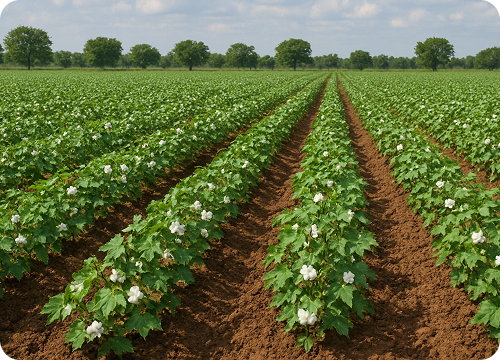
Importance of Cotton Farming
As a major cash crop, cotton drives economic growth, generates export revenue, and sustains countless textile-based industries.
Cotton farming supports families, village markets, and industry. Even small field improvements add to the cotton crop yields. Here are four simple reasons it matters, with a focus on cotton cultivation and a practical cotton farming process.
Market and livelihoods
Cotton creates steady work - seed dealers, field labour, ginners, transport, mills, and lint feeds spinning and textile units year‑round. When the cotton farming process is timely and tidy, income becomes more stable and cash flows faster after the sale.
Water and soil use
Level fields, timely irrigation, and organic matter help roots go deep and handle dry spells. Small fixes - proper spacing, early weeding, and clean bunds - cut waste and make cotton cultivation more resilient when the weather turns odd.
Quality and value
Clean picking, quick drying, and gentle handling raise lint grade and bring better prices at the ginner. A little care at harvest and storage often adds more value than a small boost in yield - quality pays, not just quantity.
Local industry linkages
The cotton crop India produces supports oil mills (cottonseed), feed makers, and other by‑products. When fields supply uniform, timely lots, mills can plan better, payments move faster, and both sides benefit.
Cotton Cultivation Process
From land preparation and sowing to picking and ginning, cotton cultivation demands precision, timing, and proper crop care.
This section covers cotton sowing methods and cotton harvesting techniques in simple steps.
1. Land Preparation
Clear old residues and tough weeds, then till to a fine, even seedbed so roots can spread and rain can soak in without puddles.
- Level the field to remove highs and lows; this keeps moisture even and makes weeding easy.
- Firm up field edges so water does not leak after a shower.
- In black soils, avoid over-tillage that makes hard pans; two or three passes are enough.
2. Seed Selection
Pick varieties or hybrids that match local heat, rainfall, and pest pressure, and use certified seed with high germination.
- Look for useful traits: earliness, boll size, and tolerance to common pests and diseases.
- Treat seed before sowing to protect against seed- and soil-borne issues.
- Store seed cool and dry until use, and test a small sample for germination so the seed rate is right.
- Trying something new? Keep a small trial beside the usual variety to compare fairly.
3. Sowing Methods
Choose cotton sowing methods based on soil moisture, tools, and labour. Line sowing with a drill or planter gives straight rows and correct depth, which improves emergence and later weeding.
- In light soils, sow a bit deeper to reach moisture; in heavy soils, keep it shallow so seedlings can push through.
- Keep spacing steady so each plant gets light and nutrients - too close invites pests and weak stems, too wide wastes land.
- Fill gaps within 10–12 days to keep the stand uniform. If intercropping with a short‑duration pulse, keep rows straight and plan inputs so both crops do well.
4. Irrigation
Plan irrigation for cotton around key stages: early establishment, square formation, flowering, and boll development.
- Aim for moist, not waterlogged, soil and avoid long dry breaks during flowering and boll set, as these can reduce yield and fibre quality.
- Drip or furrow irrigation systems help deliver water where it is needed and reduce leaf wetness.
- After rains, drain excess water quickly, especially on heavier soils.
5. Fertilization
Follow soil test guidance and local advice. Cotton needs nitrogen for growth, phosphorus for roots and early vigour, and potassium for strength, boll holding, and fibre quality.
- Split nitrogen into two or three doses to match crop demand and reduce losses, and avoid heavy late doses that only push soft growth. Watch for micronutrient gaps like zinc or boron and correct early if symptoms show. .
- Mix chemical fertilisers with compost or green manure to improve soil life over time. Note dose, timing, and placement; repeat what worked and skip what didn’t.
6. Pest & Disease Management
Walk the field once a week and check the undersides of leaves, squares, and bolls. Watch for bollworms, sucking pests, and foliar diseases; early action costs less than late rescue.
- Protect helpful insects by avoiding harsh sprays early, and rotate actives to slow resistance.
- Keep bunds clean and stands open enough for airflow. Balanced nutrition and proper spacing lower disease pressure.
- Pheromone or light traps help track trends and decide if spraying is needed.
7 .Harvesting & Post-Harvest
Pick in clean, dry weather when bolls are fully open and lint is bright and fluffy.
- Handle gently to keep trash out and protect fibre length. If picking in rounds, bag each lot separately in clean, breathable sacks so moisture does not build.
- Simple cotton harvesting techniques - no wet bags, no floor contact, no mixing with sticks or leaves - raise ginning outturn and price.
- Move picked cotton to shade quickly, keep it off bare ground, and send it to the ginner at safe moisture.
- Small, steady habits at harvest protect months of field work and show up as better lint grades.
Right Time and Soil for Cotton Farming
Cotton grows best when sown after early summer rains in well-drained black or alluvial soils with good moisture retention.

Ideal Season for Cotton Cultivation
Cotton likes a long, warm run without frost, steady sunshine, and soil that has warmed up properly before sowing. In most regions, the main window is the monsoon season: land work starts as the first showers soften the soil.
- A good thumb rule is warm days, mild nights, and soil that stays at least comfortably warm for a few days in a row.
- Season length should match the variety. Short- or medium-duration cotton fits areas with a tighter monsoon or lighter soils.
- Staggered sowing in small blocks spreads risk and labour, and keeps harvest manageable. Fields that often flood or hold water after a storm are better sown a bit later, once drains are cleared and bunds are firm.
- Flowering and boll set are the most sensitive weeks. A plan that puts flowering in a period with stable weather usually pays back in better boll retention and cleaner lint.
- Local calendars help: in many districts, cotton goes in from late June to July with the monsoon.
- A small notebook with sowing date, first square, first flower, and expected pick date keeps decisions simple.
Soil Requirements for Cotton Farming
Deep, fertile, and well-aerated clay loam soils with moderate pH and good drainage ensure strong root growth and high yield.
- Cotton grows best in soils that drain well, breathe easily, and hold enough moisture between irrigations or rains. Loam to sandy loam soils are friendly because roots spread fast, and water does not sit around the stem. Black soils can produce excellent crops too, as long as waterlogging is avoided with clean drains and careful irrigation.
- Level ground matters. High patches dry out too soon, low patches stay wet and turn plants soft, so a light levelling pass before sowing pays through the season. Healthy soil has structure and life. A bit of compost or farmyard manure before sowing improves tilth, helps hold moisture, and feeds microbes that make nutrients more available.
- Over-tillage breaks soil into powder and creates hard pans. It is known that two or three well-timed passes usually give a fine seedbed without sealing the subsoil. Where compaction is common, a shallow subsoiler pass in the dry season can open the profile. This is really helpful as it helps roots chase moisture deeper.
- A neutral to slightly alkaline pH is fine for cotton; very acidic patches benefit from liming, and sodic spots respond to gypsum as per local guidance. Micronutrients matter in small doses: zinc or boron shortages can show up at squaring and flowering and should be corrected early rather than late.
- Raised beds help in heavier soils by keeping the root zone airy and free from puddling after a shower. Simple checks work well: squeeze a handful of moist soil - it should hold shape but break with a tap; very slow infiltration calls for better structure, while too quick means more organic matter is needed.
Weather Conditions
-
Cotton is a warm-season crop that loves heat and light but not extremes.
Steady warm days and mild nights drive growth, while a long frost‑free period lets the crop finish bolls properly. Early growth needs warmth to push seedlings through the crust; flowering prefers warm, settled weather without harsh heat spikes or long cloudy spells.
-
Prolonged high heat can shed squares and flowers
A calm, sunny stretch during boll set usually shows up later as fuller, cleaner cotton at picking. Rainfall is best when it arrives in small, regular gifts. Too much at once leads to waterlogging, soft stems, and disease.
-
Light soils need more frequent, smaller irrigations
Wind matters more than many think: strong winds flatten tender plants and rub bolls, so simple windbreaks along field edges can prevent lodging and bruising. Weather tools are helpful, but do not need to be fancy.
-
Humidity and cloud cover change disease pressure
Long, damp spells invite foliar diseases; neat spacing and open canopies help air flow and keep leaves dry sooner each morning. After storms, draining low pockets quickly avoids root stress. Planning to put flowering in a steadier weather window makes the season smoother and the harvest cleaner.
Traditional Vs Modern Cotton Farming
Traditional methods rely on manual labour and natural fertilisers, while modern cotton farming maximises yield through mechanisation and hybrid seeds.
What is Traditional Cotton Farming?
Traditional cotton farming is built around familiar routines that many families have followed for years. Fields are prepared with a few tillage passes, residues are cleared, bunds are repaired, and sowing happens when the first good rains arrive.
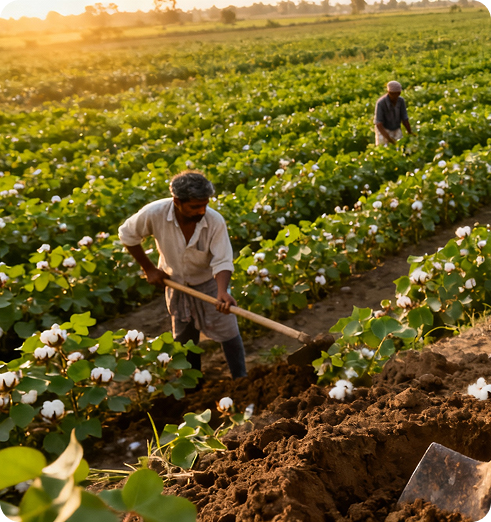
- Seed is placed in wider rows, giving each plant more room to branch and set bolls over a long season. Weeding is done by hand or with simple tools. Irrigation, where available, comes through furrows or flood turns.
- Most tasks depend on people. Sowing, gap-filling, weeding, and picking are spread across the months. Handpicking happens in several rounds as bolls open, which keeps trash low and lint cleaner.
- Nutrition is usually applied in a few big splits, and pest control often follows a simple spray calendar. This approach is steady and flexible, but it can become costly when labour is tight or the weather turns wild.
- Traditional systems are forgiving in their own way. If a shower comes late, sowing can be shifted by a few days. If a field patch lags, workers pay extra attention there.
- The trade-off is time and effort: wider spacing can leave yield on the table. Still, many growers prefer this path because it fits their tools, their crew, and their local market.
- With tidy fields, gentle picking, and timely drying, traditional cotton can bring decent yields and good lint quality without overcomplicating the season.
What is Modern Cotton Farming?
Modern cotton farming focuses on precision and timing. The idea is to do each job a little better, right when the crop needs it, so the whole season feels smoother. Planting often uses closer spacing with compact, earlier varieties to raise plant population and push more uniform bolling.
- Rows are straight, depth is consistent, and gaps are filled quickly. This helps fields look even, which makes weeding, nutrition, and pest control easier and cheaper. Water and nutrients are delivered in small, timely doses. Many farmers use drip or well-planned furrows so the root zone stays moist without drowning the plant.
- Nitrogen is split into two or three feeds, matched to growth stages, while phosphorus and potassium support roots, strength, and fibre quality. Pest management leans on scouting and thresholds, rotating products and using softer options early, so costs stay in check and resistance slows down.
- Harvest planning is part of the plan from day one. A more uniform crop means fewer, larger pickings. In some places, defoliation is used to open the crop evenly and speed up the round. Clean handling protects grade and price. Modern farming is not just about tools; it is about habits.
- A small notebook, a simple moisture check, a quick drain after rain, and a steady eye on the forecast go a long way. Put together, these steps save water, steady yields, and turn long, tiring weeks into shorter, more predictable ones. The goal is simple: fewer surprises and better returns, season after season.

Requirements for Modern Cotton Farming
Difference Between Traditional & Modern Cotton Farming
| Aspect | Traditional Potato Farming | Modern Potato Farming |
|---|---|---|
| Planting geometry | Wide spacing, long‑duration hybrids, and lower plant populations; yield depends on per‑plant load and many pickings. | HDPS with compact, early types at closer spacing for higher plant counts, synchronous bolling, and shorter seasons. |
| Water & nutrients | Flood/furrow irrigation with large splits; higher leaching and lower efficiency in light soils. | Drip or sub‑surface drip fertigation with small, timely pulses; higher water and nitrogen efficiency and better returns. |
| Pest & disease | Calendar sprays, more exposure to late pests and storms over long seasons. | Threshold‑based IPM, shorter window for pests, rotated chemistries, and better canopy airflow. |
| Harvest | Multi‑round handpicking with low trash but high labour and time. | Defoliation for fewer rounds or machine picking; faster harvest, pre‑cleaning handles higher trash. |
| Outcomes | Familiar and flexible, but higher labour per bale and variable water use. | Reported 26–35% gains in yield and efficiency with coordinated HDPS + drip + harvest practices. |
Best Suitable Tractors for Cotton Farming
Fuel-efficient medium-power tractors with adjustable wheel settings perform well for ploughing, sowing, and spraying cotton fields.
Picking a tractor for cotton comes down to three things: plot size, row spacing, and the tools used most of the season. Cotton needs a nimble machine for interculture and spraying, and a stronger one for tillage, seeding, and haulage. Match power to job size, and the season runs smoothly.
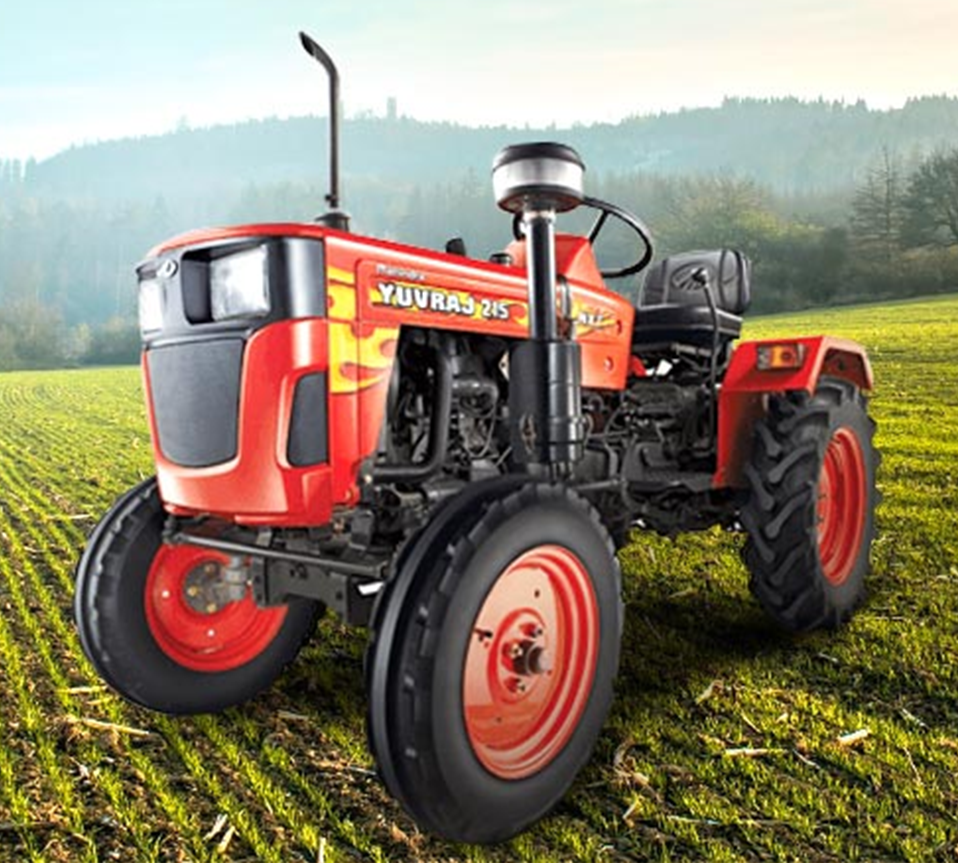
Mahindra YUVRAJ 215 NXT NT Tractor
The Mahindra YUVRAJ 215 NXT NT is well suited for cotton farming and intercultural operations due to its narrow track width, Read More
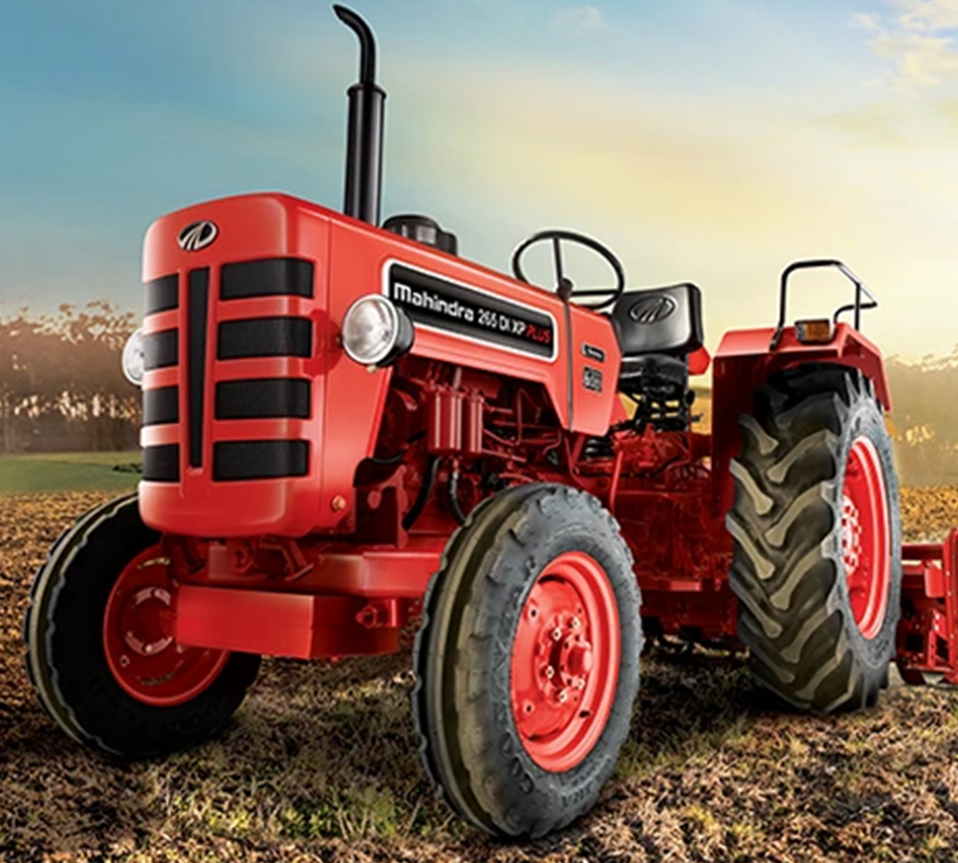
Mahindra 265 DI XP PLUS Tractor
The Mahindra 265 DI XP PLUS is a reliable all-around tractor built to manage multiple farming operations with ease. Read More
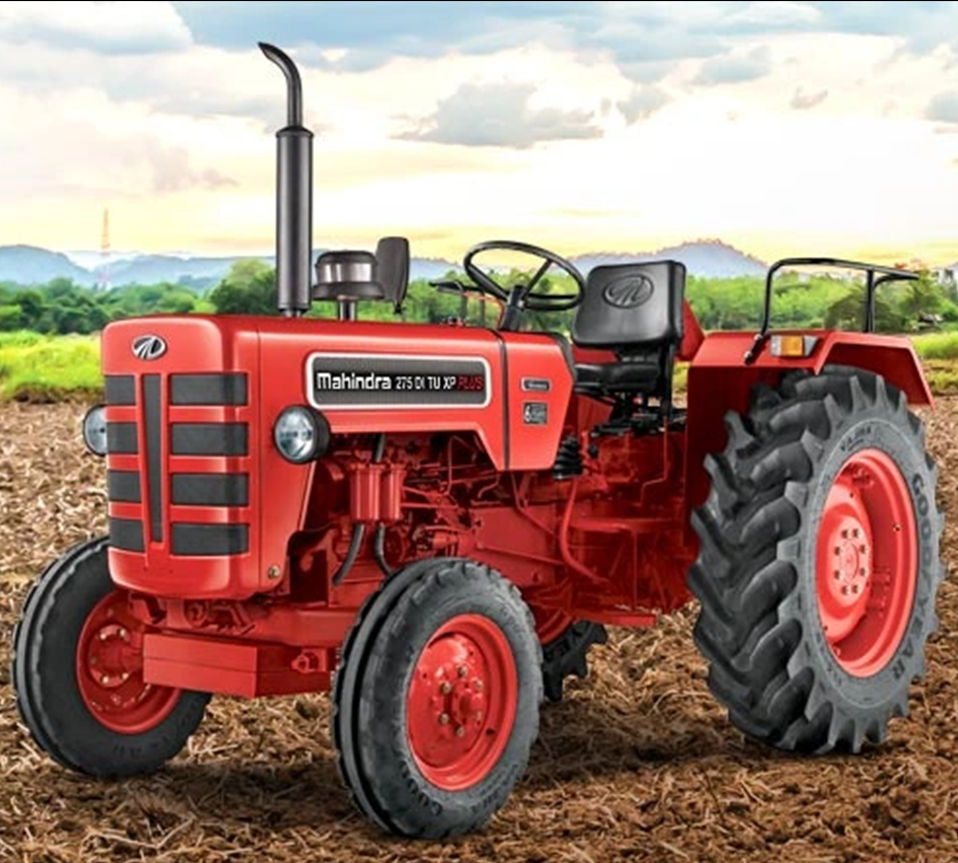
Mahindra 275 DI TU XP PLUS Tractor
The Mahindra 275 DI TU XP PLUS is designed for farmers seeking higher output and better efficiency. Read More
The Mahindra YUVRAJ 215 NXT NT is well suited for cotton farming and intercultural operations due to its narrow track width, which allows easy movement between crop rows. Its 20 HP engine delivers strong performance with high fuel efficiency. This particular tractor handles cultivation, spraying, and rotavating efficiently, while good ground clearance and lifting capacity support work on uneven fields.
The Mahindra 265 DI XP PLUS is a reliable all-around tractor built to manage multiple farming operations with ease. It offers a strong engine with high torque, ensuring smooth performance and fuel efficiency. With a high hydraulic lifting capacity, this tractor supports heavy implements very comfortably. Power steering improves operator comfort, and the long warranty enhances long-term ownership confidence.
The Mahindra 275 DI TU XP PLUS is designed for farmers seeking higher output and better efficiency. Its powerful engine and strong torque support demanding field operations. A high hydraulic lifting capacity and efficient PTO power make the tractor suitable for varied implements. Smooth transmission, good traction, and low maintenance costs contribute to consistent performance when it comes to cotton farming.
Implements & Attachments for Cotton Farming
Rotavators, seed drills, and sprayers enhance soil health, control weeds, and simplify various stages of cotton cultivation.
Good tools turn a tractor into a full cotton solution - from opening the soil to clean sowing and neat harvest. Keep passes few, settings right, and blades sharp.
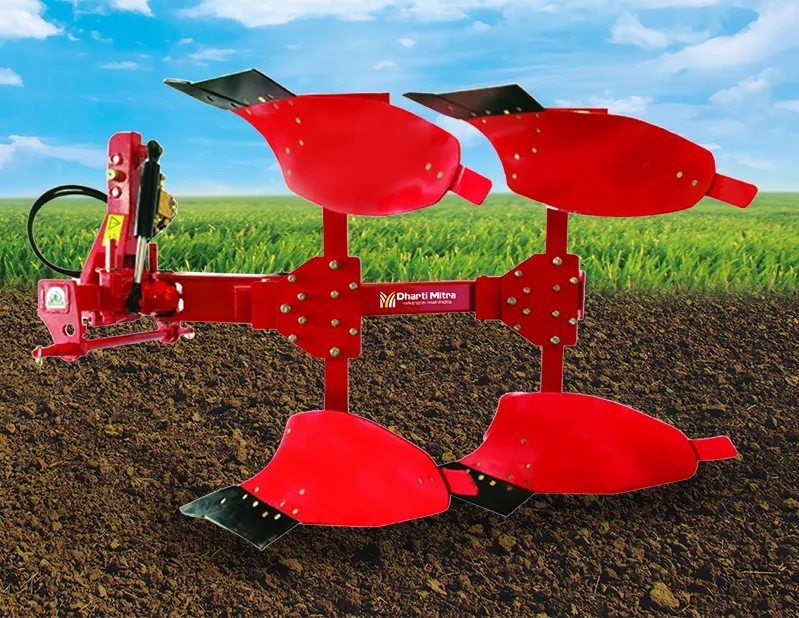
Dharti Mitra MB Plough (Mould Board)
The Dharti Mitra MB Plough is used for primary tillage, where the main aim is to turn the soil, bury crop residues. Read More
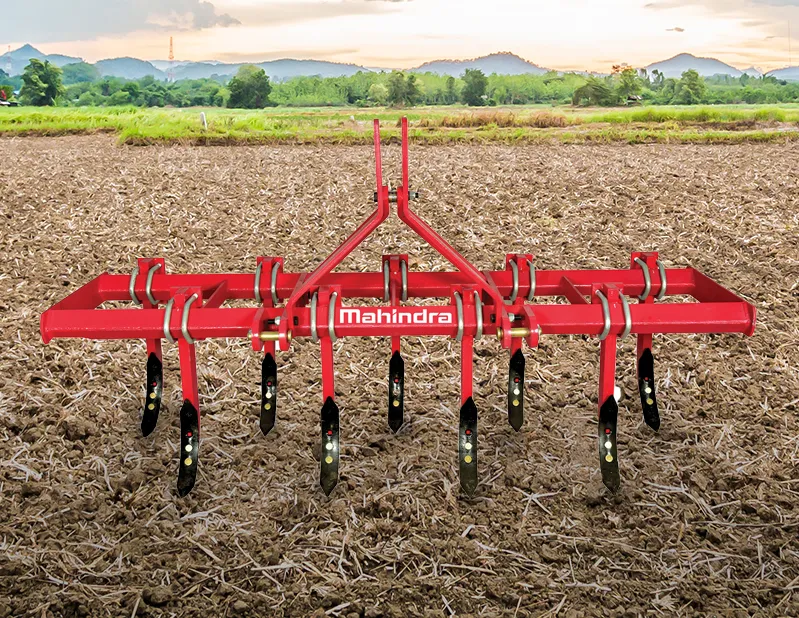
Mahindra Spring Loaded Cultivator (Heavy Duty)
The Mahindra Spring Loaded Cultivator is meant for secondary tillage work, Read More
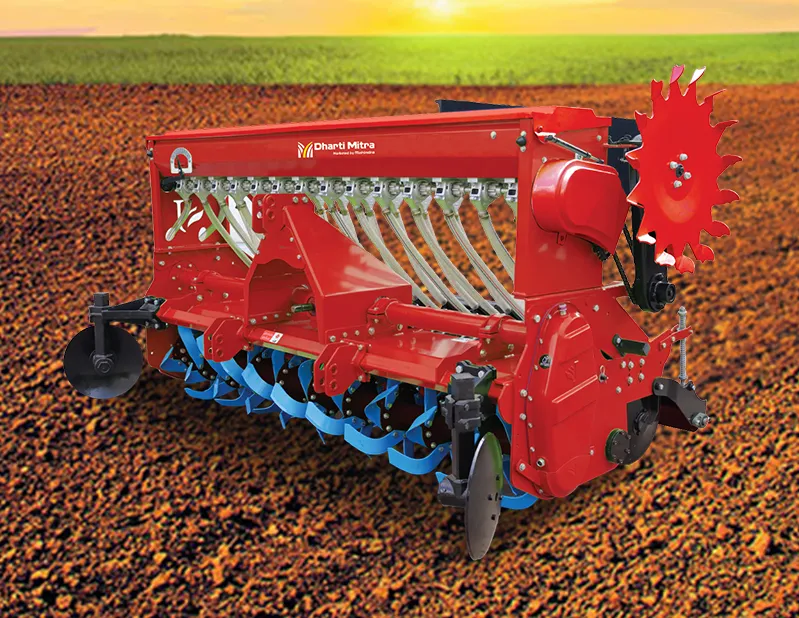
Dharti Mitra Super Seeder
The Dharti Mitra Super Seeder performs several operations in a single pass: soil preparation, Read More
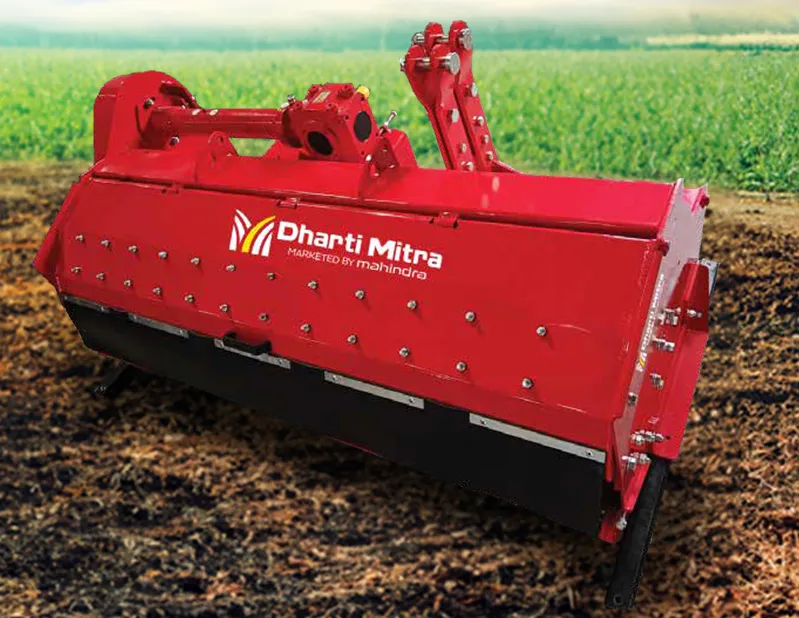
Mahindra Mahavator (Rotary Tiller/Rotavator)
The Mahindra Mahavator rotary tiller is designed to mix residues, break clods, and smooth the soil surface in medium to heavy soils, Read More
The Dharti Mitra MB Plough is used for primary tillage, where the main aim is to turn the soil, bury crop residues, and push back early weed growth. Inverting the soil layer opens the soil profile so air and moisture move more freely, and roots can spread deeper and stronger. This sets a supportive base for forming a better seedbed later. The typical working depth is about 10–15 cm, giving a balanced mix of soil turnover and stability. It pairs effectively with the ARJUN 605 DI I for deeper, steady pulling performance. Ideally, plough on a firm, moist field and let the soil rest before returning for the next field operation.
The Mahindra Spring Loaded Cultivator is meant for secondary tillage work, where the objective is to loosen and aerate soil after primary tillage and level it into a fine seedbed. In cotton fields, a well-aerated and crumbly bed leads to better and more uniform germination. Its spring tines are built to handle clods without bending, allowing consistent performance over varied field conditions. It pairs well with JIVO 245 DI 4WD or OJA 2124 for medium working widths, and with ARJUN 605 DI I for wider frames where more coverage per pass is required. Two light cultivator passes usually give better structure than one aggressive pass, which helps avoid powdering and weakening the soil.
The Dharti Mitra Super Seeder performs several operations in a single pass: soil preparation, seed placement, fertiliser application, and press wheel firming. This saves both time and fuel while ensuring seeds and nutrients are placed accurately in one straight, continuous operation. The straight line sowing also makes weed management easier during crop growth.
It pairs well with OJA 2124 or ARJUN 605 DI I, with the working width selected based on tractor power. Before starting full-scale work, it is important to calibrate seed and fertiliser rates and test over a 50–100 metre stretch to confirm uniform flow and proper placement. Once set correctly, it supports efficient and consistent field establishment.
The Mahindra Mahavator rotary tiller is designed to mix residues, break clods, and smooth the soil surface in medium to heavy soils, whether conditions are wet or dry. It helps create a uniform and fine seedbed and can manage tough residues from crops such as sugarcane and cotton. For small to medium working widths, it pairs effectively with JIVO 245 DI or OJA 2124, while wider and deeper operations are suited to tractors like the ARJUN 605 DI I. Maintaining sharp blades is important, as sharp blades save fuel, reduce strain on the tractor, and leave a cleaner finish. During peak working seasons, checking blade wear weekly helps maintain consistent performance and fuel efficiency.
Common Challenges in Cotton Farming & Practical Solutions
Pests, erratic rainfall, and high input costs challenge farmers, but integrated pest management and balanced crop planning bring stability.
1. Erratic rains and dry spells
Unpredictable rainfall disrupts crop establishment and boll development in cotton. Late monsoons delay sowing, while sudden dry spells cause flower shedding and stunted growth. To cope, ensure fields are level so water spreads evenly after each rain. Sow seeds at proper depth where soil moisture is firm, and fill gaps within 10–12 days for a uniform stand. Irrigate during critical growth stages like square formation, flowering, and boll filling to maintain consistent moisture.
2. Waterlogging after heavy rain
Water stagnation suffocates roots, leading to yellowing, diseases, and premature boll drop, especially in black or clayey soils. Before monsoon spells, prepare shallow surface drains to quickly divert excess water away from the root zone. Shaping raised beds and furrows ensures roots stay aerated while water flows off naturally. Avoid continuous irrigation runs; shorter and spaced watering cycles are better. After heavy rain, lightly loosen the topsoil to break surface crusts so oxygen can reach roots.
3. Poor germination and patchy stand
Uneven plant emergence can drastically reduce yield potential. This often happens when seeds are sown too deeply, the soil is cold, or the seed quality is poor. Always buy certified, fresh seed and check germination rates before planting. Treat seeds with fungicides or bio-protectants to shield them from soil-borne pathogens. Calibrate drills for uniform depth - shallow in heavy soils and slightly deeper in sandy ones. Lightly roll or press the soil after sowing to ensure good seed–soil contact.
4. Heavy weeds in the first 45 days
The first six weeks are critical for cotton, as weeds aggressively compete for light, moisture, and nutrients. Preparing a clean seedbed and practising a “stale seedbed” technique - irrigating to sprout weeds and clearing them before sowing - gives cotton a head start. Keep rows straight for efficient mechanical or hand weeding. Conduct early and shallow weedings, then repeat before the canopy closes. Avoid waiting until weeds mature, as removal becomes harder and more costly.
5. Early sucking pests (jassids, aphids, whitefly)
Young cotton leaves are soft and tender, making them a prime target for sucking pests like jassids, aphids, and whiteflies. These pests drain sap, causing leaf curling, yellowing, and stunted growth. Inspect the crop weekly, especially the undersides of leaves, to catch infestations early. Avoid excess nitrogen fertilisers that encourage lush, pest-prone foliage. Install yellow sticky traps as visual monitoring tools to detect pest build-up. Maintaining balanced nutrition and a diverse ecosystem reduces pest pressure significantly over time.
6. Pink bollworm and late boll damage
Pink bollworm causes severe yield and quality losses, especially when crops mature late or harvests are extended. The key is timing - sow on schedule with your local farming community and avoid keeping late bolls. After the final picking, destroy crop residues and stalks to stop larvae from surviving in leftover bolls. Use pheromone traps to track pest activity and guide timely action. Harvest cleanly and uniformly to avoid leftover green bolls that attract late pests.
7. Labour crunch at weddings and picking
Labour shortages often coincide with peak cotton tasks, such as weeding and picking. Planning ahead helps ease the burden. Line sowing simplifies mechanical or fast hand weeding, saving time and effort. Stagger sowing dates slightly between fields to spread out labour demand. Aim for uniform crop growth to plan fewer, larger pickings instead of multiple small rounds. Prepare clean bags, tarps, and tools early to avoid bottlenecks during harvest.
Post-Harvest & Storage Best Practices
Clean, dry, and airy storage conditions prevent fibre damage and preserve cotton quality before ginning and transport.

- Pick at the right moment –Timely picking is the first and most crucial step in preserving cotton quality. Bolls should be fully open, fluffy, and dry before harvesting; picking them too early results in damp, trashy lint that stains and spoils easily.
- Handle gently in the field –Gentle handling of picked cotton prevents fibre breakage and contamination. Roughly thrown or trampled cotton gathers soil, leaves, and broken stalks that reduce purity and price.
- Drying that protects the fibre –Proper drying ensures cotton maintains its bright colour and texture while avoiding mould and heating issues. Moist cotton can ferment, heat up, and lose quality within days.
- Clean before bagging – A few minutes of cleaning in the field can prevent big deductions at the gin. Remove leaf bits, stems, and dirt before bagging, as these materials fetch penalties during grading.
Post-Harvest & Storage Best Practices
1. Pick at the right moment
Timely picking is the first and most crucial step in preserving cotton quality. Bolls should be fully open, fluffy, and dry before harvesting. Picking too early results in damp, trashy lint that stains easily and loses value.
2. Handle gently in the field
Gentle handling prevents fibre breakage and contamination. Rough throwing or trampling gathers soil, leaves, and broken stalks that reduce purity and market price.
3. Drying that protects the fibre
Proper drying maintains bright colour and texture while preventing mould and heating. Moist cotton can ferment and lose quality within days if airflow is poor.
4. Clean before bagging
Remove leaf bits, stems, and dirt in the field itself. A few minutes of cleaning prevents grading penalties and deductions at the gin.
5. Smart bagging and stacking
Use only clean, breathable cotton or jute bags. Plastic sacks trap moisture, cause heating, and damage fibre quality before transport.
6. Safer short-term storage on the farm
Even for quick sales, keep cotton dry, shaded, and off the ground. Poor short-term storage can undo careful harvesting within days.
7. Watch for pests and mould
Clean storage areas thoroughly before use. Remove old lint, sweep dust, and seal cracks to prevent insects and mould development.
8. Move and transport with care
Before loading, clean and dry the vehicle bed. Line it with tarpaulin or matting to prevent moisture contact and contamination during transport.
9. Coordinate with the gin
Advance booking avoids long open-air queues. Better coordination reduces waiting losses from dust, humidity, and handling damage.
10. Rain plan during harvest
Sudden rains can cause massive losses. Keep tarpaulins, ropes, and raised platforms ready before the peak harvest period.
11. Target moisture before storage
Use a handheld moisture meter and ensure seed cotton is dry before stacking. If borderline, spread under shade with airflow instead of sun-baking.
12. Off-ground, well-drained pads
Stack on pallets, plinths, or bamboo grids so air can circulate underneath. Slight slopes prevent runoff water from pooling near cotton stacks.
13. Breathable covers, not plastic
Use shaded roofs, tarps, or breathable wraps that shed rain while allowing moisture to escape. Plastic sheets trap humidity and create hot spots.
14. Defined clean zones
Maintain a cotton-only area where footwear is brushed and trash is excluded. Clean handling zones reduce grade deductions later.
15. FIFO rotation and clear tags
Tag each lot with harvest date, field, and variety. Move older cotton first to avoid moisture buildup, pests, and mould.
16. Routine temperature and smell checks
Daily checks help detect heating early. Warm patches, sour smells, or condensation indicate trouble and need immediate restacking.
17. Fire safety and no-spark rules
Ban smoking near cotton, keep extinguishers ready, and park engines away from lint. Maintain wiring and spark arrestors on machinery.
18. Separate wet or stained lots
Never mix damp or rain-soaked cotton with clean lots. Keep suspect cotton separate for faster movement and special handling.
19. Pest-proofing that avoids residues
Seal gaps, install mesh screens, and keep vegetation trimmed. Use traps outside storage lines to avoid chemical residues on fibre.
20. Gentle loading and secure tarping
Sweep truck beds, use clean mats, and avoid over-tight ropes that compress cotton. Tarp loads to block wind-driven moisture.
21. Clear the gin paperwork and timing
Confirm moisture limits, contamination rules, and delivery slots before dispatch. Timely arrival reduces open-air waiting losses.
22. Monsoon contingency kit
Keep spare tarps, pallets, ropes, and quick-drain tools ready. A fast response during sudden rain often saves large quality losses.
State-wise Cotton Farming in India
Gujarat, Maharashtra, and Telangana lead India’s cotton production with diverse varieties suited to local climates.
Cotton grows across a wide belt of India, from the Deccan’s black soils to the western drylands and coastal plains. The crop’s success in each state depends on monsoon timing, soil type, irrigation access, and how neatly field work is planned. Below is a simple, state‑wise view with practical notes for a smoother season and cleaner harvest.

Maharashtra:
leads the national cotton output, especially in Vidarbha and Marathwada.
Most fields here are rainfed on deep black soils,
Most fields here are rainfed on deep black soils, which hold moisture well but dislike standing water. Sowing usually starts with the early monsoon; a few good showers set up the seedbed.

Gujarat
has big stretches of cotton farming fields in Saurashtra and Kutch.
Farmers here work with both rainfed and irrigated fields…
Farmers here work with both rainfed and irrigated fields, and ginning capacity is strong, so produce moves quickly when quality is clean. In coastal and saline patches, raised beds, good drainage, and gypsum (as advised) help keep roots healthy.

Telangana:
cotton belt includes Warangal, Khammam, and Nalgonda.
These areas have mixes of red and black soils…
These areas have mixes of red and black soils. Many growers have tried closer spacing with compact varieties to push more uniform bolling. Micro‑irrigation and careful split feeding keep the crop even through flowering and boll set.

Andhra Pradesh :
has cotton in Guntur, Prakasam, and Nellore.
Intercropping with short pulses is common and helps share…
Intercropping with short pulses is common and helps share risk when rains are uneven. Near the coast, plan around cyclones by firming bunds, cleaning drains early, and aiming to harvest the first flush before heavy storms.

Karnataka:
cotton areas include Raichur, Dharwad, and Ballari
These areas have canal support in some pockets and broad rainfed…
These areas have canal support in some pockets and broad rainfed zones elsewhere. Black soils respond well to timely, deeper irrigations and fast drainage after rain. Keep spacing comfortable so stems stay strong and do not lodge in gusty winds.
Cotton Farming Schemes & Subsidies
Government initiatives offer seed subsidies, farmer training, insurance, and equipment assistance to boost cotton productivity and profitability.
Several programs can steady cash flow, cut risk, and improve cotton quality from field to gin. A simple plan is to line up income support, crop insurance, micro‑irrigation, and mechanisation, then add storage and market support as the season nears harvest.

PM‑KISAN:

PMFBY crop insurance:

PMKSY Micro‑irrigation (Per Drop More Crop):

SMAM (Sub‑Mission on Agricultural Mechanisation):
Testimonials
Farmers share inspiring stories of how improved cotton practices and new technology have raised yields and transformed village incomes.
Cotton Farming FAQs Every Farmer Asks (FAQs)
When should cotton be sown? +
Sow cotton when the soil is warm, first steady showers have settled the dust, and the seedbed holds moisture without turning sticky. Avoid cold, early plantings that slow germination. If irrigation is available, plant just ahead of expected rains. Aim for an even stand, then fill gaps quickly afterwards, carefully.
What soil is best for cotton? +
Choose deep, well-drained loam or sandy loam that breathes and holds moisture between irrigations. Black soils produce well if drainage is good and waterlogging is avoided. Level the field to remove highs and lows. Add compost or manure to build structure, improve rooting, and reduce crusting after showers and runoff.
How deep should seeds be sown? +
Place seed where moisture is firm, not cold or waterlogged. In light soils, go slightly deeper; in heavy soils, keep it shallower so seedlings emerge easily. Use a drill to hold uniform depth across the field. Firm the furrow gently for good seed–soil contact and even emergence across all rows.
What spacing should be used? +
Keep straight rows and steady spacing so every plant gets light and airflow. Avoid crowding that weakens stems and invites pests; avoid very wide gaps that waste land. Match spacing to variety and equipment. Fill gaps within ten days so the stand stays uniform and operations run smoothly all season.
How can germination be improved? +
Use certified seed with high germination, stored cool and dry. Treat seed to protect against seed- and soil-borne problems. Prepare a fine, moist seedbed and sow at the right depth. Firm the soil lightly. After emergence, replant gaps quickly to keep the stand even across the plot for better growth.
How should irrigation be planned? +
Keep soil moist, not soggy, and focus water on square formation, flowering, and boll filling. Use shorter, timely turns instead of long soaks. Drain low spots quickly after rain. In light soils, irrigate more often in smaller doses; in heavier soils, give fewer, deeper irrigations with drainage as weather allows.
What is a simple fertilisation plan? +
Start with a soil test. Split nitrogen into two or three feeds to match growth. Apply phosphorus early for roots, and potassium for strength and boll retention. Watch for zinc or boron issues and correct early. Record dates, doses, and results so next season’s plan becomes easier and cheaper too.
How are early weeds managed? +
Start clean and keep rows straight. Weed early, lightly, and repeat before weeds harden. A stale seedbed helps: encourage weeds to sprout, then remove before sowing. Proper spacing lets sunlight reach the soil and slows weeds. Spot-weed problem patches rather than blanketing the whole field unnecessarily to save time and money.
How to handle sucking pests (jassids, aphids, whitefly)? +
Walk fields weekly and check leaf undersides. Use yellow sticky cards to monitor. Spray only when thresholds are crossed and rotate modes of action to slow resistance. Keep nitrogen balanced; lush, soft growth invites pests. Maintain spacing and airflow so leaves dry quickly after rain or irrigation and morning dew.
What about pink bollworm risk? +
Sow on time with neighbours, and aim to finish on time to avoid late, vulnerable bolls. Use pheromone traps to track activity. Pick more uniformly, then destroy stalks soon after the final picking. Avoid carrying green bolls into cool nights, which extends exposure and increases damage risk for next season.
How can lodging be reduced? +
Finish the last nitrogen split before peak flowering, not late in the season. Keep spacing comfortable so stems thicken. Align rows with prevailing wind where possible, and use simple windbreaks on field edges. Before a storm, maintain a shallow water layer to steady roots, then drain promptly after it passes.
What raises yield without a big cost? +
Do the basics on time: level fields, sow on time, keep spacing neat, and weed early. Split nitrogen and water at key stages. Drain quickly after heavy rain. Keep simple notes on dates and doses. These habits add a steady yield without expensive inputs or complicated technology for most farms today.
Is closer spacing (HDPS) useful? +
Closer spacing can work well with compact, earlier varieties and good canopy control. It raises plant counts, pushes more uniform bolling, and shortens the risky late season. It performs best as a complete package: neat rows, timely nutrition, careful water, scouting, and harvest planned for fewer, larger pickings each year.
When is the right time to pick? +
Pick on dry days when bolls are fully open and lint looks bright and fluffy. Avoid dew or drizzle. Keep early and late pickings separate. Handle gently to reduce trash. Move bags to shade quickly, and never place cotton directly on soil, which stains and damages the fibre and reduces the price.
How should cotton be handled after picking? +
Dry quickly on clean sheets in thin layers; turn lightly, cover if clouds build, and avoid re-wetting. Bag in breathable sacks and stack on pallets with airflow. Keep stores shaded, clean, and off the floor. Transport covered. Deliver to the gin at safe, steady moisture for grading and better payment.


 Not happy
 Could be better
 It's okay
 Good
Good Excellent