


How to Select the Best Mahindra Tractor for a 10 Acres Farm
Oct 30, 2026 | 5 Mins Read


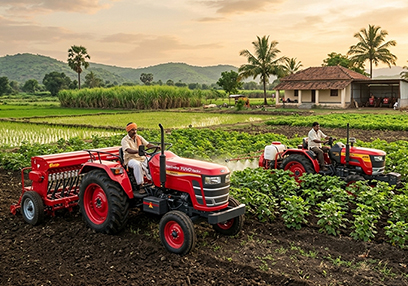
Table of Content
Choosing the right tractor for 10 acres depends less on acreage alone and more on your crops, soil type, implements, irrigation needs, and whether the tractor will also support transport or custom-hiring work. For many Indian farms of this size, a versatile Mahindra tractor in the 30–45 HP range can provide a practical balance of power, maneuverability, fuel efficiency, and long-term value.
The best choice is the one that matches the work you do most often—not simply the tractor with the highest horsepower. This guide explains how to select from Mahindra tractor models with confidence.
How to Choose the Right Tractor for 10 Acres
For a 10-acre holding, the right tractor should complete seasonal work on time while remaining economical to own and operate. A tractor that is too small may struggle with heavier implements or take longer to prepare the field. A tractor that is too large can add unnecessary purchase, fuel, and maintenance costs.
Start by listing the operations you perform during a typical crop cycle. Common requirements may include land preparation, sowing, intercultivation, spraying, haulage, puddling, and post-harvest work. The soil and cropping pattern matter just as much as acreage.
For example, a farmer growing vegetables, orchards, cotton, sugarcane, or inter-row crops may need a compact tractor with good turning ability. A farmer working heavier black soil, preparing land for wheat or paddy, or using a rotavator and cultivator regularly may benefit from additional horsepower and traction.
Use these factors to narrow your selection:
- Crop type: Row crops, orchards, vegetables, cereals, and commercial crops need different tractor widths and implement combinations.
- Soil condition: Sandy or light soil usually requires less power than hard, dry, or heavy soil.
- Primary implements: Match the tractor to the implements you will use most, such as a cultivator, rotavator, plough, harrow, seed drill, ridger, or trailer.
- Field layout: Smaller plots, narrow lanes, and orchard rows favor a compact, maneuverable design.
- Haulage requirements: If you transport produce, inputs, or materials frequently, consider torque, braking, and suitability for trailer work.
- Future needs: If you expect to expand cultivated land or take up rental work, choosing slightly more capability may make sense.
A reliable tractor for 10 acres should be easy to operate, supported by a nearby dealer, and compatible with the implements that improve labor efficiency on your farm.
What HP Tractor Is Suitable for 10 Acres?
For most mixed farming operations, 30–45 HP tractors are a strong starting point for 10 acres. This range is often suitable for regular tillage, cultivation, spraying, sowing support, and moderate haulage while remaining manageable in smaller fields.
However, there is no universal horsepower answer. The right HP depends on the load placed on the tractor, especially when operating PTO-driven implements or working in difficult soil.
| Farm requirement | Suitable tractor range to consider | Why it may fit |
|---|---|---|
| Orchards, vegetables, narrow rows, light field work | 20–30 HP | Compact size, easier turning, and lower operating requirements |
| Mixed crops, cultivation, routine haulage, moderate tillage | 30–45 HP | A versatile range for many 10-acre farms and common implements |
| Heavy soil, frequent rotavator use, larger trailer loads | 45–50 HP or above | More power and traction for demanding tasks and future expansion |
A 20–30 HP tractor may be adequate when the farm has light soil, limited tillage needs, and narrow working spaces. These hp tractors can be especially useful for horticulture, vineyards, orchards, and vegetable operations where maneuverability matters.
A 30–45 HP tractor is often the practical middle ground. It can support a wider selection of implements and handle recurring field work more efficiently than a smaller machine. This range may suit farmers who grow cereals, pulses, oilseeds, cotton, or mixed crops and need one tractor for several applications.
Consider a 45 HP-plus tractor if your land has heavy soil, you use demanding implements frequently, carry heavier loads, or plan to work beyond your own 10 acres. More horsepower can improve work rate, but it should be justified by the implement size, field conditions, and annual usage.
Remember that engine HP is only one part of performance. PTO capability, hydraulic lifting capacity, transmission options, tyre choice, weight distribution, and traction also influence how effectively a tractor handles farm work.
Mahindra Tractor Models to Consider for a 10-Acre Farm
Mahindra offers tractor models across compact, utility, and higher-power categories, allowing farmers to select a machine based on application rather than acreage alone. The best tractor for farming on 10 acres will usually come from a series that matches your crop pattern and implement requirements.
For compact farming, horticulture, and specialized applications, Mahindra's JIVO and OJA ranges are worth exploring. These tractors are designed for applications where compact dimensions, agility, and efficient operation are important. They can be relevant for orchards, vineyards, vegetable plots, and farms with restricted access or close row spacing.
For general-purpose farming, Mahindra's YUVRAJ, XP PLUS, and YUVO TECH+ ranges may offer suitable options depending on the power requirement. These series can be considered by farmers seeking a balance between field performance, implement compatibility, and daily utility. A tractor in the right configuration can support cultivation, sowing preparation, spraying, and transport work across a 10-acre farm.
Where heavier draft work or more demanding implements are part of the plan, farmers can evaluate suitable options from the SP PLUS, ARJUN, or NOVO ranges. These tractor models may be more appropriate where field conditions call for added power, strength, and capability. They can also make sense for farmers who intend to use the tractor for neighboring fields, commercial operations, or future land expansion.
Before deciding on a model, ask your Mahindra dealer to demonstrate the tractor with the implements you plan to use. Confirm the following:
- PTO suitability for a rotavator, sprayer or other powered implement
- Hydraulic capacity for mounted implements
- Tyre options for your soil and crop conditions
- Transmission and speed choices for field and transport work
- Service availability, maintenance guidance, and genuine parts support
- Financing, warranty, and current model availability in your location
Mahindra's dealership and service network can be an important part of ownership, particularly during busy sowing and harvesting periods when timely support matters.
Features That Matter More Than Just Horsepower
The best tractor for farming is not necessarily the highest-HP tractor. It is the tractor that delivers dependable performance with the implements and conditions on your farm.
Prioritize features that improve real working efficiency. Adequate hydraulic lifting capacity helps when operating mounted implements. A suitable PTO setup supports equipment such as rotavators and sprayers. Good steering, a practical turning radius, and comfortable controls reduce operator fatigue during long workdays.
For heavy soil or difficult terrain, consider traction and tyre selection carefully. Two-wheel drive may suit many routine operations, while four-wheel-drive configurations can be useful where extra grip is needed in wet, loose, sloping, or demanding field conditions. The decision should reflect your actual land conditions and budget.
Also consider serviceability. Easy access to routine maintenance points, dependable parts availability, and trained support can reduce downtime over the life of the tractor. Mahindra Tractors' farmer-focused approach, broad product portfolio, and established support network can help farmers choose equipment built for regular agricultural use.
Key takeaways
- A 30–45 HP tractor is often a practical choice for a 10-acre mixed farm.
- Choose horsepower according to soil, crops, implements and haulage needs—not acreage alone.
- Compact Mahindra tractors may suit horticulture and narrow-row work, while higher-power models fit heavier operations.
- Check PTO, hydraulics, tyres, traction and service support before finalizing a tractor.
Frequently asked questions
1. Is a 30 HP tractor enough for 10 acres?
A 30 HP tractor can be sufficient for 10 acres when soil is light to moderate and the farm uses standard implements. Farmers with heavy soil, frequent rotavator work, or larger trailer requirements may need more power.
2. Which tractor is best for 10 acres of farming?
The best tractor depends on your farming application. A compact Mahindra JIVO or OJA model may suit horticulture, while an appropriately configured XP PLUS or YUVO TECH+ tractor may suit broader mixed-farming needs.
3. Should I buy a 2WD or 4WD tractor for 10 acres?
A 2WD tractor is suitable for many farms with level land and routine operations. Consider 4WD if your fields are wet, uneven, sloping, sandy, or require additional traction for demanding work.
4. What implements should I plan for with a 10-acre tractor?
Common implements include cultivators, rotavators, ploughs, harrows, seed drills, ridgers, sprayers, and trailers. Select implements only after confirming their compatibility with the tractor's HP, PTO, and hydraulic capacity.
5. Can a tractor for 10 acres also be used for transport?
Yes, many farm tractors are used for both field work and haulage. Choose a model and trailer combination appropriate for your typical loads, local operating conditions, and safety requirements.
Recent Articles
Tag Cloud
Connect With Us

Oct 30, 2026
You May Also Like
- Read More
 Which is the Best Tractor for Farming in India?
Farming tractors are the essential companions of farmers; these robust machines help them work...
- Read More
 Choosing the Right Tractor for Groundnut Farming
Groundnut, or peanut, is grown in five states of India, namely Andhra Pradesh, Gujarat, Tamil Nadu, Karnataka, Rajasthan and Maharashtra.
- Read More
 Mahindra’s Tractor’s Potato Farming Guide
Paddy farming is one of India’s most prevalent farming methods that use small, flooded fields to cultivate rice.
- Read More
 Why Buy a Mahindra 275 DI XP Plus Tractor: Mileage, Features & Specs
The Indian Tractor market is unique—farmers are looking for an all-rounder tractor that satisfies all their needs while being affordable and powerful. One such tractor that meets the demands of Indian farmers is the Mahindra 275


 Not happy
 Could be better
 It's okay
 Good
 Excellent