


How to Choose the Right Mahindra Tractor for Different Soil Types
Dec 1, 2025 | 15 Mins Read


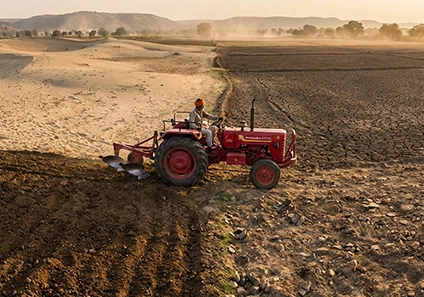
Selecting the right farming tractors is a crucial decision for any farmer. The correct tractor not only aligns with your farming types (e.g., row-cropping, orchard work, heavy tillage) but more importantly, it must match your soil conditions for efficient operation. In this post we’ll explore how to choose the right Mahindra tractor for different types of soils, discuss key features to look for, and tie in considerations like tractor price and farm size.
Understanding Soil Types & Tractor Requirements
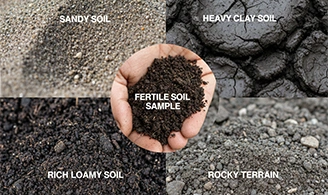
Before we assess tractor models, it’s essential to understand the primary soil types and what they mean for tractor selection.
- Sandy soil: Light, loose, drains quickly, and doesn’t retain moisture well. Tractors working on sandy soil need to be lighter in weight, avoid excessive ground‐pressure (to reduce sinking or compaction), and still offer good traction.
- Clay soil: Heavy, retains moisture, offers greater resistance when ploughing. It requires a tractor with higher torque, more power, sturdy build and good 4WD if needed.
- Loamy soil: A balanced mix of sand, silt and clay. This is often ideal for farming—tractors need to be adaptable, efficient, and versatile across tasks.
- Rocky / rough / uneven soil: Requires tractors with strong suspension, high ground clearance, rugged build, and high torque to navigate the irregular terrain.
- Wet, marshy or water-logged soil: High risk of tractors getting stuck, so 4WD, good traction, high ground clearance and possibly flotation tyres become important.
- Sloped or hilly terrain: Stability and traction become vital—4WD, high torque, low centre of gravity, and good braking/handling are key.
By mapping your soil type and terrain to tractor requirements, you ensure your investment is effective.
Mapping Soil Types to Mahindra Tractor Options
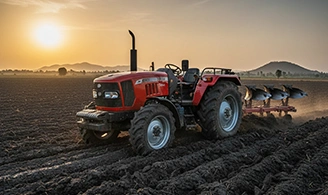
The source article provides some excellent mapping of Mahindra tractors suited to each soil/field condition. Let’s break that down and give you a practical approach.
1. Sandy Soil
For sandy soils, the guidance is: lightweight tractor, good fuel efficiency, avoid sinking/compaction.
- E.g., Mahindra YUVRAJ 215 NXT NT (20 HP) – designed for gentle operation in sandy soils.
- Mahindra JIVO 225 DI 4WD NT (20 HP with 4WD) – offers four‐wheel drive for improved balance/grip in sandy surfaces.
Recommendation for you: If your land is very sandy (for example coastal belt, desert fringe, light drift sand) and relatively small acreage, go for compact models in the lower HP bracket (20–30 HP) with good 2WD or 4WD depending on traction needs.
2. Clay Soil
Hefty soil demands higher power, good torque, 4WD often.
- Mahindra NOVO 605 DI PS 4WD V1 (50 HP, 214 Nm torque) – targeted for deep ploughing and heavy clay soil work.
- Mahindra ARJUN 605 DI MS V1 (50 HP, 214 Nm torque, advanced hydraulics) – again for demanding clay situations.
Recommendation: If your fields are heavy clay (e.g., red soil uplands, water-retaining black cotton soils), and you do deep tillage, large implements, then aim for 45–60 HP or more, 4WD, strong hydraulics.
3. Loamy Soil
Loamy soils are the “middle ground”—which means tractors need to be versatile for ploughing, sowing, transport etc.
- Mahindra XP PLUS 265 DI (35 HP, 137.8 Nm torque) – good for multiple operations in loamy fields.
- Mahindra YUVO TECH+ 265 DI (35 HP, 189 Nm torque) – efficient and backup torque oriented.
Recommendation: If your land is loamy (typical in many parts of India: combination soils, balanced fertility) and you do mixed crop, transport, moderate ploughing, then a mid‐HP tractor (30–40 HP) is optimal.
4. Rocky / Rough Soil
In rocky or uneven terrain, you want robust tractor design, excellent suspension, strong transmission, 4WD often.
- Mahindra SP PLUS 265 DI (35 HP, 131.7 Nm torque) – fuel efficient and built for hilly/rough terrain.
- Mahindra OJA 2121 (35 HP, 4WD, synchro shuttle transmission) – designed for rough terrains.
Recommendation: For stony uplands, uneven slopes, paddy bunds, go for mid‐HP 4WD tractors (35–45 HP) with good ground clearance and durable build.
5. Wet / Marshy Soil
Water-logged areas need 4WD, high ground clearance, traction control.
- Mahindra JIVO 225 DI 4WD NT – small 4WD with 750 kg lift, ideal for swampy surfaces.
- Mahindra OJA 2121 (4WD) – good performance in marshy ground.
Recommendation: For paddy lands, or fields which flood during monsoon, pick a tractor with 4WD, higher clearance, tires suited for wet soils. Compact models maybe necessary if land is small.
6. Hilly Terrain / Sloped Fields
For slopes, hills, you need torque, 4WD, stability features.
- Mahindra NOVO 605 DI PS 4WD V1 – strong enough for slope performance.
- Mahindra OJA 2121 – as above, good for hilly area agriculture.
Recommendation: For terraced farms, slopes, forest‐fringes, choose 4WD, same or higher HP as you’d use on flat, but ensure braking & stability are strong.
Key Features to Consider When Choosing a Tractor
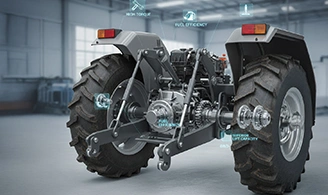
According to the article, there are several features you must check beyond just the soil type. Here’s a breakdown:
- Engine Power (HP): Determines how much workload it can handle (ploughing, hauling implements).
- Torque & Transmission: Higher torque helps in heavy soils or tough terrain; good transmission (gears, shuttle, synchromesh) aids versatility.
- 2WD vs 4WD: For normal flat, well‐drained soils, 2WD may be fine; for wet, hilly, rocky, rough soils 4WD is often essential.
- Fuel Efficiency: Operational cost matters—especially if you use the tractor for long hours or across implements.
- Ground Clearance & Suspension: Especially for rough, marshy or sloped terrain.
- Lift Capacity, Hydraulics & Implements Compatibility: For heavy soils, deep ploughing, larger implements you’ll need stronger hydraulics and lift.
- Budget / Tractor Price: Matching your budget with requirements is vital – you don’t want to over-invest into ultra‐powerful tractor if your soil and farm size don’t need it.
- Farm Size & Crop Requirements: Bigger farm and heavy implements => more HP; smaller farm or orchard => smaller HP, lighter machine. The article underscores assessing farm size and crop requirements.
Tractor Price & Budgeting Considerations
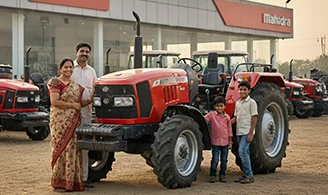
When you’re choosing the right tractor one of the big factors is tractor price. Let’s look at general Mahindra pricing ranges in India (2025) to give you context.
- Mahindra tractors are available in 15 to 74 HP bracket.
- The price range in India: approx ₹3.10 lakh to ~₹14.8 lakh (ex-showroom) depending on model, HP, drive type (2WD / 4WD) etc.
- For example, tractors under 36-50 HP tend to be in the ₹6.50 lakh to ₹9.00 lakh range.
What this means for you:
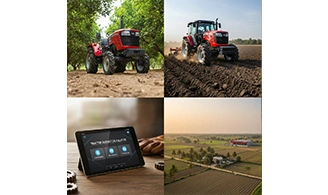
- If your soil is light and your farm is small (e.g., sandy farm, orchard) you might opt for a smaller HP model in the lower end of price.
- If you have heavy soils (clay), large fields, big implements, you’ll need to invest more—into higher HP, often 4WD, better suspension, higher upfront cost.
- Budgeting also needs to factor in operational costs (fuel, maintenance), the fact that a higher HP tractor may be under‐used (so not always cost‐efficient) if your farm doesn’t demand it.
- Ensure you consult local Mahindra dealer for on-road price (including taxes, transport) in your region (Pune/Maharashtra) because local charges vary.
Practical Steps: How You Should Choose
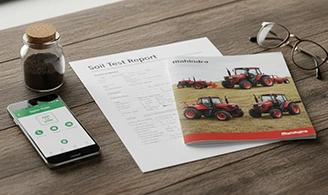
Here’s a step‐by‐step guide tailored for you (given you are based in India, in Pune area, likely varied soil types, budget‐conscious).
1. Assess Your Soil Type
- Take soil samples or consult local agricultural extension to confirm if your soil is sandy, loamy, clay, or mixed.
- Also note if there are slopes, marshy patches, heavy stones/rocks, waterlogging.
- Are you working one large field or multiple small ones? Are implements large or modest?
2. Define Your Farming Type & Requirements
- What crops do you grow? Row crops, orchards, mixed cropping, vegetable, horticulture, heavy tillage?
- What implements do you use/planning to use (plough, harrow, planter, trailer, loader)?
- If you have heavy soil and deep ploughing, you need higher HP; if orchard or small farm you may need lighter machine.
3. Match Feature Requirements
- For heavy soils => high torque, 4WD, good hydraulics.
- For sandy/loamy => moderate HP, efficient machine, maybe 2WD if terrain flat.
- For marshy/4WD needed.
- Also factor farm size: high HP but small farm may not be cost‐efficient.
4. Check Mahindra Model Options & Price
- Using the soil‐type mapping above, pick 2-3 models that fit your requirement from Mahindra’s range.
- In Pune/Maharashtra, check local on-road price: lower HP models may start ~₹4-5 lakh, mid models ~₹6-8 lakh, higher HP & 4WD could be ₹10 lakh+ or more. (Indicative ranges)
- Compare total cost of ownership: fuel, maintenance, service availability (Mahindra has many service centres across India) and resale value.
5. Decide Budget vs Need
- If your requirement is modest (loamy soil, moderate farm size), opt for a mid‐HP Mahindra tractor that gives efficiency rather than over‐spec.
- If your fields have very tough conditions (clay, slopes, large farm), spend more to avoid under‐performance or damage later.
6. Final Checks Before Purchase
- Check if 4WD is necessary for your terrain—if you choose 4WD for flat well‐drained land, you may pay extra for features you don’t really need.
- Ensure the tractor has good hydraulics, compatible with your implements.
- Confirm spare parts & service network in your region (Pune/Maharashtra).
- Go for test‐ride or demo if possible—especially if terrain is tricky.
- Read warranty and after‐sales terms (Mahindra offers good support) and negotiate price, accessories, financing if needed.
Why This Approach Matters
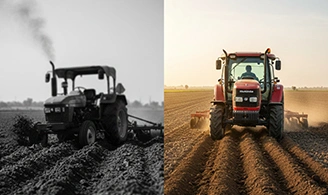
Using this structured approach—soil type → farming type → tractor feature → budget—you’ll ensure that your tractor purchase is aligned with farming tractors needs in your context. Choosing the wrong tractor (too weak for clay soil, or too big/expensive for sandy small farm) can lead to wasted money, higher maintenance, or under-utilisation. On the other hand, a well‐matched machine boosts productivity, lowers cost per hectare, and gives you longevity.
In the source article, the author emphasises:
“Maximising efficiency depends on choosing the appropriate tractor for different kinds of soil.”
And specifically:
“Assess your soil type… Consider the size of your farm… Budget planning.”
Example Scenario: For a Farmer around Pune
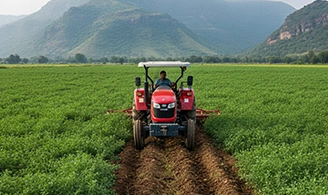
Let’s imagine you have a 10-acre farm near Pune with mostly loamy soil (although perhaps a patch that retains moisture). You grow maize and pulses with moderate tillage.
- Soil: loamy => mid-HP, efficiency.
- Farm size: moderate => don’t over‐invest in high HP 4WD.
- Terrain: relatively flat, some moisture pockets.
- Recommended Mahindra: Something like the XP PLUS 265 DI (35 HP) or YUVO TECH+ 265 DI (also ~35 HP) as per the article.
- Price: Based on numbers, a ~30-40 HP Mahindra tractor currently might cost ~₹5.5 lakh to ₹7 lakh ex-showroom (depending on drive type, region) based on Indian market data.
- You could factor in matching implements, service access in Maharashtra, lift capacity, whether 4WD is optional or 2WD suffices.
If instead your land was heavy clay (say parts of Maharashtra with red or black cotton soil), you might target a 45-50 HP tractor (4WD) for deep ploughing.
Summary & Key Takeaways
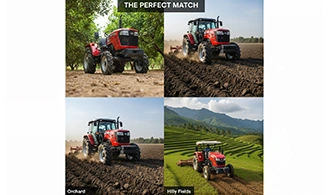
- Know your soil type (sandy / loamy / clay / rocky / marshy / sloped) as this dictates the requirements of the tractor.
- Match the tractor’s features (HP, torque, 2WD/4WD, hydraulics, ground‐clearance) to the soil + terrain + farming type.
- Consider your farm size and implements – don’t over spec beyond what you need; there’s a cost trade-off.
- Budgeting is crucial – tractor price varies significantly (for example Mahindra models from ~₹3.10 lakh to ~₹14.8 lakh in India).
- Choose a reliable brand – Mahindra has wide model range, strong service network in India; pick a model that offers the right balance of performance and cost.
- Before purchase, test the machine, if possible, ensure compatibility with your field conditions, incorporate after-sales support and financing if needed.
By following this guide, you’ll boost the chances of selecting a Mahindra tractor that is a right fit for your soil conditions, farming type, and budget—leading to better productivity, lower downtime, and higher ROI.
Recent Articles
Tag Cloud
Connect With Us

Nov 24, 2025
Dec 3, 2025

You May Also Like
- Read More
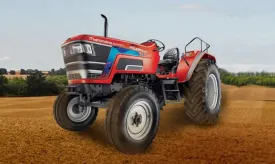 Which is the Best Tractor for Farming in India?
Farming tractors are the essential companions of farmers; these robust machines help them work...
- Read More
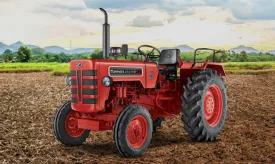 Choosing the Right Tractor for Groundnut Farming
Groundnut, or peanut, is grown in five states of India, namely Andhra Pradesh, Gujarat, Tamil Nadu, Karnataka, Rajasthan and Maharashtra.
- Read More
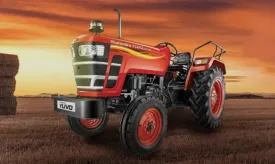 Mahindra’s Tractor’s Potato Farming Guide
Paddy farming is one of India’s most prevalent farming methods that use small, flooded fields to cultivate rice.
- Read More
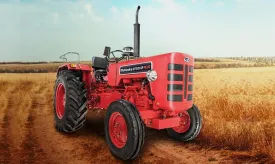 Why Buy a Mahindra 275 DI XP Plus Tractor: Mileage, Features & Specs
The Indian Tractor market is unique—farmers are looking for an all-rounder tractor that satisfies all their needs while being affordable and powerful. One such tractor that meets the demands of Indian farmers is the Mahindra 275


 Not happy
 Could be better
 It's okay
 Good
Good Excellent