


Mahindra 265 DI XP Plus vs 275 DI XP Plus: Find the Perfect XP Plus Tractor for You
Dec 3, 2025 | 12 Mins Read


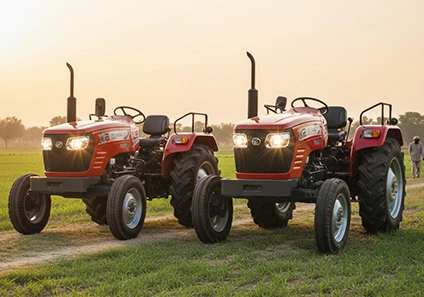
When it comes to farming tractors around the 30–40 HP range, two models from Mahindra’s XP Plus series stand out: the 265 DI XP Plus and the 275 DI XP Plus. Both are strong contenders in their class, but depending on your farm size, soil type, crop mix and budget, one may suit you better than the other. In this blog we’ll dive into a detailed comparison—highlighting key specs, real-world use, price, and how to decide which is the right fit for you.
Why compare the XP Plus models?
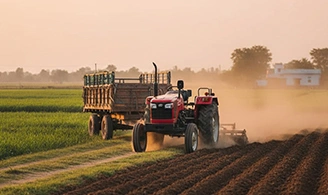
Mahindra’s XP Plus line is positioned for farmers who require a robust, general-purpose tractor that handles a wide variety of tasks—from ploughing, harrowing and sowing to transport and other utility jobs. Because many farms in India fall into a mid-range bracket (land size, mixed cropping, moderate tillage), the 30-40 HP HP category is highly relevant. Comparing the 265 DI XP Plus and 275 DI XP Plus gives you a chance to see how incremental upgrades (horsepower, engine size, features) translate into work-capacity and cost.
Key Specifications Comparison
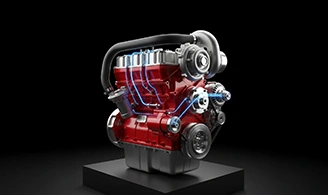
Here’s a look at how the two models stack up.
| Specification | 265 DI XP Plus | 275 DI XP Plus |
|---|---|---|
| Horsepower (HP) | 33 HP | 37 HP |
| Engine capacity (CC) | 2,048 cc | 2,235 cc |
| Engine rated RPM | 2,000 RPM | 2,100 RPM |
| Transmission | 8 Forward + 2 Reverse gears | 8 Forward + 2 Reverse gears |
| 3-point linkage lift | 1,500 kg | 1,500 kg |
| Drive type | 2WD | 2WD |
| Fuel tank capacity | 55 litres | 50 litres |
| Ex-showroom price (India) | Depends on the state and city* | Depends on the state and city* |
*Prices as listed on the comparison site, subject to change by region, taxes, dealer etc.
What these numbers mean in practice
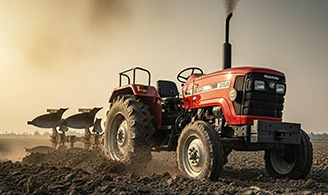
Let’s break down how these spec-differences translate into real-farm implications:
- Horsepower & engine size: The 275 DI XP plus gives you about +4 HP and a larger engine (2,235 cc vs 2,048 cc). That means for slightly heavier work (tougher soils, larger implements, longer hours) the 275 model has more reserve power.
- Rated RPM: The 275 runs slightly higher RPM (2,100 vs 2,000) meaning it might deliver higher speed or torque under matching loads—but also may consume more fuel (depending on duty cycle) although not always significantly.
- Fuel tank: Interestingly the 265 has a slightly larger fuel tank (55 litres vs 50 litres for the 275). This suggests the 265 might be tuned more for longer duration moderate loads, whereas the 275 is built for heavier duty but slightly less fuel margin.
- Lift & linkage: Both have the same rated 1,500 kg lift capacity, which means both can handle similar implement sizes (within that lift capacity) without one pulling ahead just on hydraulics.
- Drive type: Both are 2WD. If your terrain demands 4WD (water-logged fields, steep slopes, rough terrain) you might need to consider a different model or upgrade—but within this pair, that holds constant.
- Price difference: The 275 costs a bit more (₹ ~25,000-36,000 extra in ex-showroom price according to the site). That means you’re paying extra for the extra power/engine size. Whether that extra cost is worth it depends on your farming needs.
Which one should you pick?

Let’s walk through typical farm situations and how to decide which model fits.
Choose the 265 DI XP Plus if:
- Your farm size is moderate to small (for example up to ~8-10 acres) and you mostly do standard tillage, sowing, transport, mixed cropping.
- Your soils are relatively favourable (loamy, not extremely heavy clay or very steep slopes) and you don’t require ultra-heavy implements.
- You want to keep tractor price and running cost a little lower and are willing to accept a bit less reserve power.
- You need a tractor that is fuel-efficient for moderate duty and perhaps you’re budget constrained.
- You don’t have extremely demanding tasks every day (like deep ploughing multi-furrow in heavy soil) but more general utility work.
Choose the 275 DI XP Plus if:
- Your farm size is larger (say 10-15 acres or more) or you expect to scale up operations in coming years.
- Your soil conditions are tougher: heavier clay, frequent ploughing with large implements, multiple crop cycles, or maybe you also haul trailers, heavier tasks.
- You want extra reserve power so that under full load you don’t push the tractor to its limits, thereby improving longevity and operator comfort.
- Your budget allows an extra investment, and you believe that extra HP / engine size will pay off in productivity or faster job completion.
- You anticipate more hours of operation, heavier payloads, and you value that extra margin.
Cost-Benefit & Return on Investment
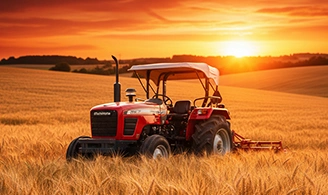
When you buy a tractor, you’re not just buying the machine—you're buying future productivity, uptime, maintenance cost, fuel cost, resale value. Thus, the extra cost for the 275 model should be validated by whether it yields incremental benefit.
- Suppose the 275 lets you operate a 3-furrow plough instead of a 2-furrow on the 265; or you finish tasks faster, reduce tillage passes. That time saving and fuel saving might justify the extra ₹25k-30k.
- If however, you only ever use moderate implements and field size is small, the 265 might give nearly the same utility but at lower cost and lower fuel/run cost.
- Also consider resale value: bigger HP often has better resale in many regions but only if used for that purpose. If you don’t utilise the extra capability, it might not translate to value.
- Running cost: higher HP, larger engine may consume more fuel under partial load; if you always run light loads, you might be wasting capability (and fuel).
- Margin for future: If you foresee scaling up crops or using heavier implements in 2-3 years, then the 275 might be a future‐proof investment.
Local Context: For Maharashtra / Pune area
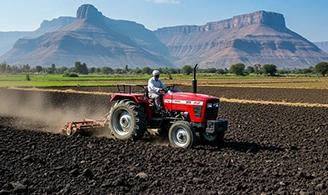
Given you are in Pune / Maharashtra, some extra context matters:
- Soil types in different parts (e.g., red soils, black cotton soils, laterite, loamy) vary. If your soil is heavy or your fields large and implements heavy, you might lean to the 275.
- Transport, service and parts availability for Mahindra are strong in Maharashtra, so both models should have support.
- On-road cost in Maharashtra will include state taxes, insurance, transport—so dealer quote is important. The ex-showroom figures above are indicative only.
- Consider subsidy schemes (state agricultural subsidies) that might apply. A slightly lower cost machine may help if subsidy band is relevant.
- Fuel cost: Diesel consumption is a major part of cost. If you run many hours, efficiency becomes important; if you run fewer hours, initial purchase cost might matter more.
Our Recommendation Flow
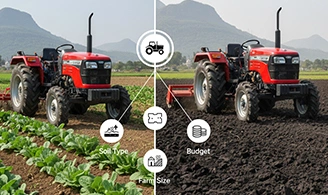
Here’s a quick decision tree for you:
1. What’s your farm size & cropping plan?
- < 10 acres, mixed cropping, moderate implements → Go 265 DI XP Plus.
- 10 acres (or plan to grow), heavy tillage implements, longer hours → Go 275 DI XP Plus.
2. What’s your soil & terrain like?
- Soil is moderate (loam), terrain flat → 265 sufficient.
- Soil heavy (clay, black cotton), terrain undulating/rough → 275 advisable.
3. What’s your budget allowance?
- Strict budget, want minimal cost interestingly, fuel usage low → 265.
- Budget allows extra and you view tractor as long-term investment → 275.
4. Are you scaling or staying steady?
- If you expect in 2-3 years to expand or run heavier implements → invest in 275.
- If stable operations, modest expansion → 265 may be wiser.
5. Compute cost vs benefit
- Extra cost divided by incremental productivity gains or savings (fewer passes, faster work). If payback in a few years looks good, go 275; else go for 265.
Final Thoughts
Both the 265 DI XP Plus and 275 DI XP Plus are strong tractors in the ~30–40 HP category with Mahindra’s reputation, good service network and feature set. The difference is not dramatic—but meaningful: extra HP and engine size in the 275 model give you more headroom, while the 265 model offers solid performance for a bit lower capital outlay.
If I were to pick one “most recommended” for typical mixed-cropping farmers in Maharashtra with moderate land (say ~8–12 acres), I might lean 265 DI XP Plus—because it gives very good value and capability without over-investing. But if I were farming say 15–20 acres or working tough soil / heavy implements, I’d pick the 275 DI XP Plus for the extra buffer and futureproofing.
Whichever you choose, make sure to:
- Get exact on-road price in your region.
- Match implement compatibility (does your plough/harrow size suit the HP/engine?).
- Check service/parts availability and diesel consumption.
- Consider resale value and total cost of ownership.
Recent Articles
Tag Cloud
Connect With Us

Dec 1, 2025
Dec 5, 2025

You May Also Like
- Read More
 Which is the Best Tractor for Farming in India?
Farming tractors are the essential companions of farmers; these robust machines help them work...
- Read More
 Choosing the Right Tractor for Groundnut Farming
Groundnut, or peanut, is grown in five states of India, namely Andhra Pradesh, Gujarat, Tamil Nadu, Karnataka, Rajasthan and Maharashtra.
- Read More
 Mahindra’s Tractor’s Potato Farming Guide
Paddy farming is one of India’s most prevalent farming methods that use small, flooded fields to cultivate rice.
- Read More
 Why Buy a Mahindra 275 DI XP Plus Tractor: Mileage, Features & Specs
The Indian Tractor market is unique—farmers are looking for an all-rounder tractor that satisfies all their needs while being affordable and powerful. One such tractor that meets the demands of Indian farmers is the Mahindra 275


 Not happy
 Could be better
 It's okay
 Good
Good Excellent