


Tractor Registration Certificate: New Rules & Documents Guide
Nov 21, 2025 | 5 mins read


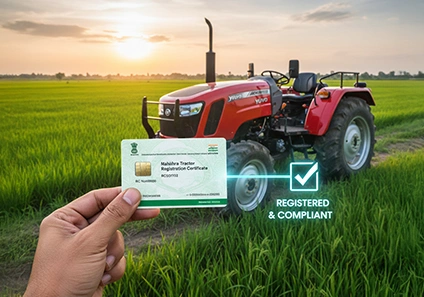
If you own a tractor or plan to buy one for your farm, it’s important to understand the tractor registration process, the new rules for 2025, and the documents required to secure a valid Registration Certificate (RC). Below is a detailed blog that will walk you through everything you need to know.
Why Tractor Registration Matters
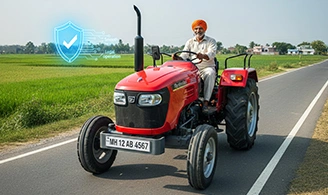
Under the Motor Vehicles Act, 1988 and associated rules, all tractors that are used on public roads—as opposed to only within fields—must be registered. Having a valid RC ensures:
- • Legal authorisation to drive the tractor on roads or move it between fields via public roads.
- • Proof of ownership and easier resale.
- • Validity of insurance and other statutory compliance.
Missing or outdated registration can lead to fines, problems during resale, and difficulty in claiming insurance.
What’s New in 2025: Key Rule Changes

- • The Central Motor Vehicles Rules, 1989 (CMVR) has been amended with GSR 269 (E) dated 28 April 2025, which introduces testing, type-approval and registration norms for agricultural tractors under newer standards.
- • Other notifications by the Ministry of Road Transport & Highways (MoRTH) list draft amendments related to tractors and trailers interchangeability (G.S.R. 485(E) dated 18 July 2025).
Implication for farmers: The registration process will become more standardised; tractors will increasingly need to satisfy approved technical specs, and documentation might become more stringent.
Documents Required for Tractor Registration
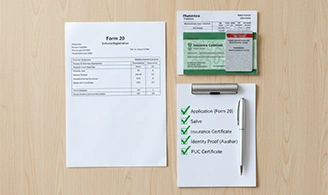
Here is a typical documentation list (may vary slightly by state):
- 1. Application (Form 20) for registration of a new tractor.
- 2. Sale Invoice from the dealer/manufacturer.
- 3. Certificate of Roadworthiness / Type Approval or Manufacturer’s certificate if required.
- 4. Insurance Certificate of the tractor.
- 5. Identity Proof & Address Proof of the applicant (e.g., Aadhaar, voter ID).
- 6. Pollution Under Control (PUC) Certificate if applicable for a tractor to move on public roads.
- 7. Chassis/Engine number verification and manufacturer’s declaration.
- 8. Registration fees and road tax payment receipt. (Fees vary by state. Refer to state transport department schedule.)
Step-By-Step Procedure
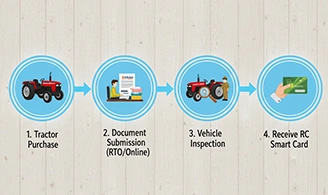
- 1. Buy your tractor from a registered dealer.
- 2. Gather required documents listed above.
- 3. Fill out Form 20 and other relevant forms at your Regional Transport Office (RTO) or via the state’s “VAHAN” online portal.
- 4. Submit documents and pay the registration fee and road tax.
- 5. The tractor will be inspected if required (especially if meant to be used on roads).
- 6. After verification, the RTO issues the Registration Certificate (RC) and assigns the registration number/plate. The certificate may be issued in smart-card format.
- 7. Display the registration plate as per rules and carry the RC when moving the tractor on public roads.
Things to Watch & Tips for Farmers

- • Pure field use vs road use: If your tractor is used only within private farmland (no public road movement), states may have relaxations—check your local transport department.
- • Check state-wise rules: Transport rules (taxes/fees/inspection) vary by state—ensure you know your state’s requirements.
- • Regular updates: Because CMVR and MoRTH are rolling out amendments in 2025, keep track of any notifications specific to tractors.
- • Proof of ownership: Keep your invoice and RC safe—this helps when reselling or if RTO queries come up.
- • Insurance & fitness: Even for agricultural tractors, if they move on roads, registration and insurance compliance is advisable.
- • Technical compliance: With newer rules around type approval and safety standards (as mentioned in legal issues for tractor manufacturing)—ensure your tractor model is compliant.
Explore more farming insights in our blogs section: Mahindra Tractors
Conclusion
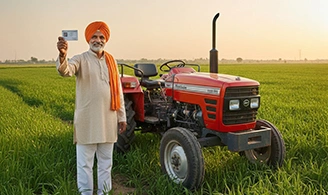
Registering your tractor and obtaining a valid Registration Certificate is not just a legal formality—it protects your investment, avoids hassle later, and ensures you can move between fields or across roads without trouble. With the new rule changes in 2025, it is more important than ever to understand what your state demands and follow the process correctly.
Recent Articles
Tag Cloud
Connect With Us


Nov 19, 2025
Nov 24, 2025

You May Also Like
- Read More
 Which is the Best Tractor for Farming in India?
Farming tractors are the essential companions of farmers; these robust machines help them work...
- Read More
 Choosing the Right Tractor for Groundnut Farming
Groundnut, or peanut, is grown in five states of India, namely Andhra Pradesh, Gujarat, Tamil Nadu, Karnataka, Rajasthan and Maharashtra.
- Read More
 Mahindra’s Tractor’s Potato Farming Guide
Paddy farming is one of India’s most prevalent farming methods that use small, flooded fields to cultivate rice.
- Read More
 Why Buy a Mahindra 275 DI XP Plus Tractor: Mileage, Features & Specs
The Indian Tractor market is unique—farmers are looking for an all-rounder tractor that satisfies all their needs while being affordable and powerful. One such tractor that meets the demands of Indian farmers is the Mahindra 275


 Not happy
 Could be better
 It's okay
 Good
Good Excellent