


GST Reforms in Agriculture: What Farmers Need to Know
Nov 19, 2025 | 4 mins read


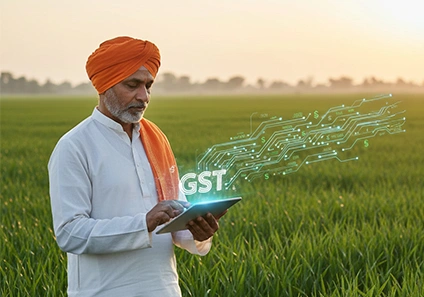
Agriculture in India operates within a complex web of production, marketing, logistics, and input procurement. When the Goods and Services Tax (GST) was introduced in 2017, it brought major structural changes—not just for industry, but also for the agricultural sector. In this blog, we’ll explore how GST reforms affect farmers, what benefits and challenges they face, and how they can adapt to this evolving tax landscape.
Understanding GST & Agriculture
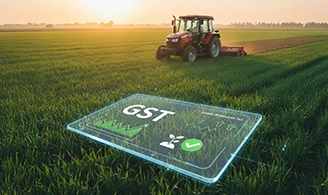
GST replaced a patchwork of state‐ and central‐level indirect taxes, thereby unifying taxation on goods and services across India. For agriculture, the key point is primary agricultural produce (raw crops, fresh fruits/vegetables, milk) remain outside the GST net—they are exempt. However, many inputs used by farmers (fertilisers, pesticides, machinery) and processing/packaging activities are taxed under GST.
Benefits of GST Reforms in Agriculture
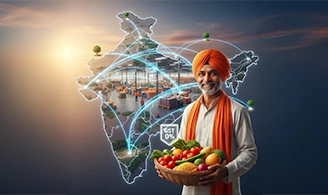
- 1. Integrated National Market – By subsuming state‐level taxes and reducing interstate checkpoints, GST supports smoother movement of agricultural produce across state lines.
- 2. Simplified Taxation for Raw Produce – Raw farming produce (unprocessed) are tax‐exempt, meaning farmers can sell them without GST being levied, which protects their margins.
- 3. Reduced Cascading Taxes – The removal of multiple layers of tax (tax on tax) benefits many segments of supply chain, potentially lowering overall costs.
- 4. Increased Transparency & Formality – With GST registration, e‐way bills and documentation, agricultural input supply chains are getting more formal, which can benefit farmers who engage in value‐addition or marketing.
Key Impacts – Costs, Inputs & Machinery
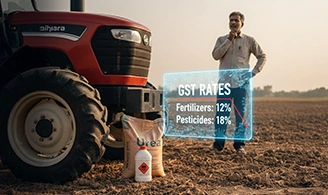
While there are benefits, GST reforms also come with specific implications for farmers:
- Inputs like fertilisers, pesticides, farm machinery often attract GST (for example, 12 % on tractors, 18 % on certain pesticides) which raises cost of production.
- Processed agricultural goods (packaged food, branded items) are subject to GST (5 %, 12 %, 18 % depending on processing). That means margins for those doing value–addition must account for this burden.
- Small and marginal farmers, often operating in informal markets, may find GST compliance (for inputs, machinery) and registration burdensome unless well supported.
Also Read: Types of Agriculture Farming in India: Methods & Importance
What Farmers Should Know & Do
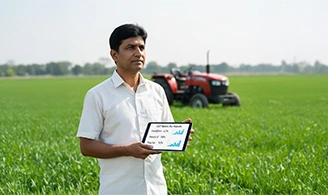
- Check GST rates on inputs: Before purchasing fertilisers, chemicals, machinery—know the applicable GST rate so you can factor it into cost analysis.
- For value-addition & processing: If you plan to package, process or brand your produce, you’ll need to understand where GST becomes applicable and how it impacts cost structure and pricing.
- Logistics & interstate trade: If you market your produce beyond your state, GST‐related documentation (e.g., e‐way bills) and compliance may kick in for transport/warehousing—so plan accordingly.
- Machinery & equipment purchase: If you’re buying tractors, harvesters, drip irrigation equipment—GST rates might be higher than older taxes, so check vendor invoices, eligibility of input tax credits (where applicable).
- Stay informed on reforms: Since GST rates and slabs evolve (including for agri‐inputs), stay updated through agriculture extension, state nodal agencies or tax advisors.
Final Thoughts

The GST reforms represent a major shift for agriculture—from fragmented state-tax regimes towards a more unified tax ecosystem. For most farmers dealing in raw produce, the tax‐exemption is a relief. But for those engaged in value-addition, using mechanisation, buying inputs, or trans‐state trading, it is critical to understand how GST applies. With clarity, planning and support, farmers can leverage GST reforms rather than get caught unaware.
Recent Articles
Tag Cloud
Connect With Us

Nov 17, 2025
Nov 21, 2025

You May Also Like
- Read More
 Which is the Best Tractor for Farming in India?
Farming tractors are the essential companions of farmers; these robust machines help them work...
- Read More
 Choosing the Right Tractor for Groundnut Farming
Groundnut, or peanut, is grown in five states of India, namely Andhra Pradesh, Gujarat, Tamil Nadu, Karnataka, Rajasthan and Maharashtra.
- Read More
 Mahindra’s Tractor’s Potato Farming Guide
Paddy farming is one of India’s most prevalent farming methods that use small, flooded fields to cultivate rice.
- Read More
 Why Buy a Mahindra 275 DI XP Plus Tractor: Mileage, Features & Specs
The Indian Tractor market is unique—farmers are looking for an all-rounder tractor that satisfies all their needs while being affordable and powerful. One such tractor that meets the demands of Indian farmers is the Mahindra 275


 Not happy
 Could be better
 It's okay
 Good
Good Excellent