


Why Coconut Farming is a Profitable Crop for Indian Farmers
Nov 3, 2025 | 8 Mins Read


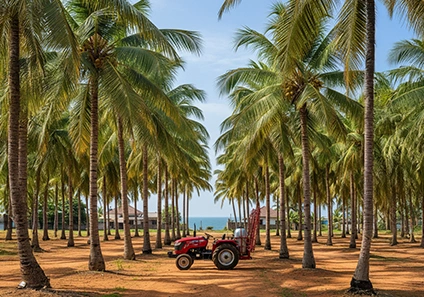
Coconut farming in India offers robust potential for small and large-scale farmers alike. As a versatile palm crop, coconut holds multiple uses—from tender coconut water and edible kernel to coir fibre, copra and even industrial by-products.
With the right agro-climatic location, good agronomic practices, and effective marketing, a well-managed coconut plantation can deliver steady returns over decades. In this blog, we explore why coconut farming makes sense for Indian growers, how cultivation works, and what to expect in terms of coconut plants per acre and profitability.
Why Coconut Farming Makes Sense

Here are the key reasons that make coconut cultivation a smart choice:
- Multiple revenue streams: Coconut palms provide tender coconut water, edible kernel, copra, oil, coir fibre, husk, shell and several industrial by-products. This is why coconut is often called the “tree of life.”
- Long orchard life: Tall varieties remain productive for 60–80 years, offering long-term income once established.
- Growing market demand: Rising demand for fresh coconuts, coconut water, virgin coconut oil, desiccated coconut and coir products supports favourable pricing.
- Relatively manageable agronomy: Coconut palms are hardy and, once established, require fewer intensive inputs than many perishable crops.
- Efficient use of land: Proper spacing allows a good number of palms per acre, making coconut viable even for smaller farms.
Key Agronomic Requirements for Coconut Cultivation
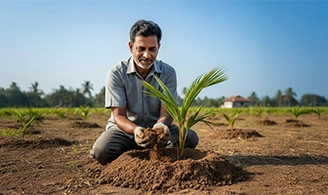
Climate
- Ideal temperature range: approximately 27°C to 32°C.
- Annual rainfall requirement: about 1,000–3,000 mm, preferably well distributed.
- Avoid water-logging, severe frost and prolonged drought.
- Full sunlight is essential for good yield.
Soil
- Best suited to sandy loam, lateritic or red sandy loam soils.
- Soil pH between 5.5 and 7.5 is ideal.
- Good drainage and aeration are critical.
- Avoid heavy clay soils and stagnant water zones.
Spacing & Number of Plants per Acre

Spacing varies depending on the variety planted (tall, dwarf or hybrid):
- At spacing of about 8 m × 8 m, around 60 coconut plants per acre can be accommodated.
- Dwarf or hybrid varieties may allow 70–100 plants per acre under good management.
On average, farmers can plan for 60 to 100 coconut palms per acre depending on spacing and variety.
Planting & Establishment
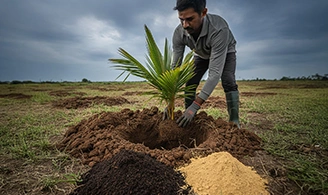
- Best planting time is usually at the onset of the monsoon.
- Recommended pit size: about 90 cm × 90 cm × 90 cm.
- Fill pits with topsoil, farmyard manure (FYM) and neem cake.
- Provide irrigation, weed control and pest protection for young palms.
Yield, Harvesting & Income Potential
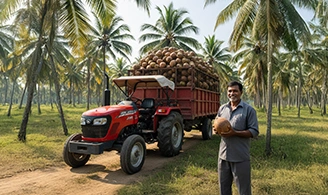
When will palms start bearing?
- Tall varieties: begin bearing in about 6–7 years.
- Dwarf and hybrid varieties: may start in 3–4 years.
Yield per tree
- Tall varieties: about 70–100 nuts per tree per year under good conditions.
- Hybrid varieties: yields can be much higher, sometimes up to 200–250 nuts per tree per year with ideal management.
Yield per acre
- With 60–70 palms yielding 80–100 nuts each, production may reach 4,800–7,000 nuts per acre annually.
- Hybrid plantations may yield even more, depending on care and inputs.
Harvesting
- Coconuts mature in about 11–12 months after spathe opening.
- Harvesting is often done every 45 days (around 8 times per year).
- Methods include climbing, pole harvesting and mechanical aids.
Income & Profitability
Costs and returns vary by region, variety and management. Once palms reach maturity, coconut farming can provide stable and attractive net income per acre, especially with good market access and value addition.
Why It’s Profitable for Indian Farmers
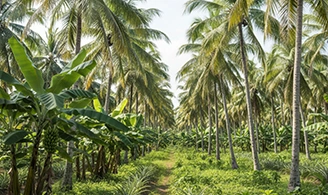
- Large areas of India have suitable climate and soil for coconut cultivation.
- Long productive life ensures returns over decades.
- Multiple end-products allow farmers to diversify income.
- Rising demand for health foods and eco-friendly products supports prices.
- Manageable plant density (60–100 palms per acre).
- Intercropping during early years improves land use and income.
Challenges & Key Considerations
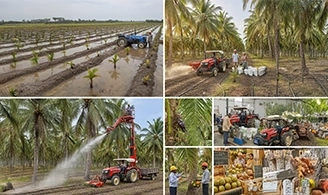
- Proper site selection is critical for success.
- Initial gestation period before full bearing.
- Higher input costs for high-yielding hybrids.
- Labour and safety challenges during harvesting.
- Pest and disease risks such as rhinoceros beetle and red palm weevil.
- Market price fluctuations for nuts and copra.
- Long-term maintenance and nutrient management.
Practical Tips for Indian Farmers

- Conduct soil testing and assess water availability before planting.
- Choose suitable varieties based on land and market demand.
- Maintain proper spacing for healthy growth.
- Adopt intercropping during early years.
- Use efficient irrigation systems such as drip irrigation.
- Apply balanced fertilisers and organic manures.
- Harvest regularly and handle produce carefully.
- Maintain records of yield, costs and prices.
- Explore direct marketing and export opportunities.
- Follow integrated pest and disease management practices.
Final Thoughts

Coconut farming is a profitable, long-term agricultural investment for Indian farmers with suitable land and water resources. Although it requires patience during the initial years, the combination of steady yield, multiple revenue streams and strong market demand makes coconut cultivation a reliable income source.
With proper site selection, the right variety and good management, a plantation of 60–100 coconut plants per acre can begin yielding in 4–7 years and continue generating income for decades.
Recent Articles
Tag Cloud
Connect With Us

Nov 1, 2025

Nov 5, 2025

You May Also Like
- Read More
 Which is the Best Tractor for Farming in India?
Farming tractors are the essential companions of farmers; these robust machines help them work...
- Read More
 Choosing the Right Tractor for Groundnut Farming
Groundnut, or peanut, is grown in five states of India, namely Andhra Pradesh, Gujarat, Tamil Nadu, Karnataka, Rajasthan and Maharashtra.
- Read More
 Mahindra’s Tractor’s Potato Farming Guide
Paddy farming is one of India’s most prevalent farming methods that use small, flooded fields to cultivate rice.
- Read More
 Why Buy a Mahindra 275 DI XP Plus Tractor: Mileage, Features & Specs
The Indian Tractor market is unique—farmers are looking for an all-rounder tractor that satisfies all their needs while being affordable and powerful. One such tractor that meets the demands of Indian farmers is the Mahindra 275


 Not happy
 Could be better
 It's okay
 Good
Good Excellent