


Blog 3: Top 10 Agricultural Producing Countries in 2025 – Trends & Insights
Nov 5, 2025 | 8 Mins Read


Agriculture remains the backbone of many economies around the world. With rising populations, changing diets and global supply-chain shifts, understanding the leading players in agricultural production is more important than ever.
In this blog, we examine the top agricultural producing countries in 2025, explore what drives their success, and understand where India stands globally. We also answer the key question: which country is number one in the world in agricultural farming, and what this means for global food security.
Who’s No. 1 in the World in Agriculture?
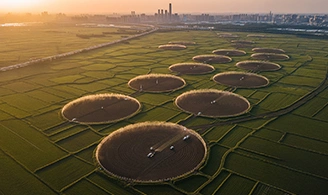
Based on comparisons of total agricultural output (value of crops and livestock), China clearly leads global agriculture. Recent estimates place China’s agricultural production value at around US$1.65 trillion, the highest in the world.
Why China leads:
- Large arable land base with diversified crop and livestock systems.
- Strong irrigation networks, technology adoption and rural infrastructure.
- Government policies that support food grains and high-value exports.
- High domestic demand driven by population size.
Because China dominates agricultural farming in terms of scale and output, many countries benchmark their agricultural performance against it.
Top 10 Agricultural Producing Countries in 2025: At a Glance
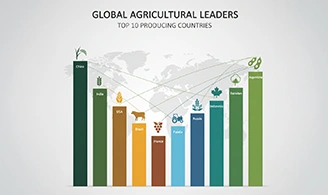
While rankings vary slightly across data sources, the following countries consistently appear among the world’s top agricultural producers:
| Rank | Country | Role / Highlights |
|---|---|---|
| 1 | China | World leader in agricultural output; feeds nearly 20% of the global population. |
| 2 | India | Diverse crop base; major contributor to global food production. |
| 3 | United States | Highly mechanised agriculture; leading exporter of crops and livestock. |
| 4 | Brazil | Large land area; major supplier of soybeans, sugarcane and beef. |
| 5 | Russia | Strong grain and livestock production; growing role in agri trade. |
| 6 | France | High-efficiency European agriculture; cereals, dairy and vineyards. |
| 7 | Mexico / Indonesia / Japan* | Appear in some datasets due to strong regional production. |
| 8 | Germany | Industrial agriculture with high productivity. |
| 9 | Turkey | Diverse agriculture: fruits, vegetables, cereals and livestock. |
| 10 | Others (varies) | May include Iran, Indonesia or other emerging producers. |
*The exact ranking for positions 7–10 varies by dataset. Some sources list China, India, USA, Brazil, Iran, Indonesia, Russia, Japan, France and Turkey as the top 10.
Deep Dive: Why These Countries Lead in Agricultural Farming
China
- Feeds around 20% of the world’s population with only about 7% of global arable land.
- Wide crop diversity: rice, wheat, maize, vegetables, fruits and livestock.
- Strong use of technology, irrigation and logistics.
India – Agriculture in India
- Large cultivated area with diverse crops such as rice, wheat, pulses, sugarcane, cotton, fruits and vegetables.
- Agriculture supports 50–60% of the rural workforce.
- Ranks among the top global agricultural producers.
- Faces challenges like productivity gaps and climate risks, but potential remains high.
United States
- Large-scale mechanised farming with high yields.
- Major exporter of corn, soybeans, wheat and animal products.
Brazil
- Vast land resources and favourable tropical climate.
- Global leader in soybeans, sugarcane, beef and coffee exports.
Others (Russia, France, Turkey, etc.)
- Russia excels in wheat and cereal exports.
- France represents highly efficient European farming systems.
- Turkey benefits from diverse agro-climatic zones.
Trends & Insights for 2025 and Beyond
- Rising demand for food, fibre and feed driven by population growth.
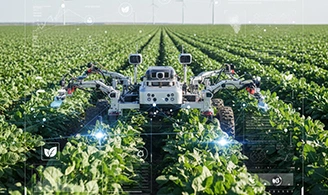
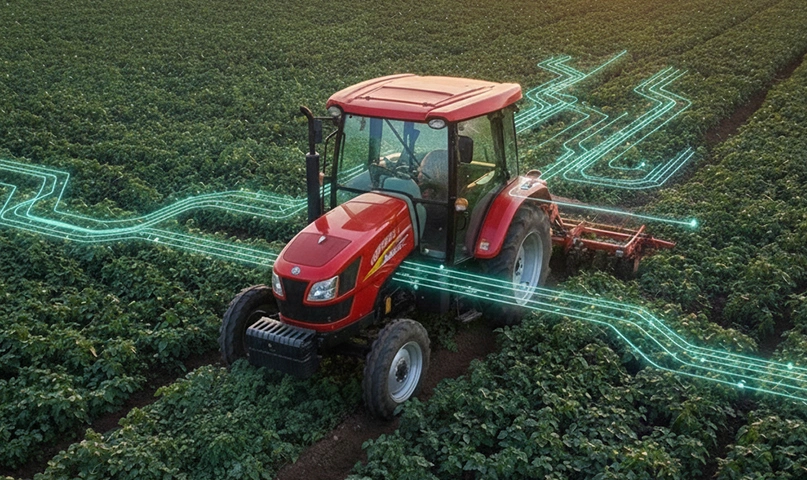
- Increasing adoption of precision agriculture, AI and automation.
- Focus on climate resilience and adaptive farming systems.
- Importance of value addition, storage and supply-chain efficiency.
- Growing emphasis on sustainability, soil health and water management.
For India, embracing mechanisation, improved seeds, cold-chain infrastructure and digital agriculture can help improve productivity and global ranking.
What the Rankings Mean for India & Farmers
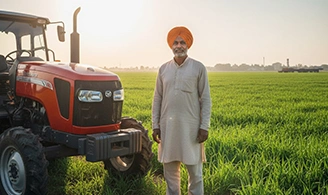
- India’s position among the top producers highlights its global importance.
- Opportunities exist for export growth and value-added agriculture.
- Policy support remains crucial for credit, insurance and infrastructure.
- Small farmers can benefit by diversifying crops and adopting new technologies.
Conclusion
- China is the number one country in the world for agricultural farming.
- The top 10 producers dominate global agriculture through scale, technology and markets.
- Agriculture in India remains a critical economic pillar with untapped potential.
- The future lies in smarter, more resilient and sustainable production.
Global agriculture is entering a phase where productivity, resilience and value addition matter more than acreage alone. For farmers, policymakers and agribusinesses, understanding why certain countries lead can guide better decisions and strategies.
Recent Articles
Tag Cloud
Connect With Us

Nov 3, 2025
Nov 8, 2025

You May Also Like
- Read More
 Which is the Best Tractor for Farming in India?
Farming tractors are the essential companions of farmers; these robust machines help them work...
- Read More
 Choosing the Right Tractor for Groundnut Farming
Groundnut, or peanut, is grown in five states of India, namely Andhra Pradesh, Gujarat, Tamil Nadu, Karnataka, Rajasthan and Maharashtra.
- Read More
 Mahindra’s Tractor’s Potato Farming Guide
Paddy farming is one of India’s most prevalent farming methods that use small, flooded fields to cultivate rice.
- Read More
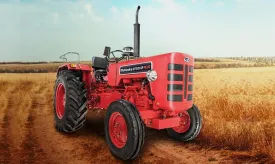 Why Buy a Mahindra 275 DI XP Plus Tractor: Mileage, Features & Specs
The Indian Tractor market is unique—farmers are looking for an all-rounder tractor that satisfies all their needs while being affordable and powerful. One such tractor that meets the demands of Indian farmers is the Mahindra 275


 Not happy
 Could be better
 It's okay
 Good
Good Excellent