


How GST Cut on Farm Machinery Helps Agriculture Farmers
Dec 8, 2025 | 9 Mins Read


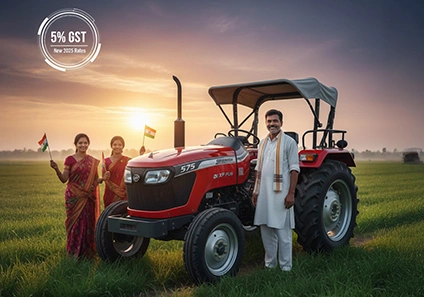
India’s agriculture sector has entered an important phase with the recent reduction in the Goods and Services Tax (GST) on farm equipment and agricultural machinery. This policy shift—covering tractors, implements, spare parts and multiple categories of tractor machinery—signals the government’s intention to make mechanization more affordable for farmers. Since machinery often represents the largest investment for a cultivator, lowering GST directly influences the cost of farming and enhances long-term productivity.
In this article, we take a detailed look at how the new 5% GST rate benefits farmers, how it changes the economics of farm operations, and why this move could accelerate agricultural growth in the years ahead.
What Has Changed in GST for Agricultural Machinery?
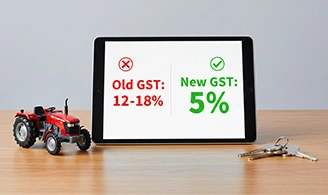
The government has introduced a uniform 5% GST rate on agricultural machinery and related equipment, replacing the earlier slabs of 12% and 18%. This change became effective on 22 September 2025, marking one of the most farmer-friendly taxation shifts in recent years.
Key highlights of the revised GST structure:
- Tractors (other than certain road tractors above 1800 cc), harvesting machines, orchard tools, straw-reapers and other major categories of farm equipment are now taxed at 5%, down from 12–18%.
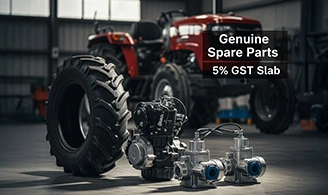
- Essential tractor parts—tyres, engines, axles, hydraulic pumps, transmission components and other accessories—have also been shifted to the 5% GST category, drastically lowering the cost of maintenance.
- Manufacturers and dealers have been officially instructed to pass the GST reduction directly to farmers, ensuring there is no price manipulation or absorption of benefits by middlemen.
Union Agriculture & Farmers’ Welfare Minister Shivraj Singh Chouhan stated that this step aims to make mechanisation accessible to every farmer by reducing the overall financial burden and helping agriculture shift toward higher productivity.
Why the GST Cut Matters for Farm Equipment and Tractor Machinery
Mechanisation plays a decisive role in modern agriculture. As farm sizes shrink and labour shortages become more common, machines are increasingly essential for completing agricultural tasks on time. The GST cut addresses exactly this need by making equipment more accessible.
Below are the major reasons this policy change is impactful:
1. Significant Reduction in Upfront Cost of Tractors and Equipment
Farm equipment—especially tractors, power-tillers and harvesters—is often one of the biggest investments a farmer makes. Even a slight decrease in price directly affects affordability.
According to official estimates:
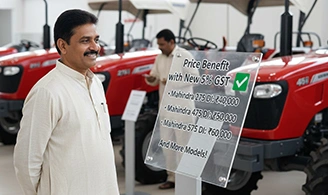
- A 35 HP tractor will now cost ₹41,000 less.
- A 45 HP tractor becomes cheaper by ₹45,000.
- A 50 HP tractor sees a reduction of ₹53,000.
- A 75 HP tractor is now cheaper by nearly ₹63,000.
- A 4-row paddy transplanter costs ₹15,400 less.
- A 4-tonne/hour multi-crop thresher becomes cheaper by ₹14,000.
These reductions are substantial enough to influence purchasing decisions, particularly for small and medium farmers who often postpone machinery purchases due to high upfront costs.
2. Lower Maintenance and Operating Expenses
Mechanisation is not just about buying a machine—it is also about keeping it in good working condition. Since spare parts also fall under the new 5% GST rate:
- Tractor tyres
- Tubes
- Axles
- Engine spares
- Hydraulic and transmission components
Now cost significantly less. This reduces the lifetime ownership cost of farm equipment and makes long-term operation more economical for farmers.
3. Increased Mechanisation Adoption
Lower prices mean more farmers can now enter the mechanised farming ecosystem. The benefits of this include:
- Timely sowing, ploughing, and harvesting.
- Faster operations during labour shortages.
- Ability to handle multiple crops efficiently.
- Better crop residue management using modern implements.
- Greater exposure to precision farming tools.
Small and marginal farmers, who previously depended on rented equipment, may now find machine ownership within reach.
4. Boost to Farm Machinery Manufacturing and Supply-Chain
A lower GST rate improves market conditions for domestic manufacturers. With demand expected to rise:
- Tractor producers are likely to increase capacity.
- Implement manufacturers will benefit from higher order volumes.
- Spare-parts suppliers and dealers may expand their network.
- Employment generation in the machinery sector may increase.
The GST cut thus strengthens the vision of “Atmanirbhar Bharat” by supporting domestic manufacturing and creating a more competitive market.
5. Broader Economic and Environmental Advantages
Cheaper farm equipment has multiple ripple effects:
- Wider use of tools like mulchers and straw-balers reduces stubble burning.
- Custom-hiring centres (CHCs) can offer more machines at lower rental rates.
- Lower cost of cultivation improves profitability and encourages adoption of improved seeds and better agronomy.
- Mechanised residue management enhances soil health and reduces environmental degradation.
The government also specifically instructed CHCs to ensure that the reduced equipment cost translates into lower rental charges, benefitting farmers who cannot afford to buy machinery outright.
How the GST Cut Influences Farm Decisions and Operations
Farmers making machinery decisions now have greater flexibility. Here’s how this policy shift impacts real-world scenarios:
Choosing the Right Tractor or Equipment
With the reduced GST rate:
- Farmers looking for a 35–50 HP tractor can save between ₹41,000–53,000, allowing them to either upgrade their model or invest in additional implements like rotavators or seed drills.
- For small farmers, the financial gap between renting and owning machinery narrows, making ownership more attractive.
- Implements such as rotavators, power-tillers, seed drillers and sprayers are now much more affordable, promoting mechanised farming across all crop stages.
Custom Hiring Becomes More Affordable
Custom-hiring centres (CHCs) play a major role in mechanising small farms.
Because CHCs can now purchase machines at reduced GST rates:
- Their investment burden decreases.
- They can reduce rental prices.
- They may expand their fleet, giving farmers more options.
- Smallholders benefit the most, since they require machines only seasonally.
Higher Output Through Timely Operations
Mechanisation ensures that field work happens at the right time. With cheaper machines:
- Farmers can harvest crops before losses occur.
- Sowing can begin early, which often boosts yield.
- Timely ploughing improves soil structure.
- Multicropping becomes easier because turnaround time reduces.
In essence, the GST cut directly contributes to better crop yields and higher farm productivity.
Reduction in Cost of Cultivation
Lower cost of machines + lower cost of parts = lower cost per acre.
These savings can be reinvested into:
- High-quality seeds
- Better fertilisers
- Modern agronomy techniques
- Drip irrigation
- Soil-health improvement
This leads to improved yield and higher farm income.
Ensuring Farmers Receive Full Benefit
While the policy is effective, real impact depends on execution. Key factors include:
- Transparency in Pricing: Dealers and manufacturers must strictly pass on GST benefits.
- Awareness: Farmers should be informed through campaigns like Viksit Krishi Sankalp Abhiyan.
- Finance and Subsidies: Loan access and subsidy schemes must align with lower GST rates.
- Availability of Parts: The spare-parts supply chain must be strong for benefits to be realised.
- Correct Equipment Choice: Farmers must choose machinery that matches their land size, soil type and cropping pattern.
Long-Term Impact on Agriculture and Mechanisation
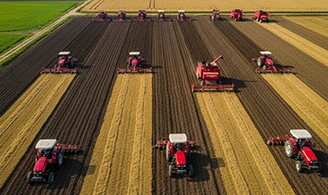
1. Mechanisation for Smallholders
Most Indian farms are under 2 hectares. Cheaper machinery increases their ability to mechanise.
2. Adoption of Modern Technology
More farmers will explore zero-till seeders, precision planters, balers and other modern tools.
3. Environmental Gains
Mechanisation reduces residue burning, lowers wastage and supports sustainable agriculture.
4. Strengthening “Make in India”
A stronger machinery market boosts indigenous production and innovation.
5. Higher Farmer Incomes
Mechanisation improves productivity while reducing labour and input costs—directly improving earnings.
Conclusion: A Catalyst for Agricultural Transformation
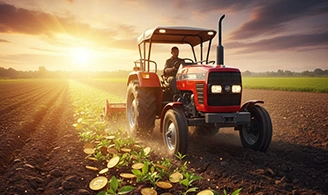
The GST reduction on farm equipment is more than a tax correction—it is a strategic push toward affordable mechanisation. Lower taxation on agricultural machinery, tractor machinery and farm equipment helps farmers save more, invest wisely, reduce cultivation costs and ultimately enhance productivity.
For farmers planning to upgrade machinery or purchase a new tractor, this is the ideal time. Ensuring price transparency, understanding subsidy options and choosing the right equipment can make this policy change truly transformative.
The GST cut paves the way for stronger agricultural competitiveness, higher mechanisation levels, and improved farmer incomes—impacting India’s agricultural growth one machine at a time.
Recent Articles
Tag Cloud
Connect With Us

Dec 5, 2025
Dec 10, 2025

You May Also Like
- Read More
 Which is the Best Tractor for Farming in India?
Farming tractors are the essential companions of farmers; these robust machines help them work...
- Read More
 Choosing the Right Tractor for Groundnut Farming
Groundnut, or peanut, is grown in five states of India, namely Andhra Pradesh, Gujarat, Tamil Nadu, Karnataka, Rajasthan and Maharashtra.
- Read More
 Mahindra’s Tractor’s Potato Farming Guide
Paddy farming is one of India’s most prevalent farming methods that use small, flooded fields to cultivate rice.
- Read More
 Why Buy a Mahindra 275 DI XP Plus Tractor: Mileage, Features & Specs
The Indian Tractor market is unique—farmers are looking for an all-rounder tractor that satisfies all their needs while being affordable and powerful. One such tractor that meets the demands of Indian farmers is the Mahindra 275


 Not happy
 Could be better
 It's okay
 Good
Good Excellent