


Modern Farming vs Traditional Farming: Key Differences & Benefits
Sep 23, 2026 | 5 Mins Read


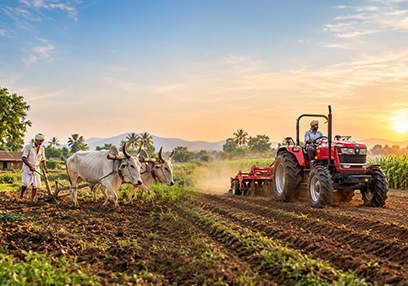
Table of Content
Agriculture has evolved significantly over the years. From manually operated tools and animal-drawn implements to precision machinery, improved irrigation systems, and data-driven decision-making, farming practices have changed to meet the growing demand for food and better resource management. While traditional farming continues to remain important in many parts of India, modern farming technology is increasingly helping farmers improve productivity, reduce labour requirements, and manage agricultural operations more efficiently.
Understanding modern farming vs traditional farming is important for farmers looking to select suitable methods for their crops, landholding, resources, and local conditions. Both approaches have their own advantages, and the right choice often depends on the scale and nature of agriculture farming.
What Is Traditional Farming?
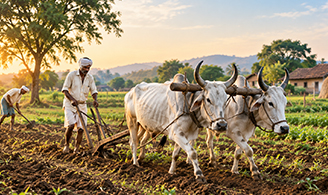
Traditional farming refers to agricultural practices that have been followed for generations. These methods generally rely on locally available resources, manual labour, animal power, and knowledge passed down through experience.
Farmers using traditional techniques may depend on bullocks for ploughing, manually sow seeds, use basic tools for intercultivation, and harvest crops using hand-operated equipment. Irrigation may depend on traditional water sources and methods, while decisions about sowing, crop protection, and harvesting are often based on seasonal experience and local knowledge.
Traditional farming has several advantages. It can require relatively low initial investment, makes use of local resources, and preserves indigenous agricultural knowledge. Small and marginal farmers may continue to use these practices where mechanization is difficult because of limited land size, terrain, financial resources, or accessibility.
However, traditional methods can also be labour-intensive and time-consuming. Dependence on manual labour can make it difficult to complete operations within the ideal agricultural window, particularly when labour availability is limited.
What Is Modern Farming?
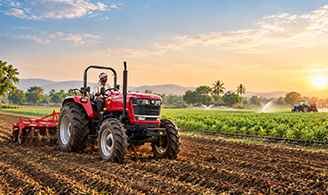
Modern farming combines agricultural knowledge with improved machinery, scientific practices, technology, and efficient resource management. It aims to increase productivity while using resources such as water, fertilizers, fuel, seeds, and labour more efficiently.
Modern farming technology can include tractors, agricultural implements, mechanized sowing and harvesting equipment, drip irrigation, sprinkler systems, improved seeds, soil testing, weather information, satellite-based monitoring, drones, precision agriculture, and digital farm-management tools.
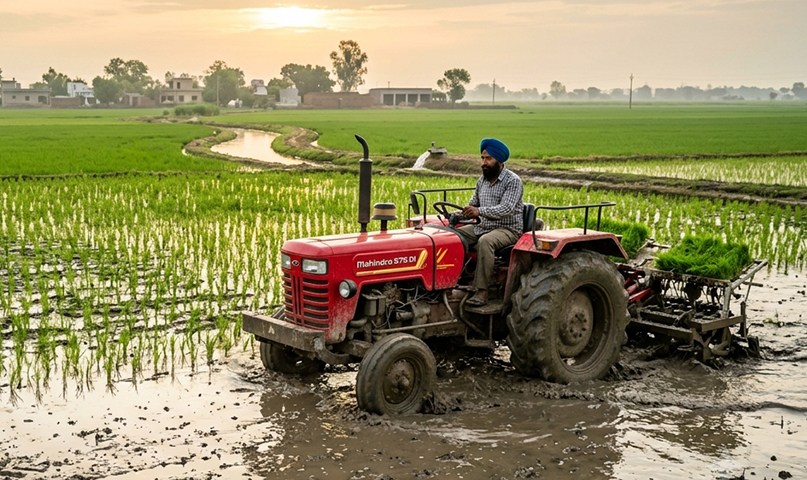
Mechanization is an important component of modern agriculture. Tractors can perform several operations by using compatible implements, including ploughing, tillage, sowing, spraying, transportation, and residue management. This allows farmers to complete larger areas of land in less time and reduce dependence on manual labour.
Modern Farming vs Traditional Farming: Key Differences
The major differences between the two approaches can be understood across several aspects.
| Factor | Traditional Farming | Modern Farming |
|---|---|---|
| Power source | Human and animal power | Tractors and mechanized equipment |
| Labour requirement | Generally high | Lower for mechanized operations |
| Technology | Limited use of technology | Greater use of machinery and digital tools |
| Productivity | Often dependent on labour and experience | Supported by mechanization and scientific practices |
| Field operations | More time-consuming | Faster and more efficient |
| Irrigation | Traditional irrigation methods | Drip, sprinkler and automated systems |
| Crop monitoring | Primarily manual observation | Technology-supported monitoring |
| Precision | Dependent largely on farmer experience | Greater scope for precision agriculture |
| Initial investment | Generally lower | Often higher |
| Scalability | More challenging for larger farms | Better suited to large-scale operations |
1. Difference in Farm Mechanization
One of the clearest differences between modern and traditional farming is the use of machinery. Traditional agriculture may depend heavily on human and animal labour, whereas modern farming uses tractors and specialized implements to perform operations more quickly.
For example, a tractor-mounted cultivator or rotavator can prepare soil over a larger area compared with manual tools. Similarly, seed drills and specialized planting equipment can improve the speed and consistency of sowing.
This does not mean traditional tools have no value. They can remain practical for small plots, specific crops, and areas where larger machinery cannot operate efficiently.
2. Difference in Labour Requirements
Labour plays a major role in traditional agriculture. Activities such as soil preparation, sowing, weeding, harvesting, and transportation can require significant manual effort.
Modern machinery can reduce the labour requirement for many of these operations. A farmer can use a suitable tractor and implement combination to perform several tasks more efficiently. This becomes particularly valuable during peak agricultural seasons when labour availability may be limited.
3. Difference in Productivity and Timeliness
Agricultural operations often need to be completed within specific time windows. Delays in land preparation, sowing, irrigation, or harvesting can affect crop performance.
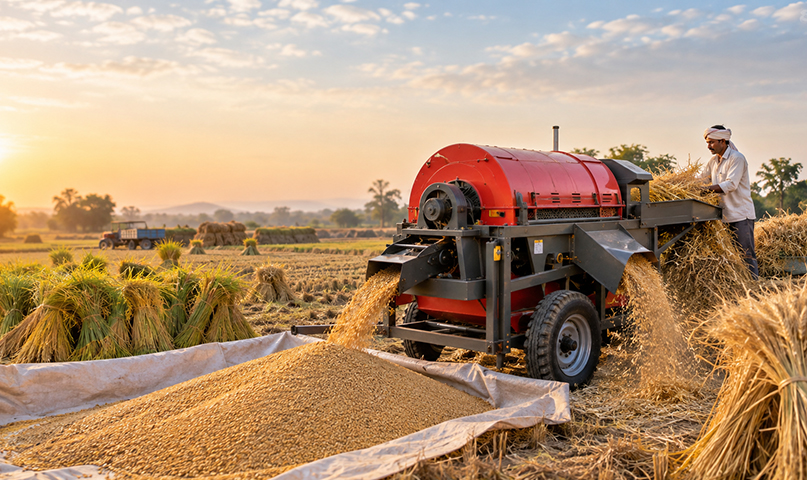
Modern equipment enables farmers to complete operations faster. Mechanized land preparation, for example, can help farmers prepare fields within a shorter period and move quickly to the next stage of cultivation.
Traditional methods may take longer because many operations depend on manual labour or animal power.
4. Difference in Resource Management
Modern agriculture increasingly focuses on efficient use of inputs. Technologies such as drip irrigation, soil testing, precision application equipment, and improved machinery can help farmers make informed decisions about water, fertilizers, and other resources.
Traditional farming often relies more heavily on experience and observation. This knowledge remains valuable, but modern tools can complement farmer expertise with measurable information.
5. Role of Tractors and Agricultural Equipment
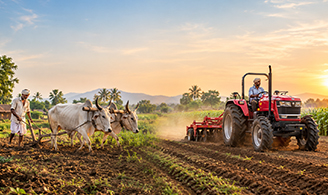
Tractors are among the most important components of modern agriculture. Companies such as Mahindra have contributed to agricultural mechanization by offering tractors and implements designed for different farm operations and requirements.
A suitable tractor can be paired with implements such as cultivators, rotavators, ploughs, seed drills, harvest-related equipment, and trailers. This versatility allows one power unit to support multiple stages of agriculture farming.
The choice of tractor, however, should be based on factors such as farm size, soil type, crops, required implements, terrain, horsepower, lifting capacity, and operating conditions rather than simply choosing the most powerful machine.
6. Technology Beyond Tractors
Modern farming extends beyond mechanization. Farmers increasingly have access to technologies that can support decision-making throughout the crop cycle.
Weather forecasting can help farmers plan irrigation and field operations. Soil testing can provide information about nutrient requirements. Drones and satellite imagery can assist with crop monitoring, while digital platforms can provide information related to markets, weather, and agricultural practices.
These technologies can complement rather than completely replace farmers' practical knowledge.
Also Read: Types of farming in India: factors and importance
Advantages of Traditional Farming
Traditional agriculture has several strengths:
- Lower dependence on expensive machinery
- Use of locally available resources
- Preservation of indigenous farming knowledge
- Suitability for certain small-scale and specialized operations
- Potentially lower initial investment
- Strong connection with local soil, climate, and crop practices
For many farmers, traditional knowledge remains an important foundation for making agricultural decisions.
Advantages of Modern Farming
Modern farming can offer several important benefits:
- Faster field operations
- Reduced dependence on manual labour
- Better utilization of farm machinery
- Improved timeliness of sowing and harvesting
- Greater operational efficiency
- Scope for precision input management
- Improved suitability for larger farms
- Reduced physical effort for farmers
- Better integration of mechanized agricultural operations
The benefits ultimately depend on choosing appropriate machinery and using it correctly.
Can Traditional and Modern Farming Work Together?
The comparison between modern farming vs traditional farming does not necessarily mean farmers must choose one approach exclusively. In practice, combining traditional knowledge with modern technology can provide an effective approach.
Farmers possess valuable knowledge about local soil, weather patterns, crop behaviour, and farming practices. Modern tools can complement this experience by providing machinery, data, improved inputs, and efficient methods of operation.
For example, a farmer may use traditional knowledge to determine the appropriate crop and combine it with modern soil testing, mechanized land preparation, precision sowing, and improved irrigation.
Conclusion
The transition from traditional to modern agriculture reflects the changing requirements of Indian farming. Traditional techniques continue to provide valuable knowledge and remain practical in many situations, while modern farming technology offers opportunities to improve efficiency, timeliness, productivity, and resource utilization.
The ideal approach depends on the farmer's requirements, resources, farm size, crop, soil, and local conditions. Tractors and agricultural equipment from manufacturers such as Mahindra can play an important role in this transition by enabling farmers to mechanize key operations and use suitable implements across the farming cycle.
Ultimately, the future of agriculture farming is likely to involve a combination of proven traditional knowledge and carefully selected modern technologies—helping farmers work more efficiently while adapting to the evolving demands of Indian agriculture.
Recent Articles
Tag Cloud
Connect With Us

Sep 2, 2026
Sep 23, 2026

You May Also Like
- Read More
 Which is the Best Tractor for Farming in India?
Farming tractors are the essential companions of farmers; these robust machines help them work...
- Read More
 Choosing the Right Tractor for Groundnut Farming
Groundnut, or peanut, is grown in five states of India, namely Andhra Pradesh, Gujarat, Tamil Nadu, Karnataka, Rajasthan and Maharashtra.
- Read More
 Mahindra’s Tractor’s Potato Farming Guide
Paddy farming is one of India’s most prevalent farming methods that use small, flooded fields to cultivate rice.
- Read More
 Why Buy a Mahindra 275 DI XP Plus Tractor: Mileage, Features & Specs
The Indian Tractor market is unique—farmers are looking for an all-rounder tractor that satisfies all their needs while being affordable and powerful. One such tractor that meets the demands of Indian farmers is the Mahindra 275


 Not happy
 Could be better
 It's okay
 Good
Good Excellent