


How to Choose a Threshing Machine for Paddy and Wheat Farming
Sep 23, 2026 | 5 Mins Read


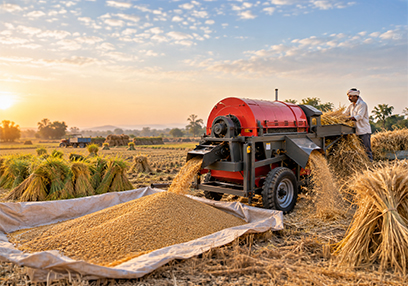
Table of Content
- Understand Your Crop and Threshing Requirement
- Consider the Size of Your Farm
- Check Machine Capacity and Output
- Select the Right Power Source
- Look at Threshing Efficiency
- Pay Attention to Grain Cleaning
- Evaluate Grain Loss and Damage
- Consider Fuel and Operating Costs
- Check Maintenance and Spare Parts Availability
- Consider Safety and Ease of Operation
- Choose Equipment That Fits Your Existing Farm Machinery
- Compare After-Sales Support and Warranty
- Conclusion
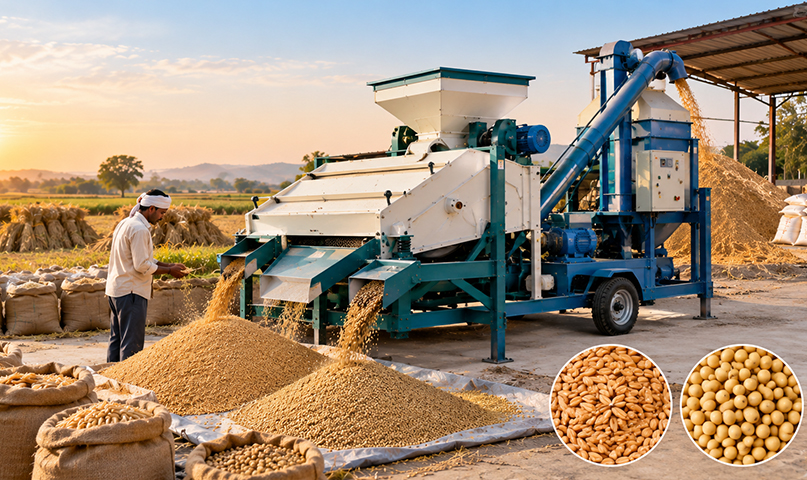
Threshing is one of the most important post-harvest operations in agriculture. After harvesting, grains need to be separated efficiently from the stalks, husks, and other crop residues. Traditionally, farmers depended heavily on manual labour for this task, which could be time-consuming, labour-intensive, and costly. Today, a modern threshing machine can make the process faster, more efficient, and easier to manage.
Farmers growing crops such as paddy and wheat can choose from different types of threshing equipment based on crop requirements, farm size, available power sources, and expected output. A suitable machine can reduce grain losses, improve cleaning, save labour, and help complete post-harvest operations within the required time. This guide explains the important factors farmers should consider when selecting a paddy thresher or wheat thresher machine.
1. Understand Your Crop and Threshing Requirement
The first step is to identify the crop for which the machine will primarily be used. Paddy and wheat have different physical characteristics and may require different threshing mechanisms and settings.
A paddy thresher is designed to separate rice grains from harvested paddy panicles while minimizing grain damage and losses. Wheat, on the other hand, requires equipment capable of efficiently separating wheat grains from the ears and straw.
Farmers who cultivate both crops should consider whether they need a dedicated machine or a versatile model that can be adjusted for multiple crops. Checking the manufacturer's recommended crops and operating conditions is important before making a purchase.
2. Consider the Size of Your Farm
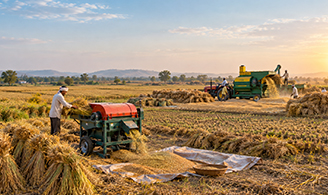
Farm size plays an important role in selecting a threshing machine. A small farmer with limited acreage may not require the same capacity as a commercial farmer or custom-hiring operator.
For smaller farms, a compact machine with moderate capacity may be sufficient and can help control the initial investment. Farmers with larger areas under paddy or wheat cultivation should consider a higher-capacity machine that can process more crop material per hour.
Choosing a machine with a capacity that matches the farm's requirements helps avoid unnecessary expenditure while ensuring that threshing can be completed within the harvesting window.
3. Check Machine Capacity and Output
Capacity is one of the most important specifications to evaluate. It indicates how much crop material the machine can process within a given period.
A higher-capacity paddy thresher or wheat thresher machine can help farmers cover larger areas in less time. However, capacity should not be considered in isolation. Actual performance can depend on crop moisture, feeding rate, crop variety, machine settings, and operator skill.
Farmers should therefore compare the manufacturer's rated capacity with their expected daily threshing requirement. The ideal machine should provide adequate output without compromising grain quality or creating excessive losses.
4. Select the Right Power Source
Threshing machines can be powered by different sources, depending on their design and application. Tractor-operated machines are particularly useful for farmers who already own a suitable tractor.
When selecting tractor-operated tractor implements, farmers should check the tractor's horsepower, PTO specifications, hydraulic requirements, and compatibility with the implement.
A tractor-powered machine can offer the advantage of using an existing power source for multiple farm operations. This can make mechanization more practical, particularly for farmers who already use their tractors with rotavators, ploughs, seeders, and other implements.
5. Look at Threshing Efficiency
Threshing efficiency determines how effectively the machine separates grain from the harvested crop. A good machine should provide effective threshing while minimizing unthreshed grain and grain damage.
Farmers should look for equipment with an appropriate threshing drum, concave arrangement, airflow system, and adjustable operating parameters. These features can help achieve better separation according to crop conditions.
For paddy, efficient separation is particularly important because excessive impact can result in broken grains. Similarly, a wheat thresher machine should separate grain efficiently without unnecessary grain losses.
6. Pay Attention to Grain Cleaning
Threshing and cleaning often go hand in hand. After grain is separated from the crop, it may contain straw pieces, husks, dust, and other impurities.
Machines equipped with suitable cleaning systems can improve the quality of the output and reduce the need for additional manual cleaning. Farmers should therefore check whether the machine incorporates mechanisms such as blowers, sieves, or other cleaning arrangements.
Better cleaning can save labour and make the harvested grain easier to store, transport, or sell.
7. Evaluate Grain Loss and Damage
Reducing post-harvest losses should be a major consideration when purchasing a threshing machine. Grain can be lost through incomplete threshing, improper machine adjustment, spillage, or inefficient separation.
At the same time, excessive threshing intensity can damage grains. Farmers should therefore choose equipment that provides an appropriate balance between threshing effectiveness and grain quality.
Before purchasing, it is useful to understand the machine's recommended operating conditions and adjustment options. Proper feeding and machine calibration are equally important for achieving good results.
8. Consider Fuel and Operating Costs
The purchase price is only one part of the overall cost of owning farm machinery. Farmers should also consider fuel consumption, maintenance, spare parts, labour requirements, and service costs.
A machine that delivers good output with reasonable operating costs can provide better value over its working life. Tractor-operated equipment should also be evaluated according to the fuel efficiency and operating characteristics of the tractor being used.
Farmers who plan to use the machine commercially or provide custom-hiring services should calculate operating costs against expected utilization and income.
9. Check Maintenance and Spare Parts Availability
Agricultural machinery operates in demanding field conditions, so ease of maintenance is important. Before buying a paddy thresher or wheat machine, farmers should check the availability of spare parts and service support in their region.
Important components such as belts, bearings, blades, sieves, and other wear parts may require periodic inspection or replacement depending on machine design and usage.
A machine supported by an established service network can reduce downtime during the critical harvesting and post-harvesting season.
10. Consider Safety and Ease of Operation
Safety should never be overlooked when selecting farm machinery. A threshing machine contains rotating and moving components that can pose risks if operated incorrectly.
Farmers should choose machines with appropriate guards and safety provisions and ensure that operators receive proper training. The feeding system should also be designed for controlled and safe operation.
Clear operating instructions, accessible controls, and easy maintenance points can further improve usability and reduce operational risks.
11. Choose Equipment That Fits Your Existing Farm Machinery
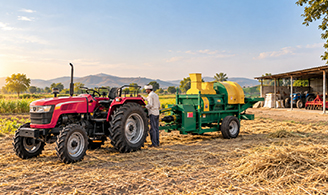
For farmers already practicing mechanized farming, compatibility with existing equipment is an important consideration. Tractor-powered tractor implements can help farmers use their tractors across multiple stages of cultivation and post-harvest operations.
Before purchasing, check the tractor's horsepower and PTO compatibility against the machine's requirements. Farmers should also consider transport, storage, and the space available for operating the equipment.
Selecting compatible equipment can help create a more efficient mechanized farming system rather than treating each machine as a standalone investment.
12. Compare After-Sales Support and Warranty
Reliable after-sales service can make a significant difference to the long-term performance of agricultural machinery. Farmers should compare warranty terms, service availability, spare-parts support, and dealer assistance before making a final decision.
It is also advisable to purchase machinery from an established manufacturer or authorized dealer. Demonstrations can be particularly useful because they allow farmers to understand the machine's operation and assess its performance under practical conditions.
Conclusion
Choosing the right threshing machine requires more than simply comparing prices. Farmers should evaluate the crop, farm size, machine capacity, power requirement, threshing efficiency, grain quality, cleaning performance, operating costs, maintenance, safety, and after-sales support.
For paddy cultivation, a suitably configured paddy thresher can help streamline grain separation and reduce dependence on manual labour. For wheat cultivation, a reliable wheat thresher machine can improve threshing efficiency and help farmers complete post-harvest operations on time.
When selecting tractor-operated equipment, compatibility with the available tractor is equally important. The right combination of tractor implements and farm machinery can help farmers improve productivity, reduce post-harvest losses, save time and labour, and move towards more efficient and sustainable agriculture farming.
Recent Articles
Tag Cloud
Connect With Us

Sep 23, 2026
Sep 23, 2026

You May Also Like
- Read More
 Which is the Best Tractor for Farming in India?
Farming tractors are the essential companions of farmers; these robust machines help them work...
- Read More
 Choosing the Right Tractor for Groundnut Farming
Groundnut, or peanut, is grown in five states of India, namely Andhra Pradesh, Gujarat, Tamil Nadu, Karnataka, Rajasthan and Maharashtra.
- Read More
 Mahindra’s Tractor’s Potato Farming Guide
Paddy farming is one of India’s most prevalent farming methods that use small, flooded fields to cultivate rice.
- Read More
 Why Buy a Mahindra 275 DI XP Plus Tractor: Mileage, Features & Specs
The Indian Tractor market is unique—farmers are looking for an all-rounder tractor that satisfies all their needs while being affordable and powerful. One such tractor that meets the demands of Indian farmers is the Mahindra 275


 Not happy
 Could be better
 It's okay
 Good
Good Excellent