


Cotton Farming Guide: Harvesting Machines, Tools & Tractors
Aug 31, 2026 | 5 Mins Read


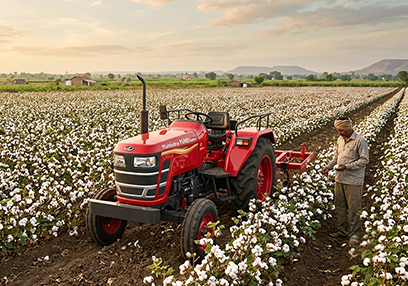
Table of Content
- Understanding Cotton Farming in India
- Why Farm Mechanization Matters in Cotton Farming
- Essential Cotton Farming Tools
- Cotton Harvesting Machines
- Tractor-Towed Harvest Equipment
- Role of Farming Tractors in Cotton Cultivation
- Choosing the Right Tractor for Cotton Farming
- Mahindra Tractor Solutions for Cotton Farming
- Tips for Higher Cotton Productivity
- Benefits of Mechanized Cotton Farming
- Conclusion
Cotton is one of India's most valuable commercial crops, contributing significantly to the country's textile industry and rural economy. As the world's largest cotton producer, India cultivates cotton across states like Maharashtra, Gujarat, Telangana, Punjab, Haryana, Karnataka, Andhra Pradesh, Rajasthan, and Madhya Pradesh. However, profitable cotton farming depends on more than good seeds and weather. Modern mechanization, efficient cotton harvesting machines, reliable farming tractors, and advanced cotton farming tools play a vital role in improving productivity while reducing labour costs.
This guide explores the essential machinery and tractor solutions that help farmers achieve higher yields and better efficiency during cotton cultivation and harvesting.
Understanding Cotton Farming in India
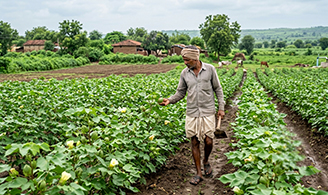
Cotton is primarily a Kharif crop sown during the monsoon and harvested between October and February, depending on the region and variety. Successful cotton cultivation requires:
- Well-prepared soil
- Quality seeds
- Timely irrigation
- Weed management
- Pest control
- Proper harvesting techniques
- Efficient transportation
Mechanization has become increasingly important due to rising labour costs and the need for timely field operations.
Why Farm Mechanization Matters in Cotton Farming
Traditional cotton farming often depends on manual labour for field preparation, spraying, and harvesting. However, labour shortages and increasing cultivation costs have encouraged farmers to adopt modern equipment.
Mechanized farming offers several benefits:
- Faster field operations
- Reduced labour dependency
- Improved productivity
- Lower operational costs
- Better crop quality
- Timely harvesting
- Increased profitability
A dependable farming tractor forms the backbone of these mechanized operations.
Essential Cotton Farming Tools
Modern cotton farming tools simplify almost every stage of cultivation.
1. Cultivators
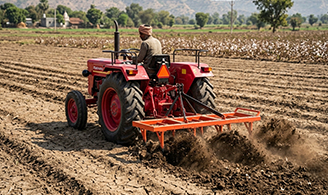
Cultivators loosen the soil, remove weeds, and prepare seedbeds before sowing. Tractor-mounted cultivators cover larger areas in less time compared to manual methods.
2. Rotavators
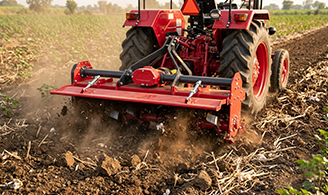
Rotavators prepare a fine seedbed by breaking soil clods and mixing crop residue into the soil. They improve soil aeration and help retain moisture for healthy crop growth.
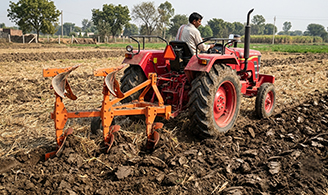
3. MB Ploughs
MB (Mould Board) ploughs are ideal for deep tillage. They turn over the soil, bury crop residues, and improve soil structure before planting cotton.
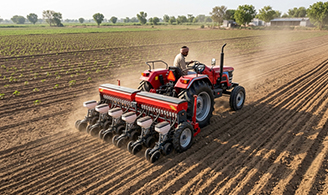
4. Seed Drills
Seed drills ensure uniform seed placement at the correct depth and spacing. Proper sowing promotes even germination and healthier crop establishment.
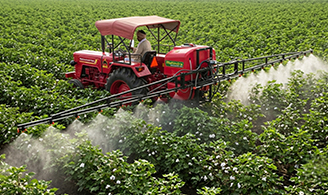
5. Boom Sprayers
Cotton crops require regular pest and disease management. Tractor-mounted boom sprayers provide uniform application of pesticides and fertilizers while reducing chemical wastage.
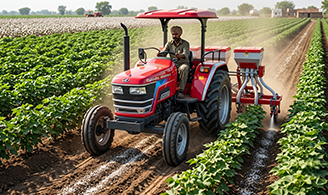
6. Fertilizer Applicators
These implements help distribute fertilizers evenly across the field, improving nutrient availability and crop growth.
Cotton Harvesting Machines
Harvesting is one of the most labour-intensive stages of cotton cultivation. Modern cotton harvesting machines help reduce manual effort while improving harvesting efficiency.
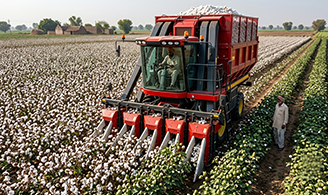
1. Cotton Pickers
Cotton pickers selectively harvest open cotton bolls without damaging unopened ones. These machines are suitable for large farms where labour availability is limited.
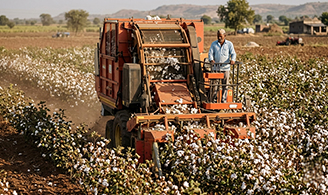 2. Cotton Strippers
Cotton strippers remove both opened and unopened bolls simultaneously. They are commonly used in regions where the crop matures uniformly.
Tractor-Towed Harvest Equipment
Many farmers use tractor-operated harvesting equipment that offers an economical alternative to self-propelled machines. These solutions are particularly suitable for medium-sized farms.
Mechanized harvesting minimizes crop losses, reduces harvesting time, and helps farmers complete operations before adverse weather conditions affect crop quality.
Role of Farming Tractors in Cotton Cultivation
A farming tractor is one of the most valuable investments for cotton growers. Modern tractors perform multiple operations throughout the crop cycle.
1. Land Preparation
Tractors efficiently operate:
- Rotavators
- MB ploughs
- Disc harrows
- Cultivators
These implements prepare the field for sowing while reducing manual labour.
2. Sowing
With compatible seed drills, tractors enable precise seed placement, ensuring better germination and crop uniformity.
3. Spraying
Powerful PTO systems allow tractors to operate boom sprayers and fertilizer applicators efficiently throughout the growing season.
4. Intercultivation
Tractors equipped with cultivators help control weeds between crop rows while improving soil aeration.
5. Transportation
During harvest, tractors transport cotton from the field to collection centres, storage facilities, or ginning units quickly and efficiently.
Choosing the Right Tractor for Cotton Farming
Selecting the right tractor depends on several factors.
1. Farm Size
Small farms benefit from compact tractors, while larger farms require higher horsepower models for heavy-duty operations.
2. Soil Conditions
Clay soils often require more powerful tractors with better traction, while lighter soils can be managed with medium-horsepower models.
3. Implement Compatibility
Ensure the tractor supports commonly used cotton farming tools, including rotavators, cultivators, sprayers, trailers, and seed drills.
4. Hydraulic Capacity
A strong hydraulic system improves implement performance and allows smoother field operations.
5. Fuel Efficiency
Fuel-efficient tractors reduce operating expenses, especially during long working hours.
6. Operator Comfort
Features such as power steering, ergonomic seating, smooth gear shifting, and low vibration improve productivity during extended field operations.
Mahindra Tractor Solutions for Cotton Farming
Mahindra offers a wide range of tractors suitable for cotton cultivation, from compact models for small farms to powerful tractors for commercial agriculture.
Popular Mahindra tractor options include:
- Mahindra 275 DI XP Plus – Suitable for small and medium farms.
- Mahindra 575 DI XP Plus – Ideal for cultivation, spraying, and haulage.
- Mahindra YUVO TECH+ 585 – Designed for heavy-duty operations with superior hydraulics.
- Mahindra NOVO 605 DI PP V1 – Excellent for commercial cotton farming and intensive field operations.
- Mahindra OJA Series – Compact tractors for intercultivation and orchard-style farming.
These tractors support multiple implements and help farmers complete operations efficiently throughout the cotton crop cycle.
Tips for Higher Cotton Productivity
To maximize cotton yields:
- Use certified seeds.
- Prepare fields thoroughly before sowing.
- Maintain recommended plant spacing.
- Follow balanced fertilizer application.
- Monitor pests and diseases regularly.
- Use appropriate spraying equipment.
- Harvest at the correct maturity stage.
- Adopt mechanized operations wherever possible.
- Maintain tractors and implements regularly.
- Use genuine spare parts for reliable performance.
Benefits of Mechanized Cotton Farming
Investing in modern machinery offers several long-term advantages:
- Reduced labour costs
- Faster field operations
- Better crop quality
- Timely harvesting
- Improved fuel efficiency
- Lower operating expenses
- Higher productivity
- Increased profitability
- Reduced post-harvest losses
Mechanization also enables farmers to manage larger cultivated areas with greater efficiency.
Conclusion
Modern cotton farming is no longer limited to traditional cultivation methods. With the adoption of advanced cotton harvesting machines, efficient cotton farming tools, and reliable farming tractors, farmers can improve productivity, reduce labour dependency, and enhance overall profitability.
From land preparation and sowing to spraying, harvesting, and transportation, tractors play a critical role in every stage of cotton cultivation. Choosing the right tractor and compatible implements ensures smoother operations, lower fuel consumption, and better returns on investment.
As Indian agriculture continues to embrace mechanization, investing in quality equipment and modern tractor solutions will help cotton farmers meet rising production demands while building a more sustainable and profitable farming future.
Recent Articles
Tag Cloud
Connect With Us

Aug 31, 2026
Sep 1, 2026

You May Also Like
- Read More
 Which is the Best Tractor for Farming in India?
Farming tractors are the essential companions of farmers; these robust machines help them work...
- Read More
 Choosing the Right Tractor for Groundnut Farming
Groundnut, or peanut, is grown in five states of India, namely Andhra Pradesh, Gujarat, Tamil Nadu, Karnataka, Rajasthan and Maharashtra.
- Read More
 Mahindra’s Tractor’s Potato Farming Guide
Paddy farming is one of India’s most prevalent farming methods that use small, flooded fields to cultivate rice.
- Read More
 Why Buy a Mahindra 275 DI XP Plus Tractor: Mileage, Features & Specs
The Indian Tractor market is unique—farmers are looking for an all-rounder tractor that satisfies all their needs while being affordable and powerful. One such tractor that meets the demands of Indian farmers is the Mahindra 275


 Not happy
 Could be better
 It's okay
 Good
Good Excellent