


Duster vs Sprayer in Agriculture: Which One Should You Use?
Sep 29, 2026 | 5 mins Read


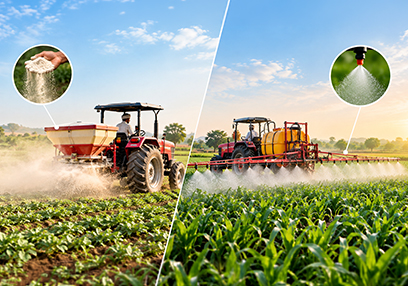
Table of Content
- What Is an Agricultural Duster?
- What Is a Tractor Sprayer?
- Duster vs Sprayer: Key Differences
- When Should Farmers Use a Duster?
- When Should Farmers Use a Sprayer?
- Importance of Application Timing
- Weather Conditions Matter
- Choosing the Right Tractor Implements
- Safety During Dusting and Spraying
- Maintenance of Agricultural Application Equipment
- Conclusion
Effective crop protection is essential for maintaining healthy crops and achieving better yields. Farmers use different application methods to protect crops from insects, fungal diseases, weeds, and other threats. Among the most widely used methods are dusting and spraying. While both techniques are designed for crop protection, they differ significantly in the material applied, equipment used, coverage, operating conditions, and suitability for different agricultural situations.
An agricultural duster applies pesticides or other crop-protection materials in powder or dust form, whereas a sprayer applies chemicals in liquid form. Understanding the difference between these methods can help farmers select the right equipment and application technique for their crops.
What Is an Agricultural Duster?
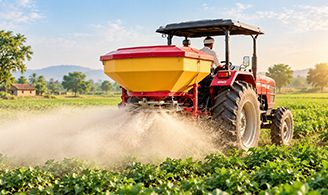
An agricultural duster is a farm machine used to distribute powdered pesticides, insecticides, fungicides, or other dry formulations over crops. The machine uses airflow or mechanical mechanisms to disperse the powder across the crop canopy.
Dusting can be useful when dry formulations are recommended for a particular crop-protection application. Depending on the design, dusters may be manually operated, mounted on tractors, or designed as larger mechanised units.
The main advantage of dusting is its ability to apply dry material without requiring water. This can be useful in areas where water availability is limited. However, dust can be affected by wind, and controlling the application precisely can sometimes be more difficult than liquid spraying.
What Is a Tractor Sprayer?
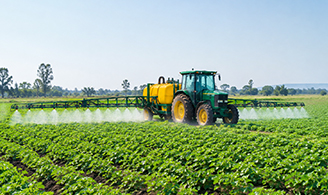
A tractor sprayer is an agricultural implement designed to apply liquid pesticides, herbicides, fungicides, insecticides, fertilisers, or other crop-treatment solutions evenly across agricultural fields.
Tractor sprayers generally consist of a tank, pump, filters, pressure-control system, hoses, and spray nozzles. Depending on the model, they may be mounted on or trailed behind a tractor.
The sprayer converts the liquid into droplets and distributes them through nozzles. Different nozzle types can produce different spray patterns and droplet sizes, allowing farmers to adjust application according to the crop and chemical being used.
Duster vs Sprayer: Key Differences
Although both machines support crop protection, they are designed for different application methods.
| Feature | Agricultural Duster | Tractor Sprayer |
|---|---|---|
| Material applied | Dry powder/dust | Liquid formulation |
| Water requirement | Usually not required | Requires water or another liquid carrier |
| Application method | Air/mechanical dust distribution | Pump and nozzle-based spraying |
| Suitable formulations | Approved dry formulations | Approved liquid or water-mixable formulations |
| Wind sensitivity | Generally high | Also affected, depending on droplet size |
| Coverage control | Can be less precise | Generally easier to regulate |
| Common use | Certain dry pesticide applications | Insecticides, fungicides, herbicides and other liquid treatments |
The right choice depends on the crop, pest or disease, chemical formulation, weather conditions, and application recommendation.
When Should Farmers Use a Duster?
Dusting should only be carried out when the pesticide or crop-protection product is specifically approved and recommended for dry application. Farmers should follow the product label for application rate, timing, crop suitability, and safety precautions.
An agricultural duster can be useful when:
- The required crop-protection product is available as a suitable dry formulation.
- Water availability is limited.
- Field conditions favour dry application.
- Rapid distribution of a powder formulation is required.
- The crop structure allows effective dust penetration.
Weather is particularly important when dusting. Strong winds can carry dust away from the target area, resulting in uneven application and potential exposure to nearby people, crops, animals, or the environment.
For this reason, farmers should avoid dusty, windy conditions and follow all label directions.
Also Read: Top 10 tractor implements you must have for farming
When Should Farmers Use a Sprayer?
A tractor sprayer is generally preferred when the crop-protection product is formulated for liquid application. Sprayers can provide relatively uniform distribution and allow farmers to adjust pressure, nozzle selection, and application volume.
Spraying may be useful for:
- Insect control
- Fungal disease management
- Weed control
- Foliar nutrient application
- Other approved liquid crop treatments
The timing of spraying is critical. Farmers should consider crop growth stage, pest or disease development, weather conditions, and the manufacturer's application recommendations.
Spraying during excessively hot, windy, or rainy conditions can reduce effectiveness. Rain soon after application may wash the product from plant surfaces, depending on the product and its formulation.
Importance of Application Timing
Choosing the right machine is only part of effective crop protection. Timing can have an equally important influence on results.
Farmers should regularly monitor their fields for early signs of pest infestation, disease, or weed growth. Applying the appropriate treatment at the recommended stage can help prevent problems from becoming more severe.
For example, an insecticide may be most effective when a pest is at a particular life stage. Similarly, fungicide applications may need to be timed according to disease risk and crop development.
Farmers should not automatically spray or dust simply because a crop has reached a particular age. Instead, application should be based on the crop, pest or disease situation, product label, and recommendations from qualified agricultural professionals.
Weather Conditions Matter
1.For Dusting
Dry and relatively calm conditions are generally more suitable for dust application, subject to the product label. Strong winds can cause drift and uneven distribution.
2. For Spraying
Wind speed and direction, temperature, humidity, and rainfall should all be considered. Excessive wind can cause spray drift, while very hot and dry conditions can increase evaporation of smaller droplets.
Farmers should always follow the pesticide label and local agricultural recommendations rather than relying on a fixed weather rule.
Choosing the Right Tractor Implements
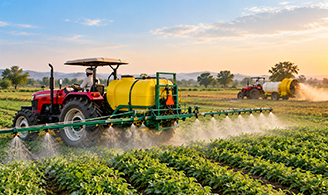
Modern farming involves a wide range of tractor implements, and selecting the correct implement can improve operational efficiency. A tractor-mounted or tractor-operated sprayer can cover larger areas than many manual spraying methods, making it useful for commercial farms.
When choosing a sprayer, farmers should consider:
- Tractor horsepower and compatibility
- Tank capacity
- Pump performance
- Boom width
- Nozzle type
- Operating pressure
- Field size
- Crop spacing
- Availability of spare parts and service
For an agricultural duster, farmers should similarly consider capacity, airflow, distribution mechanism, tractor compatibility, adjustment options, and suitability for the intended crop-protection material.
Safety During Dusting and Spraying
Pesticide application requires careful handling regardless of whether the material is applied as a dust or liquid. Farmers and operators should read the product label carefully and use the recommended personal protective equipment.
Avoid eating, drinking, or smoking while handling pesticides. Keep people and animals away from treated areas according to the product instructions, and clean equipment safely after use.
Equipment should also be inspected regularly. Leaking hoses, damaged nozzles, blocked outlets, worn components, or faulty pressure systems can lead to uneven application and unnecessary chemical exposure.
Maintenance of Agricultural Application Equipment
Regular maintenance helps keep tractor implements working efficiently. After spraying, tanks, hoses, filters, and nozzles should be cleaned according to the manufacturer's and chemical product's instructions. Blocked nozzles can produce uneven spray patterns and affect application rates.
For an agricultural duster, remove accumulated dust and inspect the blower, distribution mechanism, hoses, and moving components. Lubricate components where recommended and store the machine in a clean, dry location.
Proper maintenance not only extends equipment life but also helps farmers achieve more consistent application.
Conclusion
Both the agricultural duster and tractor sprayer can play an important role in modern crop protection, but they serve different purposes. A duster applies suitable dry formulations, while a sprayer distributes approved liquid formulations using a tank, pump, and nozzles.
For farmers, the best choice depends on the crop, treatment required, product formulation, field conditions, water availability, tractor compatibility, and weather. Equally important is application timing: treatments should be applied at the recommended crop and pest stage and under suitable environmental conditions.
By selecting appropriate tractor implements, following product-label instructions, maintaining equipment properly, and applying treatments responsibly, farmers can improve the efficiency of crop-protection operations while supporting healthier and more productive crops.
Recent Articles
Tag Cloud
Connect With Us

Sep 23, 2026
Sep 29, 2026

You May Also Like
- Read More
 Which is the Best Tractor for Farming in India?
Farming tractors are the essential companions of farmers; these robust machines help them work...
- Read More
 Choosing the Right Tractor for Groundnut Farming
Groundnut, or peanut, is grown in five states of India, namely Andhra Pradesh, Gujarat, Tamil Nadu, Karnataka, Rajasthan and Maharashtra.
- Read More
 Mahindra’s Tractor’s Potato Farming Guide
Paddy farming is one of India’s most prevalent farming methods that use small, flooded fields to cultivate rice.
- Read More
 Why Buy a Mahindra 275 DI XP Plus Tractor: Mileage, Features & Specs
The Indian Tractor market is unique—farmers are looking for an all-rounder tractor that satisfies all their needs while being affordable and powerful. One such tractor that meets the demands of Indian farmers is the Mahindra 275


 Not happy
 Could be better
 It's okay
 Good
Good Excellent