


What Is Conservation Agriculture? Principles, Benefits & Methods
Oct 29, 2026 | 5 Mins Read


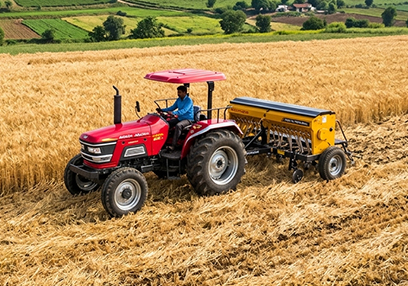
Table of Content
Conservation agriculture is a farming approach that protects soil while maintaining productive crops. Instead of repeated ploughing and leaving fields bare, it relies on minimum soil disturbance, permanent soil cover, and crop diversification. For Indian farmers managing changing rainfall, rising input costs, and soil health concerns, conservation agriculture can be a practical way to make agricultural farming more resilient over time.
Its success depends on adapting methods to the crop, soil type, residue availability, irrigation access, and machinery available on the farm. It is not a one-size-fits-all replacement for every traditional practice.
What Is Conservation Agriculture and How Does It Work?
Conservation agriculture is a system of crop production built around three connected principles:
- Minimum mechanical soil disturbance: Soil is disturbed only as much as needed to place seed, fertilizer, or manage a specific field issue. This may involve reduced tillage, strip tillage, or direct seeding rather than repeated ploughing.
- Permanent soil cover: Crop residues, cover crops or mulch remain on the field to protect the soil surface.
- Crop diversification: Rotating crops or growing more than one crop type over time helps break pest cycles, use nutrients differently, and support soil biology.
These principles work best together. For example, reduced tillage without residue cover may not adequately protect soil from heat and erosion. Similarly, leaving residue on the surface without managing the next crop’s planting can create operational challenges.
In conventional agriculture farming, ploughing is often used to prepare a fine seedbed, control weeds, and incorporate residues. Conservation agriculture aims to achieve crop establishment with fewer soil operations. A farmer may retain paddy straw after harvest, use a suitable seeding implement to sow wheat, and avoid unnecessary passes across the field.
The goal is not simply to “stop tilling.” The goal is to manage the farm so that soil remains covered, biologically active, and less vulnerable to degradation while crops receive timely establishment and care.
Key Conservation Agriculture Methods for Indian Farms
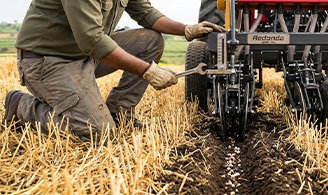
The right conservation agriculture method depends on local cropping patterns and field conditions. Farmers can begin gradually on a small area, observe results, and refine the process before adopting it across the entire holding.
1. Reduced and Minimum Tillage
Reduced tillage lowers the number and intensity of soil-working operations. Rather than multiple passes with a plough, harrow, and cultivator, the farmer may use fewer passes to prepare a seedbed.
Minimum tillage is useful where some soil preparation is still needed for crop establishment. It can help reduce fuel use, operating time, and soil disruption. However, fields with heavy compaction, uneven surfaces, or serious weed pressure may require corrective action before moving fully to reduced tillage.
2. Zero Tillage or Direct Seeding
Zero tillage, often called no-till or direct seeding, places seed into minimally disturbed soil. A zero-till seed drill can sow the crop with limited disturbance, making timely planting possible after the previous crop.
This method is commonly discussed for wheat following rice, particularly where delayed sowing can affect crop performance. Managing standing stubble and loose residue is important. The implement must be appropriate for the amount and type of residue in the field.
3. Residue Retention and Mulching
Crop residue can protect the soil surface from direct sun, wind, and raindrop impact. Retained straw and stubble may also reduce moisture loss and gradually add organic matter as they decompose.
Residue should be managed rather than burned. Burning can remove valuable biomass and create air pollution. In some situations, residues may be chopped, spread evenly, or handled with specialized equipment so that they do not interfere with the following crop.
Farmers should also consider competing uses for residues, such as livestock fodder. Retaining all residue may not be practical on every farm, so a balanced approach is often necessary.
4. Crop Rotation, Intercropping and Cover Crops
Crop diversification is central to conservation agriculture. Rotating cereals with pulses, oilseeds, or other suitable crops can reduce reliance on a single crop cycle. Pulses may contribute to nutrient cycling, while different root systems can support soil structure in different ways.
Intercropping can provide ground cover and spread production risk, though it requires careful crop selection and spacing. Cover crops are grown mainly to protect and improve soil between cash crops; their suitability depends on moisture availability, seed access, and the following crop plan.
Also Read: Different Types of Agriculture Farming in India: Methods & Importance
Benefits and Importance of Conservation Agriculture
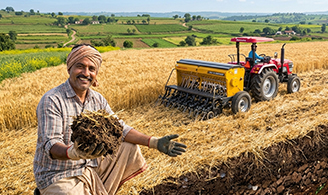
The importance of conservation agriculture lies in its focus on long-term soil productivity. Healthy soil supports root growth, water movement, nutrient cycling, and crop establishment. By reducing disturbance and maintaining cover, farmers may improve the field’s ability to handle weather variability over successive seasons.
Potential benefits include:
- Reduced soil erosion: Residue and living cover shield the soil from heavy rain and wind.
- Better moisture conservation: Mulch can reduce evaporation from the soil surface, which is particularly valuable in moisture-limited conditions.
- Improved soil structure: Less repeated disturbance can help protect soil aggregates and biological activity.
- Fewer field passes: Reduced operations can save time, fuel, and labour where the system is properly planned.
- Timely sowing: Direct seeding systems may help farmers establish the next crop faster after harvest.
- More resilient crop systems: Diverse rotations can reduce dependence on one crop and may help disrupt some pest and disease cycles.
These outcomes are not automatic. Weed control can be a major challenge during the transition, especially when tillage has traditionally been used for weed management. Farmers may need a combination of crop rotation, mulch, timely mechanical control, and, where appropriate, carefully selected herbicide practices following label instructions and local guidance.
Nutrient management also needs attention. Surface residues can temporarily affect nutrient availability as they break down, and fertilizer placement may need to change in reduced-tillage systems. Soil testing and crop-specific recommendations remain important.
Conservation agriculture is therefore best viewed as a managed system, not merely an implement choice. Good record-keeping—covering crop yields, fuel use, weed pressure, residue levels, and soil condition—helps farmers assess whether changes are working on their own land.
Choosing Machinery for Conservation Agriculture
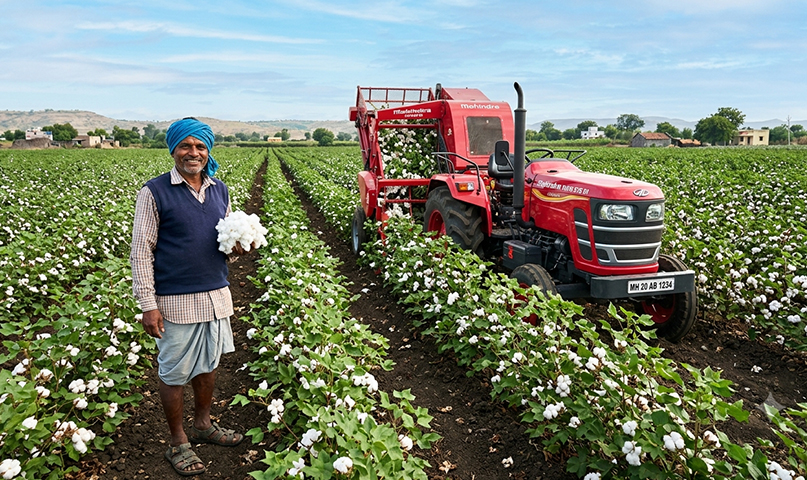
Machinery can make conservation agriculture more practical, especially when farmers need to sow within a short time after harvest. The correct combination depends on farm size, tractor power, soil condition, cropping sequence, and the quantity of crop residue.
A farming tractor should be matched to the implement’s power and traction requirement rather than selected only by horsepower. Adequate lifting capacity, hydraulic compatibility, tyre condition, and field maneuverability also matter. Overloading a tractor can reduce efficiency and increase wear, while an oversized machine may raise ownership and operating costs unnecessarily.
| Farm task | Possible equipment category | What to consider |
|---|---|---|
| Direct sowing | Zero-till or direct-seeding drill | Seed placement, residue handling, row spacing |
| Residue management | Straw chopper, mulcher, or residue manager | Straw volume, even distribution, following crop needs |
| Limited soil preparation | Cultivator or other reduced tillage implement | Soil compaction, clod condition, number of passes |
| Inter-row weed control | Mechanical weeder or intercultivator | Crop spacing, soil moisture, weed stage |
| Mulch establishment | Seed drill suited to cover crops | Seed size, depth control, local crop suitability |
Before purchasing or hiring equipment, farmers should inspect demonstration fields where possible. They should also confirm availability of service, spare parts, operator support, and compatible implements. Custom hiring can be a sensible option for seasonal equipment that is not used frequently enough to justify ownership.
Key takeaways
- Conservation agriculture combines minimum soil disturbance, soil cover, and crop diversification.
- Reduced tillage and residue retention can support soil and moisture conservation when managed well.
- Zero tillage can help with timely sowing, but residue and weed management are essential.
- A suitable tractor-implement combination improves field efficiency and crop establishment.
- Start on a manageable area and adapt practices to local soil, crops, and farm resources.
Frequently asked questions
1. Is conservation agriculture the same as organic farming?
No. Conservation agriculture focuses on soil disturbance, cover, and crop diversity. Organic farming follows standards that generally restrict or prohibit certain synthetic inputs; a conservation agriculture system may or may not be organic.
2. Can conservation agriculture work for small farmers?
Yes, but the approach should be scaled to available land, labour, and equipment. Smallholders may use shared machinery, custom hiring services, mulch from local biomass, and crop rotations suited to their farm.
3. Does zero tillage eliminate all weed problems?
No. Zero tillage changes weed management; it does not eliminate it. Farmers need an integrated plan that may include residue cover, crop rotation, timely planting, mechanical methods, and approved crop-protection practices where needed.
4. Which crops are suitable for conservation agriculture?
Many crops can fit into the system, including cereals, pulses, oilseeds, and fodder crops. Suitable choices depend on the region, season, water availability, market demand, and the previous crop.
5. Is residue retention always possible?
Not always. Crop residues may be needed for animal feed, bedding, or other farm uses. Farmers can retain as much cover as practical while balancing livestock needs and ensuring the next crop can be planted effectively.
Recent Articles
Tag Cloud
Connect With Us

Oct 29, 2026
Oct 29, 2026

You May Also Like
- Read More
 Which is the Best Tractor for Farming in India?
Farming tractors are the essential companions of farmers; these robust machines help them work...
- Read More
 Choosing the Right Tractor for Groundnut Farming
Groundnut, or peanut, is grown in five states of India, namely Andhra Pradesh, Gujarat, Tamil Nadu, Karnataka, Rajasthan and Maharashtra.
- Read More
 Mahindra’s Tractor’s Potato Farming Guide
Paddy farming is one of India’s most prevalent farming methods that use small, flooded fields to cultivate rice.
- Read More
 Why Buy a Mahindra 275 DI XP Plus Tractor: Mileage, Features & Specs
The Indian Tractor market is unique—farmers are looking for an all-rounder tractor that satisfies all their needs while being affordable and powerful. One such tractor that meets the demands of Indian farmers is the Mahindra 275


 Not happy
 Could be better
 It's okay
 Good
 Excellent