


Cotton Harvesting Machines in India: Types, Price & Buying Guide
Oct 29, 2026 | 5 Mins Read


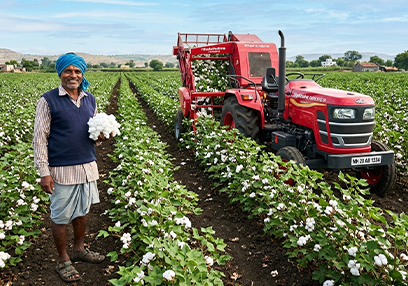
Table of Content
Cotton farming depends on harvesting the crop at the right stage, protecting lint quality, and completing the work before weather or labor constraints cause losses. Cotton harvesting machinescan help farmers improve timeliness and reduce dependence on manual picking, but the right choice depends on acreage, crop geometry, field conditions, labor availability, and the farming tractor already in use.
This guide explains the main machine types, the factors that affect price, and how to select practical cotton farming tools for Indian farms.
Cotton harvesting machines: types and their best uses
The best cotton harvesting machine is one that matches the crop’s planting pattern and your farm’s harvest volume. Unlike many tractor operations, cotton harvesting is highly dependent on uniform rows, crop maturity, and field preparation.
| Machine type | How it works | Best suited for | Key consideration |
|---|---|---|---|
| Manual picking aids | Tools such as collection bags, picking aids, and field transport solutions support hand harvesting | Small holdings and farms with dependable labor | Low equipment cost, but labor requirement remains high |
| Tractor-operated field support equipment | Implements or trailers help move picked cotton, manage crop residue, or support field logistics | Farms using manual or semi-mechanized harvesting | Must be compatible with the available farming tractor |
| Cotton stripper harvester | Removes open bolls along with some plant material | Dry conditions and cotton suited to stripping | May require more cleaning after harvest |
| Spindle cotton picker | Picks seed cotton from open bolls while leaving unopened bolls on the plant | Larger, well-managed cotton fields with uniform crop rows | Requires precise crop management and significant investment |
| Self-propelled cotton harvester | High-capacity harvesting machine with dedicated power and systems | Large commercial operations or custom-hiring businesses | Higher purchase, maintenance, and operator costs |
Manual harvesting remains common where fields are small, plant maturity is uneven, or labor is available. However, labor shortages during peak harvest can make mechanization worth evaluating.
Stripper and picker machines are not interchangeable. A picker generally needs cleaner, more uniform crop conditions because it is designed to remove lint from open bolls selectively. A stripper is typically more aggressive, removing more of the crop material and potentially increasing the need for cleaning and handling. Before considering either system, confirm that your cotton variety, row spacing, and local processing requirements can support mechanical harvesting.
Cotton harvesting machine price: what affects the investment?
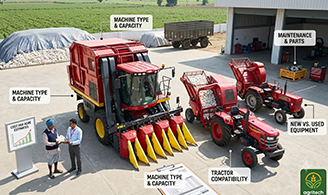
Cotton harvesting machine price in India can vary widely because capacity, technology, import status, attachments, service support, and machine condition all influence the final cost. Rather than relying on a single advertised figure, farmers should request a detailed, current quotation from an authorized supplier or dealer.
A complete estimate should include more than the machine’s purchase price. Consider the following costs before making a decision:
- Machine type and capacity: Self-propelled pickers generally cost substantially more than simple tractor-operated equipment or field-support tools.
- New versus used equipment: A used machine may reduce initial investment, but its service history, parts availability, and remaining working life need careful evaluation.
- Tractor compatibility: If choosing a tractor-mounted or tractor-drawn solution, check power requirement, hydraulic capacity, PTO specifications, hitch category, and tyre suitability.
- Crop preparation inputs: Mechanical harvesting may require uniform sowing, planned row spacing, weed control, and defoliation where agronomically appropriate.
- Transport and storage: Harvested cotton needs clean handling, suitable trailers, covered storage, and timely movement to avoid contamination or moisture damage.
- Maintenance and operator training: Parts, lubrication, seasonal inspection, and trained operation affect machine reliability and harvest quality.
- Financing and utilization: Calculate annual machine use. A high-capacity harvester may be difficult to justify for a small farm unless it is shared, rented, or used for custom hiring.
The most useful calculation is cost per acre or cost per quintal harvested, not purchase price alone. Compare that cost with expected manual picking expenses, likely labor availability, harvest time, and quality-related losses. For many growers, hiring a harvesting service or joining a local machinery-sharing arrangement may be more practical than owning a specialized cotton harvester.
Also Read: Cotton Farming Guide: Harvesting Machines, Tools &; Tractors
How to choose machinery for cotton farming
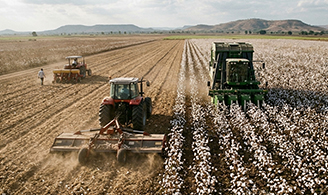
Start with the crop and field, then select the machine. Cotton harvesting machines perform best when the farm system is planned for them from sowing through harvest.
First, assess farm size and utilization. A small or fragmented holding may benefit more from efficient cotton farming tools, transport equipment, and a reliable farming tractor than from a dedicated harvester. Larger contiguous acreage can improve the economics of mechanized harvesting, especially when harvesting must be completed within a short weather window.
Next, inspect field layout. Mechanical harvesting requires workable headlands for turning, reasonably level ground, clear access routes, and row spacing that matches the machine. Rows should be straight and crop height should be as consistent as possible. Stones, irrigation pipes, loose wire, and heavy weed growth can affect machine performance and increase downtime.
Crop readiness is equally important. Harvest when a high proportion of bolls are open and dry, while avoiding unnecessary delay that can expose lint to rain, dust, or staining. Defoliation is sometimes used before mechanical harvesting to reduce leaf contamination, but the decision should be based on local agronomic guidance, crop condition, and label directions for approved products.
Use this pre-purchase checklist:
- Measure actual harvest area and estimate how many days are available for harvesting.
- Confirm row spacing and crop variety suitability with an agronomist, seed provider, or equipment specialist.
- Check tractor and implement compatibility before purchasing tractor-operated equipment.
- Ask about local service support and the availability of wearing parts before the season begins.
- Request an on-field demonstration in cotton conditions similar to your own.
- Evaluate cotton cleanliness after a trial, not only machine speed.
- Plan residue management after harvest, including shredding, incorporation, or other approved field practices.
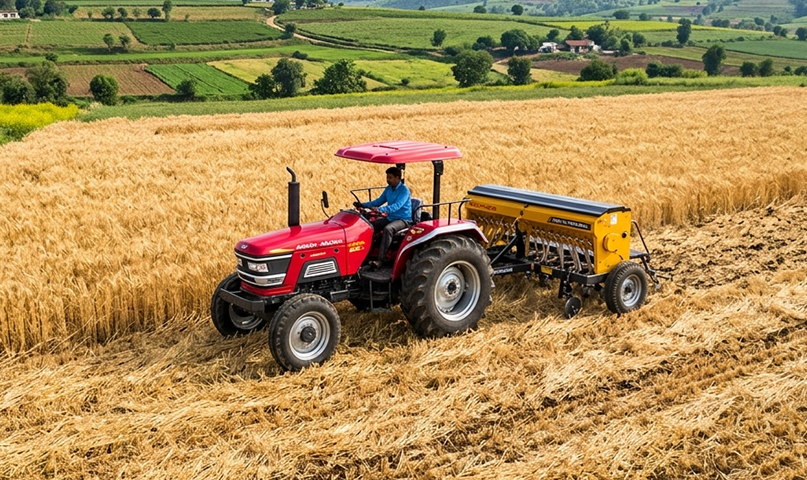
A dependable tractor can support cotton operations well beyond harvest. It can help with land preparation, sowing, spraying, intercultivation, hauling, and residue management when paired with suitable implements. Mahindra Tractors offers tractors and mechanization solutions designed for diverse farm requirements; farmers should consult an authorized dealer to identify an appropriate tractor and implement combinationfor local conditions.
Key takeaways
- Cotton harvesting machines should be selected according to acreage, crop uniformity, row spacing, field access, and labor availability.
- Cotton harvesting machine price includes purchase, maintenance, transport, operator training, crop preparation, and service support.
- Spindle pickers and stripper harvesters suit different crop and field conditions; evaluate lint cleanliness as well as capacity.
- For smaller farms, hiring, sharing, or using tractor-based cotton farming tools may offer better value than owning a specialized harvester.
- A compatible farming tractor can support multiple cotton operations across the season.
Frequently asked questions
1. What is the best machine for cotton harvesting?
There is no single best machine for every farm. Small farms may benefit from manual picking aids and tractor-supported logistics, while large, uniform cotton fields may justify stripper or picker harvesters.
2. How much do cotton harvesting machines cost in India?
Prices vary substantially by machine type, capacity, condition, brand, service support, and whether the machine is imported or locally supplied. Request an itemized quotation and compare the total operating cost per acre with manual harvesting costs.
3. Can a regular farming tractor harvest cotton?
A farming tractor can operate compatible implements and support cotton transport, residue management, and field logistics. However, dedicated cotton picking or stripping may require specialized equipment and specific tractor power or hydraulic capability.
4. What crop conditions are needed for mechanical cotton harvesting?
The crop should have suitable row spacing, relatively uniform maturity, open and dry bolls, manageable weed levels, and adequate field access. Mechanical harvesting also benefits from level ground and clear turning space at field ends.
5. Is it better to buy or hire a cotton harvester?
Hiring can be a sensible option when annual acreage is limited or harvest demand is seasonal. Buying may make more sense when the machine will be used across sufficient acreage, shared among farmers, or operated as a custom-hiring service.
Recent Articles
Tag Cloud
Connect With Us

Oct 29, 2026
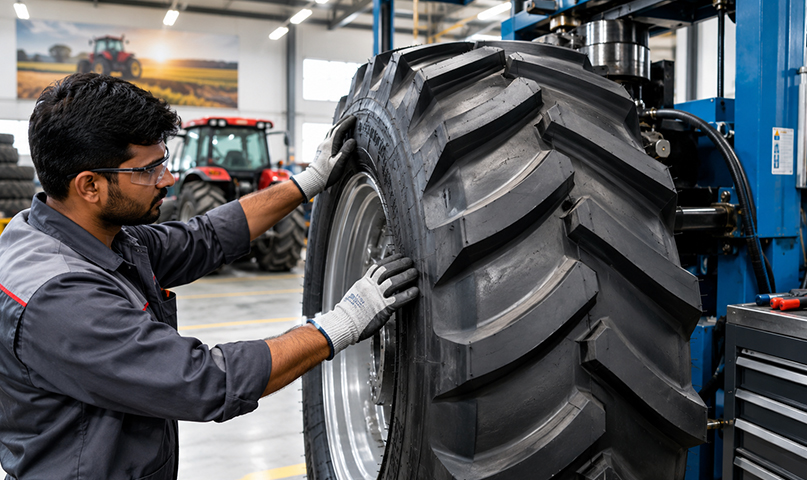
Oct 29, 2026

You May Also Like
- Read More
 Which is the Best Tractor for Farming in India?
Farming tractors are the essential companions of farmers; these robust machines help them work...
- Read More
 Choosing the Right Tractor for Groundnut Farming
Groundnut, or peanut, is grown in five states of India, namely Andhra Pradesh, Gujarat, Tamil Nadu, Karnataka, Rajasthan and Maharashtra.
- Read More
 Mahindra’s Tractor’s Potato Farming Guide
Paddy farming is one of India’s most prevalent farming methods that use small, flooded fields to cultivate rice.
- Read More
 Why Buy a Mahindra 275 DI XP Plus Tractor: Mileage, Features & Specs
The Indian Tractor market is unique—farmers are looking for an all-rounder tractor that satisfies all their needs while being affordable and powerful. One such tractor that meets the demands of Indian farmers is the Mahindra 275


 Not happy
 Could be better
 It's okay
 Good
 Excellent