


5 Things to Check Before Buying a New Tractor This Festive Season
Oct 29, 2026 | 5 Mins Read


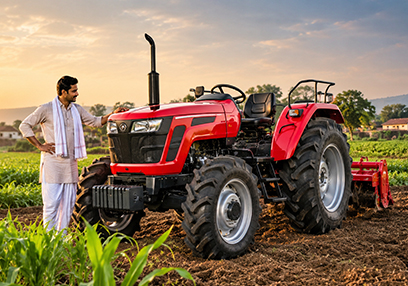
Table of Content
- Match the new tractor to your land, crops, and daily work
- Check power, hydraulics, transmission, and implement compatibility
- Compare tractor price, finance options, and long-term ownership value
- Assess dealer support, service access, and genuine parts availability
- Verify documents, safety features, and delivery condition
- Key takeaways
- Frequently asked questions
Buying a new tractor during the festive season can be a practical investment in higher farm productivity, lower manual effort, and better preparation for upcoming crop cycles. Before comparing offers or visiting a dealership, evaluate your farm requirements, the tractor’s working capabilities, total ownership costs, and the after-sales support available in your area.
1. Match the new tractor to your land, crops, and daily work
The best new tractor is not always the largest or most powerful model. It is the one that handles your regular farm tasks efficiently while fitting your landholding, crop pattern, field conditions, and budget.
Start by listing the work the tractor must complete throughout the year. Typical applications may include land preparation, sowing, intercultivation, spraying, haulage, operating a rotavator, and using other farm implements. A tractor chosen only for one seasonal task may not provide the value or versatility your farm needs year-round.
Consider these farm-specific factors before selecting a model:
- Landholding size: Small farms may need compact, maneuverable tractors, while larger acreage may require higher power and greater work capacity.
- Crop type and row spacing: Orchards, vineyards, sugarcane fields, vegetable farms, and open-field cultivation can require different tractor widths and dimensions.
- Soil condition: Sandy, wet, hard, loose, or black cotton soil can influence traction requirements, tyre selection, and implement performance.
- Field shape and access: Narrow paths, smaller plots, and tight turning areas require good maneuverability and a suitable turning radius.
- Transport requirements: If you regularly move harvested produce, inputs, or equipment, assess the tractor’s suitability for haulage work.
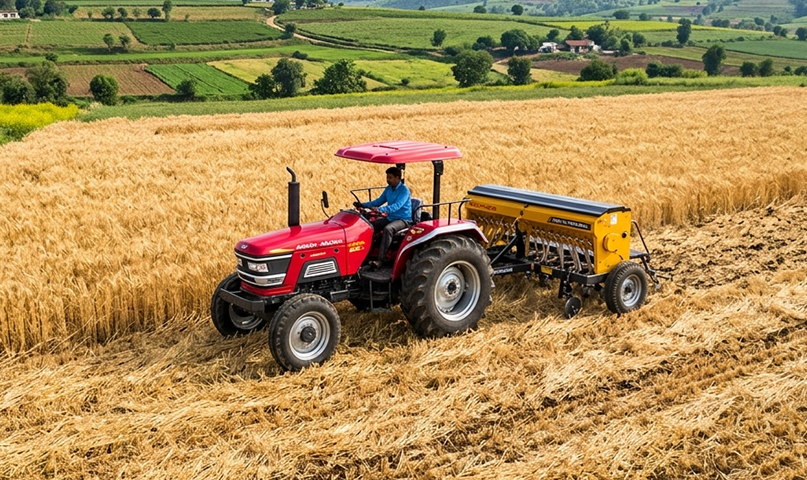
Also plan for future needs. If you expect to add a rotavator, cultivator, seed drill, loader, or trailer later, choose a tractor that can operate those implements effectively. Mahindra Tractors offers models across power ranges and application categories to help farmers select equipment suited to their farming requirements.
2. Check power, hydraulics, transmission, and implement compatibility
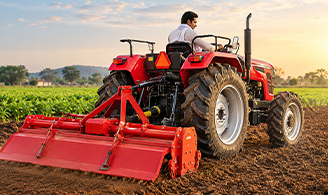
Horsepower matters, but it should not be your only comparison point when buying a new tractor. Productive work depends on how the engine, transmission, hydraulics, PTO, tyres, and implements perform together in your actual field conditions.
Before finalizing a model, ask the dealer to explain its recommended applications. A tractor used regularly for tillage or heavy implement work may need different capabilities than one mainly used for spraying, intercultivation, or transport.
Focus on the features that affect real work
Engine power and torque: Select power based on the heaviest task you perform regularly, rather than an occasional requirement. An underpowered tractor can slow field operations, while unnecessarily high power may increase fuel and ownership costs.
Hydraulic lifting capacity: Hydraulic capacity is important for mounted implements. Confirm that the tractor can safely handle the implements you own or intend to purchase, particularly heavier equipment.
PTO suitability: The power take-off operates many implements, including rotavators, sprayers, threshers, and pumps. Check that the PTO configuration is compatible with the equipment you use or plan to use.
Transmission and gear options: Different field tasks require different working speeds. A suitable gear range helps operators work efficiently during tillage, sowing, intercultivation, and transport. Ask for a demonstration of the gear-shifting process and available speed options.
Tyres and traction: Tyre selection affects grip, stability, soil compaction, and performance across varying conditions. Discuss the right tyre configuration for your soil and farming applications.
Do not overlook operator comfort. A comfortable seat, accessible controls, clear visibility, and easy steering can reduce fatigue during long working days. Whenever possible, take a test drive or attend a live demonstration with an implement attached.
3. Compare tractor price, finance options, and long-term ownership value
The upfront tractor price is important, but it is only one part of the purchase decision. A well-planned tractor purchase should account for the total cost of ownership, including finance, fuel, maintenance, insurance, implements, and future service needs.
Festive-season offers may be available through authorized dealers or finance partners. However, do not choose a tractor based only on a discount, gift, or limited-period offer. First confirm that the model matches your farm work requirements.
Use this checklist when comparing costs:
| Cost area | What to check before purchase |
|---|---|
| Tractor price | Request a clear, itemized quotation and confirm what is included. |
| Implements | Check whether the quoted price includes required implements, accessories, or attachments. |
| Tractor loan | Review eligibility, documents, repayment period, interest-related charges, and payment schedule. |
| Tractor EMI price | Confirm that the monthly installment fits comfortably within your expected farm income and other commitments. |
| Operating costs | Consider expected fuel use, routine maintenance, and consumables. |
| Service support | Check the availability of authorized service, genuine parts, and trained technicians near your farm. |
A tractor loan can help spread the purchase cost, but the repayment plan should align with your income cycle. Farmers with seasonal income may prefer a payment structure that remains manageable during harvest and crop-marketing periods. Ask the financer or dealer to explain every term before signing.
When reviewing the tractor EMI price, look beyond the monthly installment. Check the down payment, tenure, total repayment amount, and applicable charges. A lower EMI over a longer tenure may feel easier each month, but it can affect the overall financing cost.
4. Assess dealer support, service access, and genuine parts availability
A tractor is a long-term farm partner, so after-sales support deserves as much attention as the machine itself. Farm operations often run on tight timelines, and delays in service or difficulty sourcing parts can affect important fieldwork.
Before buying, identify the authorized dealership or service point nearest to your village or farm. Ask practical questions about the support available after delivery.
Questions to ask your dealer
- Where is the nearest authorized service workshop?
- How can I schedule routine service or request support?
- Are genuine spare parts readily available for this model?
- What does the warranty cover, and what conditions apply?
- Can the dealer recommend suitable implements for my farm?
- Is operator training available during delivery or through a demonstration?
- What documents will I receive with the tractor?
A reliable dealer should help you understand the tractor’s controls, maintenance intervals, lubrication points, safe operating practices, and implement connection procedures. This guidance can help prevent avoidable downtime and support better machine life.
Choose genuine parts and authorized service whenever possible. Components designed for a specific tractor model can help maintain fit, performance, and reliability. Regular maintenance is equally important: timely engine oil changes, filter checks, tyre-pressure inspections, cooling-system care, and proper storage all support dependable operation.
Mahindra Tractors supports farmers through an extensive dealership and service network in India. When considering a Mahindra tractor, speak with an authorized dealer about suitable models, implements, local service availability, and finance options.
5. Verify documents, safety features, and delivery condition
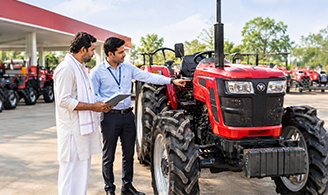
Before taking delivery, review all paperwork and inspect the tractor carefully. This final step helps ensure you receive the exact model, variant, and configuration you selected.
Check that the model name, variant, engine details, chassis information, price, accessories, finance details, and warranty documents match your booking. If implements or accessories were included in the agreement, verify that they have been delivered and are in proper condition.
During delivery, inspect the tractor for visible damage, tyre condition, fluid leaks, battery connections, lights, reflectors, and safety guards. Ask the dealer to demonstrate essential controls, including braking, steering, PTO engagement, hydraulic lift operation, and parking procedures.
Safety should remain a priority from the first day of ownership. Use recommended protective equipment, avoid carrying extra passengers, maintain stable loads during transport, and follow the operator manual. Never operate beyond the tractor’s intended capacity or on unsuitable slopes.
A festive-season purchase can be a smart opportunity when supported by careful planning. Take time to compare options, understand the financial commitment, and choose a tractor built for the work your farm requires.
Key takeaways
- Select a new tractor based on your crops, land size, soil conditions, implements, and transport needs.
- Compare power, hydraulics, PTO, tyres, and transmission—not horsepower alone.
- Review tractor price, tractor loan terms, and tractor EMI price before making a commitment.
- Prioritize authorized service, genuine parts, and dealer support near your farm.
- Inspect documents, included equipment, and tractor condition before delivery.
Frequently asked questions
1. What should I check first before buying a new tractor?
Start with your farm’s regular tasks, land size, crop pattern, soil type, and implement requirements. These factors help identify the most suitable tractor category and power range for your needs.
2. How do I choose the right tractor power?
Choose power based on the heaviest work you expect to perform regularly, such as tillage or operating larger implements. An authorized dealer can help match tractor capability with your intended applications.
3. Is tractor price the only cost I should compare?
No. Also consider implement costs, fuel, maintenance, insurance, service access, and finance expenses. Reviewing the total ownership cost supports a more informed purchase decision.
4. What should I ask about a tractor loan?
Ask about the down payment, repayment tenure, installment schedule, applicable charges, required documents, and total repayment amount. Make sure the repayment plan suits your farm income cycle.
5. Why is authorized tractor service important?
Authorized service helps you access trained technicians, recommended maintenance, and genuine parts. This can support dependable tractor performance and reduce avoidable downtime.
Recent Articles
Tag Cloud
Connect With Us

Sep 29, 2026
Oct 29, 2026

You May Also Like
- Read More
 Which is the Best Tractor for Farming in India?
Farming tractors are the essential companions of farmers; these robust machines help them work...
- Read More
 Choosing the Right Tractor for Groundnut Farming
Groundnut, or peanut, is grown in five states of India, namely Andhra Pradesh, Gujarat, Tamil Nadu, Karnataka, Rajasthan and Maharashtra.
- Read More
 Mahindra’s Tractor’s Potato Farming Guide
Paddy farming is one of India’s most prevalent farming methods that use small, flooded fields to cultivate rice.
- Read More
 Why Buy a Mahindra 275 DI XP Plus Tractor: Mileage, Features & Specs
The Indian Tractor market is unique—farmers are looking for an all-rounder tractor that satisfies all their needs while being affordable and powerful. One such tractor that meets the demands of Indian farmers is the Mahindra 275


 Not happy
 Could be better
 It's okay
 Good
 Excellent