


What is Precision Farming in India? Benefits & Challenges
Jul 28, 2026 | 5 Mins Read


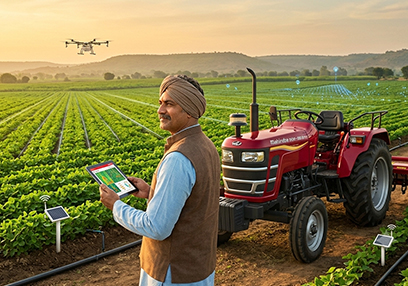
Table of Content
Indian agriculture is undergoing a major transformation driven by technology, data, and innovation. As farmers face challenges such as shrinking landholdings, climate change, water scarcity, rising input costs, and labor shortages, traditional farming methods are no longer sufficient to ensure sustainable growth. This is where precision farming is emerging as a gamechanger.
By combining advanced technologies such as GPS, sensors, drones, satellite imagery, Internet of Things (IoT), and data analytics, precision farming helps farmers make informed decisions and optimize resource utilization. Instead of treating an entire field uniformly, it allows farmers to manage specific areas based on their unique requirements.
In this blog, we explore what precision farming is, the benefits of precision farming, the challenges of precision farming India, and the future of this revolutionary approach to agriculture.
What is precision farming?
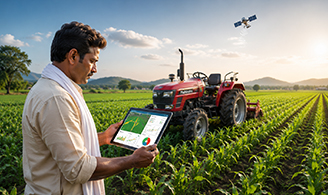
Precision farming, also known as precision agriculture, is a modern agricultural approach that uses technology and data to monitor, measure, and manage crop production with greater accuracy. The goal is simple: apply the right input, at the right place, at the right time, and in the right quantity.
Rather than applying fertilizers, water, or pesticides uniformly across an entire field, precision farming identifies variations in soil conditions, moisture levels, nutrient availability, and crop health. Farmers can then tailor their actions according to the specific needs of different sections of the farm.
This data-driven approach helps improve productivity, reduce wastage, and support sustainable farming practices.
Why precision farming is important in India
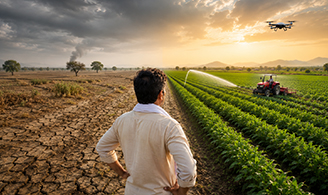
India's agricultural sector supports millions of farmers, but it faces several challenges:
- Small and fragmented landholdings
- Increasing production costs
- Unpredictable weather patterns
- Water scarcity
- Soil degradation
- Pest and disease outbreaks
To address these issues, farmers are increasingly adopting modern farming technology that enables better farm management and resource optimization. Precision farming helps improve efficiency while ensuring environmental sustainability.
Technologies used in precision farming
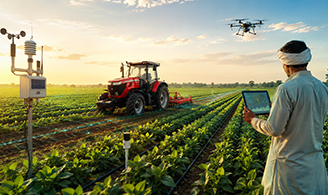
The success of precision farming depends on several advanced technologies working together.
1. GPS and GIS mapping
Global Positioning System (GPS) and Geographic Information Systems (GIS) allow farmers to create accurate maps of their fields and monitor variations in crop conditions. This helps identify areas that require additional attention or resources.
2. Drones and remote sensing
Drones equipped with cameras and sensors provide real-time aerial images of fields. These images help detect crop stress, pest infestations, nutrient deficiencies, and irrigation issues before they become major problems.
3. Soil sensors
Soil sensors collect information about moisture, temperature, pH levels, and nutrient content. Farmers can use this data to optimize irrigation and fertilizer applications.
4. Internet of Things (IoT)
IoT devices continuously gather data from the field and transmit it to digital platforms. This enables farmers to monitor crop and soil conditions remotely and make timely decisions.
5. Variable Rate Technology (VRT)
Variable Rate Technology allows farmers to apply different amounts of fertilizers, pesticides, or water across various parts of a field based on actual crop requirements.
6. Artificial Intelligence and Data Analytics
AI-powered systems analyze large volumes of agricultural data to provide recommendations on irrigation, fertilization, disease management, and harvest planning.
Benefits of precision farming
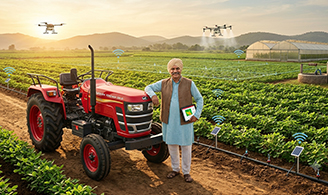
The growing adoption of precision agriculture is largely driven by the numerous benefits of precision farming.
1. Increased Crop Productivity
One of the most significant benefits of precision farming is improved crop yield. Since crops receive the precise amount of water, nutrients, and protection they need, overall productivity increases. Farmers can identify issues early and take corrective action before crop health is affected.
2. Efficient Use of Resources
Precision farming ensures that valuable resources such as water, fertilizers, and pesticides are used efficiently. Inputs are applied only where necessary, reducing wastage and improving overall farm efficiency.
3. Lower production costs
By optimizing the use of agricultural inputs, farmers can significantly reduce operational expenses. Variable rate application helps avoid overuse of fertilizers and chemicals, resulting in cost savings.
4. Better environmental sustainability
Among the major benefits of precision farming is its positive environmental impact. Reduced use of chemicals and water helps protect soil health, groundwater resources, and surrounding ecosystems. Precision farming supports sustainable agriculture by minimizing environmental damage.
5. Data-driven decision making
Farmers gain access to real-time information about crop health, weather conditions, soil quality, and pest risks. This enables informed decision-making and reduces dependency on guesswork.
6. Improved risk management
Advanced monitoring systems help farmers detect disease outbreaks, pest infestations, and weather-related threats early. Timely interventions can prevent significant crop losses and improve farm resilience.
Challenges of precision farming India
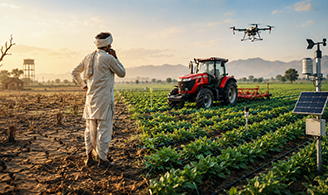
Despite its advantages, several barriers continue to slow the widespread adoption of precision agriculture. Understanding the challenges of precision farming India is essential for developing effective solutions.
1. High initial investment
Many precision farming tools such as drones, sensors, GPS systems, and automated machinery require substantial upfront investment. For small and marginal farmers, affordability remains a major concern.
2. Limited awareness and training
Many farmers are unfamiliar with advanced agricultural technologies. Lack of technical knowledge and training can hinder the adoption of precision farming practices.
3. Small landholdings
India's agricultural landscape is dominated by small and fragmented farms. Implementing sophisticated technologies on small plots can be difficult and may reduce economies of scale.
4. Poor digital infrastructure
Reliable internet connectivity and digital infrastructure are critical for precision farming. In some rural areas, connectivity limitations can affect the performance of IoT devices and cloud-based platforms.
5. Data management challenges
Precision farming generates large volumes of data. Managing, interpreting, and utilizing this information effectively requires technical expertise and robust digital systems. Researchers note that fragmented agricultural data and integration challenges can limit AI-driven farming solutions.
6. Access to technology
Availability of advanced equipment and support services remains uneven across different regions of India. Farmers in remote areas may face difficulties accessing the latest modern farming technology.
The future of precision farming in India
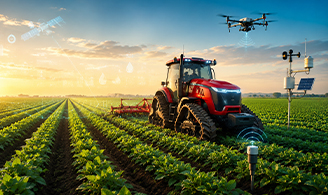
The future of precision farming in India looks highly promising as technology becomes more affordable and accessible.
1. Artificial Intelligence and Machine Learning
AI will play a larger role in predicting crop diseases, optimizing resource allocation, and improving farm planning. Advanced analytics will help farmers make more accurate and timely decisions.
2. Expansion of IoT and 5G networks
The growth of 5G connectivity will enable faster communication between sensors, drones, and farm equipment. Real-time monitoring and automation will become increasingly efficient.
3. Agricultural robotics
Autonomous machines and robots may soon perform tasks such as planting, spraying, weeding, and harvesting with minimal human intervention. This could help address labor shortages and improve operational efficiency.
4. Integration of Big Data
Future agricultural systems will integrate weather data, market information, soil health records, and crop performance metrics to provide comprehensive farm management solutions.
5. Government and private sector support
As awareness grows, government initiatives, agritech startups, and agricultural organizations are expected to accelerate the adoption of modern farming technology across rural India. This support can help overcome many of the current challenges of precision farming India.
Conclusion
Precision farming is transforming Indian agriculture by enabling farmers to use data and technology for smarter, more efficient crop management. Through tools such as GPS, IoT sensors, drones, AI, and data analytics, farmers can optimize resource use, improve productivity, and reduce environmental impact.
The numerous benefits of precision farming—including higher yields, lower costs, improved sustainability, and better decision-making—make it an essential component of the future agricultural landscape. While the challenges of precision farming India such as high costs, limited awareness, and infrastructure gaps still exist, ongoing technological advancements and increasing support from stakeholders are creating new opportunities for adoption.
As modern farming technology continues to evolve, precision farming has the potential to drive the next agricultural revolution in India, helping farmers achieve greater profitability, sustainability, and resilience in an increasingly complex farming environment.
Recent Articles
Tag Cloud
Connect With Us

Jul 28, 2026
Jul 28, 2026

You May Also Like
- Read More
 Which is the Best Tractor for Farming in India?
Farming tractors are the essential companions of farmers; these robust machines help them work...
- Read More
 Choosing the Right Tractor for Groundnut Farming
Groundnut, or peanut, is grown in five states of India, namely Andhra Pradesh, Gujarat, Tamil Nadu, Karnataka, Rajasthan and Maharashtra.
- Read More
 Mahindra’s Tractor’s Potato Farming Guide
Paddy farming is one of India’s most prevalent farming methods that use small, flooded fields to cultivate rice.
- Read More
 Why Buy a Mahindra 275 DI XP Plus Tractor: Mileage, Features & Specs
The Indian Tractor market is unique—farmers are looking for an all-rounder tractor that satisfies all their needs while being affordable and powerful. One such tractor that meets the demands of Indian farmers is the Mahindra 275


 Not happy
 Could be better
 It's okay
 Good
Good Excellent