


Potato Varieties Cultivated in India: Popular Types and Uses
Oct 29, 2026 | 5 Mins Read


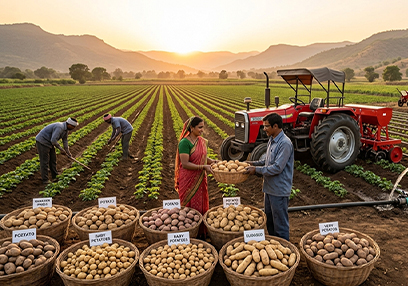
Table of Content
Potato varieties cultivated in India differ in maturity period, yield potential, tuber shape, skin and flesh color, storage behavior, and suitability for table use or processing. Choosing the right variety helps farmers match their crop to local climate, planting season, market demand, irrigation availability, and the machinery used for field preparation, planting, earthing up, and harvesting.
Potato Varieties Cultivated in India: Categories and Crop Needs
India grows potatoes across diverse agro-climatic regions, from the plains of Uttar Pradesh, Punjab, West Bengal, and Bihar to the hills of Himachal Pradesh and Uttarakhand. Most potato production takes place during the cool season, although planting windows vary by region. This makes variety selection an important farm decision rather than a one-size-fits-all choice.
Potato varieties are commonly grouped according to their intended use:
- Table varieties: Grown mainly for household consumption and fresh markets. These potatoes should have an appealing appearance, acceptable cooking quality, and dependable yield.
- Processing varieties: Used for chips, French fries, flakes, and other value-added products. They are generally selected for higher dry matter, suitable sugar levels, uniform tuber shape, and processing quality.
- Early-maturing varieties: Useful where farmers want an early harvest, faster market entry, or a shorter crop window before the next crop.
- Main-season varieties: Typically remain in the field longer and may offer stronger yield potential when managed well.
- Region-specific varieties: Developed or recommended for particular growing conditions, including plains, hills, warm areas, or locations with certain disease pressures.
The best potato variety is not necessarily the one with the highest yield in another district. Farmers should consider local agricultural university recommendations, seed availability, buyer requirements, and past field performance. Healthy, quality seed tubers are equally important because poor seed can reduce plant vigor and introduce disease into the field.
Also Read: Mahindra's Tractor's Potato Farming Guide
Popular Potato Varieties Grown in India
Several Kufri varieties developed through potato research programs are widely recognized by Indian farmers. Their performance can vary with location, seed quality, planting date, soil fertility, irrigation, and crop protection practices.
| Potato variety | General characteristics | Common suitability |
|---|---|---|
| Kufri Jyoti | A well-known, widely grown variety with attractive tubers and broad adaptability. | Fresh market and table use in many potato-growing regions. |
| Kufri Chandramukhi | Known for its relatively early maturity and good tuber appearance. | Farmers seeking an early crop for fresh sale. |
| Kufri Bahar | A popular plains variety with good yield potential under suitable management. | Table potato production in north Indian plains. |
| Kufri Pukhraj | An early variety often valued for producing marketable tubers within a shorter crop duration. | Early planting and early market opportunities. |
| Kufri Badshah | Produces larger tubers under favorable conditions and is used in several potato-growing belts. | Fresh markets where larger potatoes are preferred. |
| Kufri Sindhuri | Recognizable for its red skin and commonly associated with good keeping quality. | Table markets and storage-oriented sales. |
| Kufri Himalini | A variety associated with cooler and hill-growing environments. | Hill regions and suitable cool-climate locations. |
| Kufri Chipsona types | Developed with processing characteristics in mind, including suitability for chips. | Contract or organized chip-processing supply chains. |
| Kufri Frysona | Intended for French fry processing where uniform, elongated tubers are needed. | Processing markets, subject to buyer specifications. |
Kufri Jyoti, Kufri Chandramukhi, Kufri Bahar, Kufri Pukhraj, and Kufri Sindhuri remain familiar names in many potato-producing areas. However, farmers should not select a variety solely because it is popular. A variety suitable for fresh retail markets may not meet the requirements of a chips or French fry buyer.
Processing companies may specify the desired tuber size, shape, dry matter, internal quality, and delivery schedule. Before planting a processing variety, farmers should confirm whether a nearby buyer or contract arrangement is available. Without a defined market, a table variety may offer greater selling flexibility.
Also Read: Potato Harvesting Machines: How to Choose, Use & Maintain Them
How to Choose the Right Potato Variety for Your Farm
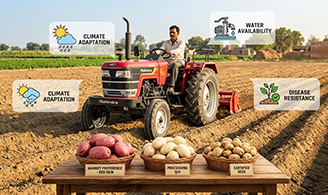
The right potato variety should fit the farm's field conditions and marketing plan. Start by identifying whether the crop will be sold immediately after harvest, stored for later sale, supplied to a processor, or retained partly as seed.
Consider these practical selection factors:
- Planting season and crop duration: Early varieties can help farmers reach the market sooner. Longer-duration varieties may be suitable where the season and irrigation support a full crop cycle.
- Climate and location: Plains, hills, and warmer potato-growing zones can require different varieties. Follow recommendations from local extension officers or agricultural research institutions.
- Soil condition: Potato performs best in well-prepared, loose, well-drained soil. Heavy clods and poor drainage can affect tuber development, shape, and harvest efficiency.
- Water availability: Uniform moisture is important during tuber initiation and bulking. Choose a crop plan that matches available irrigation capacity.
- Disease management: Use certified or reliable disease-free seed wherever possible. Select varieties recommended locally for the area's major disease challenges.
- Market preference: Red-skinned potatoes, white or cream-skinned tubers, small grading sizes, large tubers, and processing-quality potatoes may command different demand in different markets.
Mechanization can support timely potato cultivation, especially where labor availability is limited. A suitable tractor and compatible implements can help with primary tillage, bed or ridge formation, inter-cultivation, earthing up, and haulage. Proper field preparation is particularly important because potatoes develop underground and need a loose soil profile for uniform tuber growth.
Mahindra Tractors offers tractors and farm mechanization solutions suited to varied farm sizes and operating conditions. Farmers should match tractor horsepower, implement width, soil type, and acreage to ensure efficient potato field operations without unnecessary soil compaction.
Key takeaways
- Potato varieties cultivated in India include table, early-maturing, storage-oriented, and processing types.
- Kufri Jyoti, Kufri Chandramukhi, Kufri Bahar, Kufri Pukhraj, Kufri Badshah, and Kufri Sindhuri are among the commonly recognized varieties.
- Processing varieties should be planted only after confirming buyer requirements and market access.
- Variety choice should reflect local climate, crop duration, seed quality, irrigation, disease risk, and selling plan.
- Good oil preparation, timely earthing up, and suitable mechanization contribute to a productive potato crop.
Frequently asked questions
1. Which potato variety is best for cultivation in India?
There is no single best variety for all Indian farms. Kufri Jyoti, Kufri Bahar, Kufri Pukhraj, Kufri Chandramukhi, and Kufri Sindhuri are widely known options, but the best choice depends on location, season, market, and crop purpose.
2. Which potato varieties are suitable for chips and French fries?
Kufri Chipsona types are associated with chip processing, while Kufri Frysona is intended for French fry processing. Farmers should verify quality specifications and procurement arrangements with processors before planting.
3. Which potato variety is suitable for early harvesting?
Kufri Pukhraj and Kufri Chandramukhi are commonly considered early options in suitable growing conditions. Actual harvest timing will depend on planting date, weather, crop management, and local recommendations.
4. Why is certified potato seed important?
Quality seed supports uniform plant establishment and reduces the risk of carrying diseases into the field. Using healthy seed tubers is one of the most important steps in protecting yield and tuber quality.
5. What machinery is useful for potato farming?
Tractors can support land preparation, ridge formation, earthing up, transport, and other field operations through suitable implements. The right equipment depends on farm size, soil condition, row spacing, and the level of mechanization planned.
Recent Articles
Tag Cloud
Connect With Us

Oct 29, 2026
You May Also Like
- Read More
 Which is the Best Tractor for Farming in India?
Farming tractors are the essential companions of farmers; these robust machines help them work...
- Read More
 Choosing the Right Tractor for Groundnut Farming
Groundnut, or peanut, is grown in five states of India, namely Andhra Pradesh, Gujarat, Tamil Nadu, Karnataka, Rajasthan and Maharashtra.
- Read More
 Mahindra’s Tractor’s Potato Farming Guide
Paddy farming is one of India’s most prevalent farming methods that use small, flooded fields to cultivate rice.
- Read More
 Why Buy a Mahindra 275 DI XP Plus Tractor: Mileage, Features & Specs
The Indian Tractor market is unique—farmers are looking for an all-rounder tractor that satisfies all their needs while being affordable and powerful. One such tractor that meets the demands of Indian farmers is the Mahindra 275


 Not happy
 Could be better
 It's okay
 Good
 Excellent