


Wheat vs Soybean Grading Machines: Key Differences & Prices
Sep 23, 2026 | 5 Mins Read


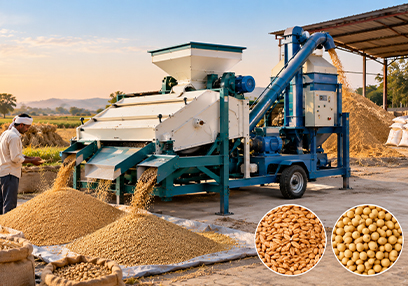
Table of Content
- What Is a Grading Machine?
- Wheat Grading Machine: Purpose and Applications
- Soybean Grading Machines
- Key Differences Between Wheat and Soybean Grading Machines
- Understanding Grading Machine Capacity
- What Determines the Price of a Grading Machine?
- Capacity vs Price: What Should Farmers Choose?
- Important Features to Check Before Buying
- Role of Farm Machinery in Modern Agriculture
- How to Select the Right Machine
- Conclusion
Grading is an important post-harvest operation that helps farmers and agricultural businesses separate grains and seeds according to size, weight, quality, and cleanliness. With increasing mechanization in agriculture, modern grading equipment has become an essential part of farm machinery used for handling crops after harvesting. A suitable grading machine can help reduce manual sorting, improve product uniformity, and prepare grains for storage, processing, or marketing.
Wheat and soybean are both important crops, but their physical characteristics and grading requirements differ. Therefore, selecting the right machine requires an understanding of crop type, grading capacity, cleaning requirements, power source, operating cost, and purchase price. This article explains the major differences between wheat and soybean grading machines and the factors farmers should consider before investing.
What Is a Grading Machine?
A grading machine is agricultural equipment designed to separate harvested produce into different grades or categories. Depending on its design, it may use screens, sieves, air flow, vibration, gravity, or a combination of these mechanisms.
After harvesting and threshing, crops can contain broken grains, undersized seeds, stones, dust, chaff, and other unwanted materials. A suitable grading machine helps separate these materials and improve the overall quality of the harvested produce.
Grading is particularly useful when farmers or agricultural businesses need consistent quality grain for storage, processing, packaging, or sale. Mechanized grading can also reduce dependence on manual labour and improve the speed of post-harvest handling.
Wheat Grading Machine: Purpose and Applications
A wheat grading machine is designed to handle wheat grains and separate them according to physical characteristics such as size, density, and cleanliness. Depending on the machine configuration, wheat can be screened to remove impurities and segregate grains into different grades.
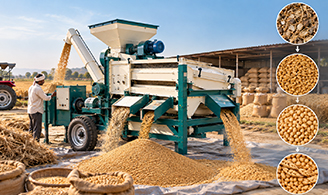
A wheat grading machine can be useful for:
- Cleaning harvested wheat
- Removing foreign materials
- Separating undersized or broken grains
- Improving grain uniformity
- Preparing wheat for storage
- Supporting commercial grain processing and packaging
For farmers cultivating wheat on a larger scale, mechanized grading can make post-harvest handling considerably more efficient.
Soybean Grading Machines
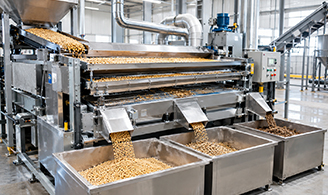
Soybeans have different physical characteristics from wheat, so grading equipment intended for soybean handling may require different screen sizes, settings, or separation mechanisms.
Soybean grading can involve removing impurities, broken or damaged seeds, undersized seeds, and other unwanted material. Depending on the application, grading may also help produce a more uniform seed lot.
This can be particularly valuable for commercial soybean cultivation, seed processing, and businesses handling large quantities of harvested soybeans.
Key Differences Between Wheat and Soybean Grading Machines
Although both machines perform the basic function of separation and grading, their configurations can differ according to crop characteristics.
| Feature | Wheat Grading Machine | Soybean Grading Machine |
|---|---|---|
| Primary crop | Wheat | Soybean |
| Main purpose | Cleaning and size-based grading of wheat | Cleaning and grading soybean seeds |
| Screen selection | Based on wheat grain dimensions | Based on soybean seed size |
| Operating settings | Adjusted for wheat characteristics | Adjusted for soybean characteristics |
| Applications | Wheat farms, grain handling, processing | Soybean farms, seed processing, grain handling |
| Capacity requirement | Depends on farm and wheat volume | Depends on soybean production and handling volume |
Farmers should not assume that a machine designed for one crop will automatically deliver optimum results with another. Multi-crop machines may be available, but their screens, airflow, feed rate, and other settings may need adjustment.
Understanding Grading Machine Capacity
Capacity is one of the most important specifications when comparing farm machinery. It generally indicates the quantity of crop that a machine can process over a particular period.
The appropriate capacity depends on:
- Total cultivated area
- Crop yield
- Quantity requiring grading
- Harvesting schedule
- Available labour
- Required daily output
- Whether the machine is used commercially
A small farm may not need a very high-capacity machine. Conversely, a commercial farmer or custom-hiring operator may benefit from equipment capable of processing larger quantities efficiently.
Choosing the right capacity can help prevent both underutilization and unnecessary investment.
What Determines the Price of a Grading Machine?
The price of a grading machine can vary substantially depending on its specifications and configuration. Farmers should consider more than the initial purchase price when comparing different models.
Major factors affecting price include:
1. Capacity
Higher-capacity machines generally require larger and more robust components and may therefore cost more.
2. Technology
Machines incorporating multiple cleaning or grading stages, adjustable settings, advanced separation systems, or automated controls may have a higher purchase price.
3. Crop Compatibility
A machine capable of handling multiple crops may offer greater versatility than a dedicated unit. However, additional mechanisms or interchangeable screens can affect its cost.
4. Power Requirement
The machine's power source can also influence its overall cost. Some equipment may be electrically powered, while others can be integrated with tractors or other agricultural machinery.
5. Construction Quality
Heavy-duty construction and durable components can increase the initial investment while potentially improving machine life under regular agricultural use.
Capacity vs Price: What Should Farmers Choose?
The cheapest machine is not necessarily the most economical choice, while the highest-capacity machine may not be suitable for every farm.
Farmers should estimate how much wheat or soybean they need to grade each season and compare this quantity with the machine's rated capacity. For example, purchasing a very high-capacity machine for a small farm could leave the equipment underutilized.
On the other hand, choosing equipment with insufficient capacity for a large farm could increase operating time and delay post-harvest activities.
The best approach is to select a machine that provides an appropriate balance between price, capacity, performance, maintenance, and expected utilization.
Important Features to Check Before Buying
Before purchasing a wheat or soybean grading machine, farmers should evaluate several technical and practical factors.
1. Screen or sieve arrangement: Check whether appropriate screens are available for the crop and required grade.
2. Cleaning efficiency: A good machine should effectively remove unwanted materials without causing excessive grain losses.
3. Adjustability: Adjustable feed rate, airflow, vibration, or screen settings can make equipment more versatile.
4. Ease of operation: Simple controls and accessible adjustment points can make daily operation easier.
5. Maintenance: Check how easily important components can be inspected, cleaned, serviced, or replaced.
6. Spare parts: Availability of replacement parts is important for minimizing downtime during the post-harvest season.
7. Power requirements: Ensure that the machine is compatible with the available power source and farm infrastructure.
Role of Farm Machinery in Modern Agriculture
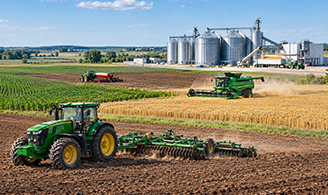
Mechanization has transformed agricultural operations from land preparation and sowing to harvesting and post-harvest management. Grading equipment is an important part of this wider ecosystem of farm machinery.
Different types of farming may have different mechanization requirements. Small and medium farms may prioritize affordable, compact equipment, while commercial farms may require high-capacity machinery capable of handling large volumes.
As farmers increasingly focus on reducing labour dependency, improving quality, and increasing operational efficiency, post-harvest machines such as threshers, cleaners, graders, and seed-processing equipment can play an increasingly important role.
How to Select the Right Machine
The selection process should begin with the crop and quantity that needs to be processed. Farmers should then compare machine capacity, grading mechanism, power requirements, price, maintenance costs, and after-sales support.
For wheat growers, a dedicated wheat grading machine can be a suitable option when wheat is the primary crop requiring grading. Farmers handling soybeans should select equipment with appropriate screens and settings for soybean seeds.
If the machine will be used for multiple crops, farmers should confirm its multi-crop capability with the manufacturer rather than relying solely on general specifications.
Conclusion
A suitable grading machine can improve the efficiency and quality of post-harvest grain handling by reducing manual sorting and helping farmers achieve more uniform produce. However, wheat and soybean have different grading requirements, making crop compatibility an important consideration.
When comparing a wheat grading machine with soybean grading equipment, farmers should evaluate capacity, grading mechanism, screen configuration, power requirements, price, maintenance, and versatility. The right choice ultimately depends on farm size, crop volume, intended application, and frequency of use.
As agriculture becomes increasingly mechanized, investing in appropriate farm machinery can help farmers manage operations more efficiently. Across different types of farming, selecting equipment based on actual farm requirements—not simply purchase price—can lead to better utilization, lower operating challenges, and improved post-harvest productivity.
Recent Articles
Tag Cloud
Connect With Us

Sep 23, 2026
Sep 23, 2026

You May Also Like
- Read More
 Which is the Best Tractor for Farming in India?
Farming tractors are the essential companions of farmers; these robust machines help them work...
- Read More
 Choosing the Right Tractor for Groundnut Farming
Groundnut, or peanut, is grown in five states of India, namely Andhra Pradesh, Gujarat, Tamil Nadu, Karnataka, Rajasthan and Maharashtra.
- Read More
 Mahindra’s Tractor’s Potato Farming Guide
Paddy farming is one of India’s most prevalent farming methods that use small, flooded fields to cultivate rice.
- Read More
 Why Buy a Mahindra 275 DI XP Plus Tractor: Mileage, Features & Specs
The Indian Tractor market is unique—farmers are looking for an all-rounder tractor that satisfies all their needs while being affordable and powerful. One such tractor that meets the demands of Indian farmers is the Mahindra 275


 Not happy
 Could be better
 It's okay
 Good
Good Excellent