


Sugarcane Cutting Machines vs Traditional Harvesting: Efficiency & Cost
Sep 23, 2026 | 5 Mins Read


Table of Content
- Traditional Sugarcane Harvesting
- What Is a Sugarcane Cutting Machine?
- Efficiency: Machine vs Traditional Harvesting
- Comparing the Costs
- Role of Labour Availability
- Impact of Climate Change on Harvesting Decisions
- Environmental Considerations
- Traditional Harvesting: Advantages and Limitations
- Sugarcane Cutting Machine: Advantages and Limitations
- Role of Harvesting Implements in Sugarcane Farming
- Which Method Is More Cost-Effective?
- How to Choose the Right Approach
- Conclusion
Sugarcane is a major commercial crop that requires substantial labour and careful timing during harvesting. Traditionally, farmers have depended on manual cutting using labour-intensive methods. However, increasing labour costs, labour shortages, changing weather conditions, and the need to complete sugarcane harvesting within a limited period have encouraged greater adoption of mechanization.
A modern sugarcane cutting machine can significantly change the way harvesting operations are carried out by combining cutting and other harvesting functions into a mechanized process. At the same time, traditional harvesting continues to remain relevant, particularly for small farms and fields where mechanized equipment may be difficult to operate.
The choice between mechanical and traditional harvesting depends on farm size, crop conditions, labour availability, terrain, investment capacity, and harvesting requirements.
Traditional Sugarcane Harvesting
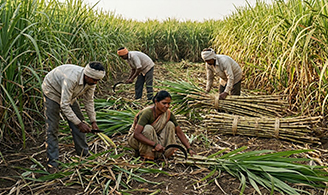
Traditional sugarcane harvesting generally involves workers manually cutting mature cane close to the ground, removing leaves and unwanted portions, and preparing the harvested cane for transportation. The process can provide flexibility because workers can selectively harvest cane and operate in fields where large machines may have difficulty moving.
However, manual harvesting is labour-intensive. Farmers need sufficient workers during the harvesting season, and delays can affect the overall farm operation. Labour availability and wage rates can therefore have a major influence on harvesting costs.
Traditional methods may be particularly suitable for small or fragmented farms, uneven fields, narrow access routes, and situations where the use of large harvesting machinery is impractical.
What Is a Sugarcane Cutting Machine?
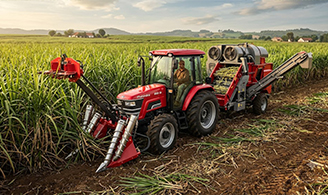
A sugarcane cutting machine is agricultural equipment designed to mechanize one or more stages of sugarcane harvesting. Depending on its configuration, mechanized harvesting equipment can perform operations such as cutting, gathering, cleaning, and preparing harvested cane for collection or transportation.
Mechanical harvesting is part of the broader transition towards mechanized sugarcane farming, where machinery is increasingly used to reduce dependence on manual labour and improve operational efficiency.
The exact functions, capacity, fuel consumption, and field performance vary between machines. Therefore, farmers should evaluate equipment according to their crop conditions and actual harvesting requirements rather than relying only on advertised capacity.
Efficiency: Machine vs Traditional Harvesting
The biggest difference between mechanical and traditional harvesting is the speed of operation.
Manual harvesting depends directly on the number of workers available and their daily working capacity. A labour shortage can slow down harvesting considerably, particularly when large areas need to be harvested within a short period.
A sugarcane cutting machine, by comparison, can cover larger areas in a shorter operating window, depending on field conditions and machine specifications. This can help farmers manage harvesting schedules more effectively.
Mechanical harvesting can also reduce the number of workers required for cutting operations. This is particularly valuable in areas where agricultural labour is becoming more difficult or expensive to obtain.
However, machine efficiency is not identical in every field. Field size, row spacing, soil condition, crop lodging, cane density, terrain, and field accessibility can influence performance.
Comparing the Costs
Cost is another important factor when comparing mechanical and traditional sugarcane harvesting.
Traditional harvesting generally requires a lower initial investment because farmers do not need to purchase expensive machinery. However, recurring labour expenses can become significant over multiple harvesting seasons.
Mechanical harvesting requires an initial investment in equipment or access to machinery through rental, custom-hiring, or service providers. There are also operating costs such as fuel, maintenance, repairs, transportation, and operator expenses.
Therefore, farmers should compare the total cost of harvesting, rather than simply comparing the purchase price of a machine with the wage paid for manual labour.
For large farms or farmers who can use the machine extensively, mechanization may offer better economic efficiency over time. For small farms with limited annual acreage, hiring machinery may be more practical than purchasing it.
Role of Labour Availability
Labour availability has become an important consideration in modern sugarcane farming. Manual harvesting requires a coordinated workforce during the peak harvesting period.
If sufficient labour is unavailable, harvesting may be delayed. Mechanical equipment can help address this challenge by reducing dependence on manual cutting.
This does not necessarily mean that machines eliminate labour completely. Operators, transport workers, maintenance personnel, and other workers may still be required. However, mechanization can change the nature and scale of labour required for the harvesting operation.
Also Read: Sugarcane farming in Maharashtra: Best tractor and implement combinations
Impact of Climate Change on Harvesting Decisions
Climate-related challenges add another dimension to sugarcane production. The source article provided by IMCO Alloys highlights that climate change can affect sugarcane production through higher temperatures, increased evapotranspiration, reduced soil-water availability, drought, extreme weather events, and changing pest and disease patterns. It also notes that the impact varies considerably by geographic region.
These challenges can make timely agricultural operations increasingly important. Improved irrigation, stress-tolerant varieties, and better management practices are among the adaptation strategies identified in the source.
For harvesting, this reinforces the value of having access to equipment that can complete field operations efficiently when crop and weather conditions are suitable.
Environmental Considerations
The environmental impact of harvesting practices is also worth considering. The IMCO Alloys article notes that practices such as residue burning can contribute to greenhouse gas emissions and highlights green harvesting techniques as one approach that can reduce CO₂ emissions associated with sugarcane production.
Mechanization alone does not automatically make harvesting environmentally sustainable. Farmers should consider the complete harvesting system, including fuel consumption, residue management, transportation, and field practices.
A well-planned mechanized operation can nevertheless support more systematic harvesting and residue management when appropriate equipment and practices are used.
Traditional Harvesting: Advantages and Limitations
Traditional harvesting has several advantages:
- Lower initial investment in machinery
- Greater flexibility in small or irregular fields
- Selective cutting may be possible
- Suitable where machinery access is difficult
- Can work effectively where sufficient labour is available
However, it also has limitations:
- High dependence on manual labour
- Potentially higher recurring labour costs
- Slower harvesting over large areas
- Greater exposure to labour shortages
- Difficulty completing large-scale harvesting quickly
For smallholders with suitable labour availability, traditional harvesting can remain a practical choice.
Sugarcane Cutting Machine: Advantages and Limitations
Mechanized harvesting offers several potential advantages:
- Faster harvesting
- Reduced dependence on manual cutting labour
- Better suitability for larger farms
- Improved harvesting productivity
- Potentially more predictable harvesting schedules
- Reduced physical workload associated with manual cutting
However, machinery also has limitations:
- Higher initial investment
- Fuel and maintenance expenses
- Requirement for trained operators
- Performance affected by field conditions
- May be unsuitable for very small, fragmented, or inaccessible fields
Consequently, farmers should assess the machine's suitability before investing.
Role of Harvesting Implements in Sugarcane Farming
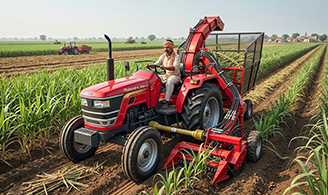
Not every farm requires a large self-propelled harvesting machine. Depending on the operation, farmers can consider different harvesting implements and tractor-operated equipment designed for specific field tasks.
The right implement can help mechanize selected stages of the harvesting process while allowing farmers to continue using an existing tractor. This approach can be particularly relevant for farmers who already own tractors and use them for multiple agricultural operations.
When evaluating harvesting implements, farmers should check tractor compatibility, horsepower requirements, PTO or hydraulic requirements, working capacity, field suitability, maintenance requirements, and availability of spare parts.
Which Method Is More Cost-Effective?
There is no universal answer. The more economical option depends on the individual farm.
1. Traditional harvesting may be more suitable when:
- The farm is small.
- Labour is readily available.
- Fields are irregular or difficult to access.
- Machinery cannot be utilized sufficiently to justify its cost.
2. Mechanical harvesting may be more suitable when:
- The cultivated area is large.
- Labour availability is limited.
- Harvesting needs to be completed quickly.
- Machinery can be purchased, hired, or shared economically.
- Fields have suitable row spacing and accessibility.
Farmers should calculate harvesting cost per acre or hectare, including labour, fuel, machinery rental or depreciation, maintenance, transportation, and other associated expenses.
Also Read: Understanding Different Types of Harvesting Machines and Their Uses
How to Choose the Right Approach
Before investing in a sugarcane cutting machine, farmers should evaluate the size and layout of their fields, sugarcane variety, row spacing, terrain, soil conditions, annual harvesting area, labour availability, and transportation arrangements.
It is also important to compare machine ownership with custom hiring. For farmers who cultivate only a limited area, hiring a machine when required can provide access to mechanization without the capital cost of ownership.
Conclusion
The shift from traditional harvesting to mechanized sugarcane harvesting is driven largely by the need for greater efficiency, timely operations, and reduced dependence on manual labour. A sugarcane cutting machine can offer substantial productivity advantages on suitable farms, while traditional harvesting continues to provide flexibility for smaller or difficult-to-access fields.
Climate-related challenges, including drought, higher temperatures, water stress, and extreme weather, further emphasize the importance of efficient farm management and timely operations.
Ultimately, the right choice depends on farm size, field conditions, labour costs, machinery access, and investment capacity. By carefully evaluating harvesting implements, machinery costs, and operating requirements, farmers can choose a harvesting system that supports efficient and economically viable sugarcane farming.
Recent Articles
Tag Cloud
Connect With Us

Sep 23, 2026
Sep 23, 2026

You May Also Like
- Read More
 Which is the Best Tractor for Farming in India?
Farming tractors are the essential companions of farmers; these robust machines help them work...
- Read More
 Choosing the Right Tractor for Groundnut Farming
Groundnut, or peanut, is grown in five states of India, namely Andhra Pradesh, Gujarat, Tamil Nadu, Karnataka, Rajasthan and Maharashtra.
- Read More
 Mahindra’s Tractor’s Potato Farming Guide
Paddy farming is one of India’s most prevalent farming methods that use small, flooded fields to cultivate rice.
- Read More
 Why Buy a Mahindra 275 DI XP Plus Tractor: Mileage, Features & Specs
The Indian Tractor market is unique—farmers are looking for an all-rounder tractor that satisfies all their needs while being affordable and powerful. One such tractor that meets the demands of Indian farmers is the Mahindra 275


 Not happy
 Could be better
 It's okay
 Good
Good Excellent