


Rabi Crop Sowing Calendar 2026: Best Time to Sow Wheat & More
Sep 1, 2026 | 5 Mins Read


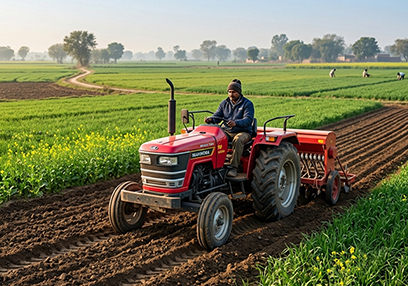
Table of Content
- Understanding the Rabi Season
- Why Following an Agriculture Calendar Matters
- Rabi Sowing Calendar 2026
- Role of Tractors in Rabi Farming
- Fertilizer Application
- Choosing the Right Tractor for Rabi Crops
- Essential Tips for Successful Wheat Farming
- Common Challenges During the Rabi Season
- Benefits of Farm Mechanization
- Importance of Regular Tractor Maintenance
- Planning Your Agriculture Calendar
- Conclusion
The Rabi season is one of the most important cropping seasons in Indian agriculture. Following the monsoon, farmers prepare their fields for winter crops that contribute significantly to the country's food security and agricultural economy. Timely sowing is critical for achieving higher yields, better crop quality, and improved profitability. Following a well-planned agriculture calendar helps farmers make informed decisions about field preparation, seed selection, irrigation, and harvesting.
Whether you're engaged in wheat farming, cultivating mustard, gram, or peas, understanding the ideal sowing window and using the right tractors for farming can improve efficiency and maximize returns.
This guide explains the Rabi season crops, their ideal sowing period, and how farm mechanization supports successful cultivation in 2026.
Understanding the Rabi Season
The Rabi season begins after the southwest monsoon retreats, generally from October to November. Crops grow during the cooler winter months and are harvested between March and April, depending on the crop and region.
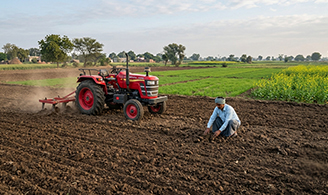
Major Rabi season crops include:
- Wheat
- Mustard
- Gram (Chickpea)
- Peas
- Barley
- Lentils
- Oats
These crops require relatively cool temperatures during vegetative growth and dry weather during harvesting.
Why Following an Agriculture Calendar Matters
A well-planned agriculture calendar helps farmers:
- Prepare fields at the right time
- Select suitable crop varieties
- Schedule irrigation efficiently
- Apply fertilizers at the correct growth stage
- Manage pests and diseases effectively
- Harvest crops at optimum maturity
Timely operations reduce production risks and improve overall farm productivity.
Rabi Sowing Calendar 2026
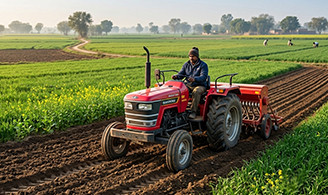
Although sowing schedules vary by region and weather conditions, the following timeline serves as a general guide for most parts of India.
Farmers should also consider local weather forecasts, soil moisture, and regional agricultural recommendations before sowing.
1. Wheat Farming: Best Time for Sowing
Wheat farming is one of the largest agricultural activities during the Rabi season. Timely sowing helps plants establish strong roots before temperatures drop significantly.
Ideal Conditions
- Temperature: 20–25°C during sowing
- Well-drained loam or clay loam soil
- Adequate residual soil moisture
Benefits of Timely Wheat Sowing
- Better germination
- Uniform crop establishment
- Reduced pest incidence
- Higher grain filling
- Improved yield potential
Delayed sowing often exposes the crop to higher temperatures during grain filling, which may reduce productivity.
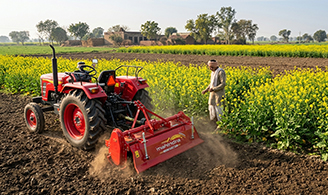
2. Mustard Cultivation
Mustard is an important oilseed crop grown across northern and central India.
Best Sowing Time
Mid-October to Mid-November is generally considered ideal.
Field Preparation
The field should be well-levelled with good drainage to prevent waterlogging.
Tractor Operations
Modern tractors for farming help perform:
- Deep ploughing
- Seedbed preparation
- Rotavation
- Seed drilling
- Fertilizer application
Mechanization ensures timely sowing and uniform seed placement.
3. Gram (Chickpea) Cultivation
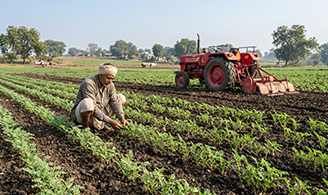
Gram is a major pulse crop requiring relatively less irrigation.
Ideal Sowing Window
Late October to Mid-November.
Soil Requirements
- Well-drained black soils
- Sandy loam
- Medium black cotton soils
Proper seedbed preparation encourages better root development and healthy plant growth.
4. Pea Cultivation
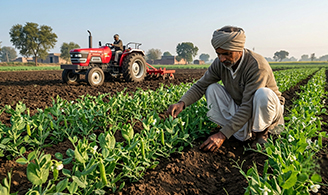
Peas are widely cultivated for both fresh vegetable markets and pulse production.
Best Time for Sowing
October through November.
Growing Conditions
- Cool climate
- Fertile, well-drained soils
- Moderate irrigation
Timely sowing ensures flowering occurs under favourable weather conditions, improving pod development and yield.
Role of Tractors in Rabi Farming
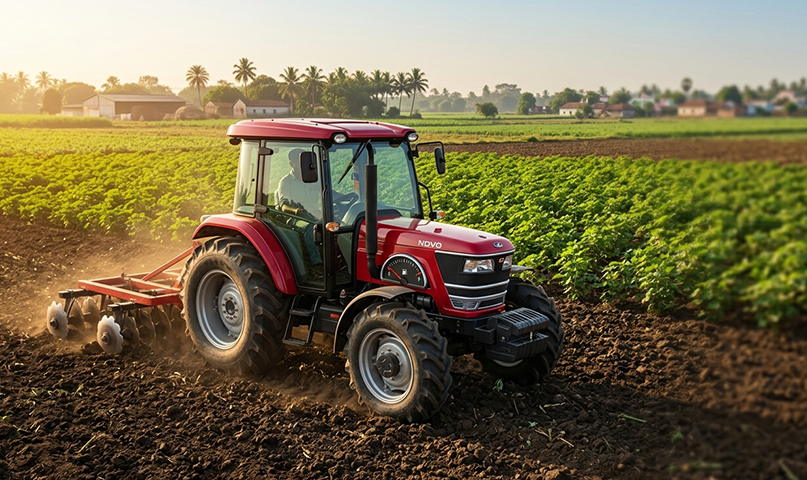
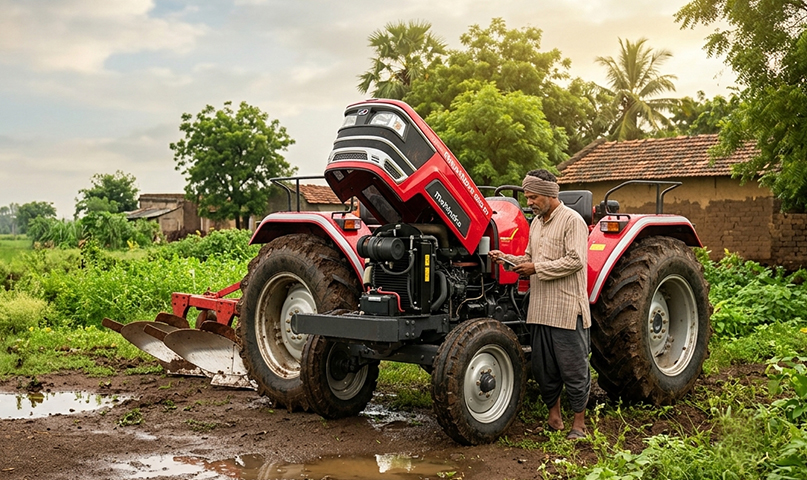
Modern tractors for farming play an essential role throughout the Rabi crop cycle.
1. Land Preparation
Tractors efficiently operate:
- MB ploughs
- Cultivators
- Disc harrows
- Rotavators
These implements prepare a fine seedbed that promotes better germination.
2. Sowing Operations
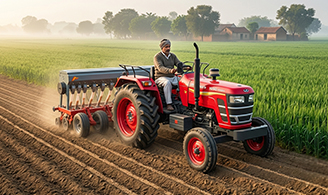
Seed drills attached to tractors ensure:
- Uniform seed placement
- Correct sowing depth
- Proper row spacing
- Better seed-to-soil contact
This results in uniform crop emergence.
Fertilizer Application
Tractor-mounted fertilizer applicators improve nutrient distribution while reducing labour requirements.
1. Spraying
PTO-operated boom sprayers help manage weeds, pests, and diseases efficiently.
2. Transportation
After harvest, tractors transport produce quickly from farms to storage facilities and markets.
Choosing the Right Tractor for Rabi Crops
Selecting the appropriate tractor depends on:
1. Farm Size
Small farms benefit from compact tractors, while medium and large farms require higher horsepower models.
2. Soil Type
Heavy soils require tractors with greater pulling power.
3. Implements
Ensure compatibility with:
- Rotavators
- Seed drills
- Cultivators
- MB ploughs
- Sprayers
- Trailers
4. Hydraulic Capacity
A strong hydraulic system improves implement performance and operational efficiency.
5. Fuel Efficiency
Fuel-efficient tractors help reduce operating costs during intensive farming operations.
Essential Tips for Successful Wheat Farming
To maximize productivity:
- Use certified seeds.
- Prepare a fine seedbed.
- Sow within the recommended time.
- Follow balanced fertilizer application.
- Irrigate at critical growth stages.
- Monitor weeds regularly.
- Control pests promptly.
- Harvest at physiological maturity.
Following these practices improves grain quality and yield.
Common Challenges During the Rabi Season
Farmers may encounter several challenges:
- Delayed sowing
- Low soil moisture
- Early frost
- Weed infestation
- Pest attacks
- Labour shortages
- Rising fuel costs
Mechanization helps address many of these issues by enabling faster and more efficient field operations.
Benefits of Farm Mechanization
Using modern tractors for farming offers several advantages:
- Faster land preparation
- Timely sowing
- Reduced labour dependency
- Improved fuel efficiency
- Better seed placement
- Higher operational accuracy
- Lower production costs
- Increased productivity
These benefits contribute directly to higher farm profitability.
Importance of Regular Tractor Maintenance
Before beginning the Rabi season, farmers should inspect their tractors thoroughly.
Important maintenance checks include:
- Engine oil
- Hydraulic oil
- Air filters
- Fuel filters
- Tyre pressure
- Braking system
- Steering components
- Battery condition
- PTO operation
Regular servicing minimizes breakdowns during critical sowing operations.
Planning Your Agriculture Calendar
A successful agriculture calendar should include:
- Field preparation schedule
- Seed procurement
- Fertilizer planning
- Irrigation schedule
- Pest monitoring
- Machinery maintenance
- Harvest planning
- Market preparation
Planning each activity in advance helps reduce delays and improves resource utilization.
Conclusion
The success of Rabi season crops depends largely on timely sowing, proper field preparation, and efficient farm management. Following the right agriculture calendar allows farmers to optimize operations for crops such as wheat farming, mustard, gram, and peas while minimizing production risks.
Modern tractors for farming have transformed Rabi cultivation by enabling faster land preparation, precise sowing, efficient fertilizer application, and reliable transportation. Choosing the right tractor and implements ensures that every farming operation is completed on time, helping improve productivity and reduce operating costs.
As you prepare for the 2026 Rabi season, focus on timely sowing, adopt recommended agronomic practices, maintain your machinery, and plan your operations carefully. A well-executed Rabi season not only delivers higher yields but also lays the foundation for a more profitable and sustainable farming future.
Recent Articles
Tag Cloud
Connect With Us

Sep 1, 2026
Sep 1, 2026

You May Also Like
- Read More
 Which is the Best Tractor for Farming in India?
Farming tractors are the essential companions of farmers; these robust machines help them work...
- Read More
 Choosing the Right Tractor for Groundnut Farming
Groundnut, or peanut, is grown in five states of India, namely Andhra Pradesh, Gujarat, Tamil Nadu, Karnataka, Rajasthan and Maharashtra.
- Read More
 Mahindra’s Tractor’s Potato Farming Guide
Paddy farming is one of India’s most prevalent farming methods that use small, flooded fields to cultivate rice.
- Read More
 Why Buy a Mahindra 275 DI XP Plus Tractor: Mileage, Features & Specs
The Indian Tractor market is unique—farmers are looking for an all-rounder tractor that satisfies all their needs while being affordable and powerful. One such tractor that meets the demands of Indian farmers is the Mahindra 275


 Not happy
 Could be better
 It's okay
 Good
Good Excellent