


What Are Fodder Crops? Popular Fodder Crops Grown in India
Oct 30, 2026 | 5 Mins Read


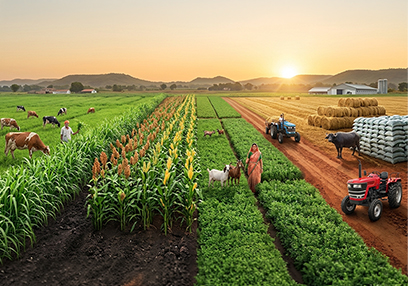
Table of Content
Fodder crops are plants grown mainly to feed cattle, buffaloes, goats, sheep, and other livestock. For dairy and mixed farms, reliable fodder crops support animal health, milk production, and lower dependence on purchased feed.
India's varied soils, rainfall patterns, and seasons allow farmers to grow many kinds of green fodder, dry fodder, and forage legumes. Choosing the right crop depends on local climate, irrigation availability, livestock numbers, and the farm's feeding requirements.
What Are Fodder Crops and What Are the Main Types of Fodder?
Fodder crops are cultivated crops that provide nutritious feed for farm animals. They may be fed fresh as green fodder, conserved as hay or silage, or used as dry roughage after harvest. Good fodder cultivation helps maintain a regular feed supply across seasons, especially when natural grazing land is limited.
The major types of fodder include:
- Green fodder: Fresh, succulent crops such as maize, sorghum, napier grass, berseem, and cowpea. These crops are valued for moisture, digestibility, and palatability.
- Dry fodder: Crop residues such as paddy straw, wheat straw, maize stover, and dry grass. Dry fodder provides roughage but may need to be combined with green feed and concentrates for a balanced ration.
- Legume fodder: Crops such as berseem, lucerne, cowpea, and cluster bean. Legumes generally contribute protein and can improve soil fertility through nitrogen fixation.
- Non-legume fodder: Cereals and grasses such as maize, oats, sorghum, bajra, and napier grass. They are often grown for bulk green biomass and energy.
- Perennial fodder: Crops that remain productive for more than one season, including hybrid napier grass and guinea grass. These can provide repeated harvests when managed well.
- Annual fodder: Crops grown and harvested within a season or year, such as maize, oats, cowpea, and berseem.
A practical livestock feeding plan usually combines more than one fodder type. For example, a farmer may use green maize or napier grass for bulk, berseem or cowpea for protein, and straw for additional roughage.
Popular Fodder Crops Grown by Indian Farmers
The best fodder crops vary by region, season, and water availability. However, several crops are widely used across India because they fit common livestock systems and can be harvested as green feed, hay, or silage.
| Fodder crop | Suitable season or conditions | Main use |
|---|---|---|
| Maize | Kharif, rabi, or summer with irrigation | Green fodder and silage |
| Sorghum | Warm and relatively dry conditions | Green fodder, hay, and silage |
| Bajra | Kharif and dry areas | Fast-growing green fodder |
| Hybrid napier grass | Warm areas with irrigation | Repeated green fodder harvests |
| Berseem | Rabi season in irrigated areas | Protein-rich green fodder |
| Oats | Cool rabi season | Green fodder and hay |
| Cowpea | Kharif and summer | Green fodder and mixed cropping |
| Lucerne | Irrigated areas with suitable soil | Long-duration, protein-rich forage |
Maize is among the most popular fodder crops examples for dairy farms. It produces an energy-rich crop and is commonly selected for silage because it can be stored for use during periods of fodder shortage. Timely harvesting helps preserve feed quality.
Also Read: Maize farming: Tractor and implement guide for better yields
- Sorghum, also known as jowar, is valued for its tolerance of warm weather and its ability to grow in many rainfed areas. Farmers should harvest it at an appropriate stage and follow local agronomy guidance, as very young sorghum can require caution before feeding.
- Bajra is useful where rainfall is uncertain and temperatures are high. It grows quickly and can provide green fodder during the monsoon season. It is frequently paired with legumes such as cowpea to improve the overall quality of the forage.
- Hybrid napier grass is a preferred perennial choice for farms that need regular cut-and-carry fodder. Once established, it can be harvested repeatedly with proper irrigation, nutrient management, and cutting intervals.
- Berseem is an important winter fodder in northern and irrigated parts of India. Its tender green growth and protein content make it a valuable option for milch animals. Oats are also commonly grown in winter and may be used alone or mixed with berseem.
- Cowpea and lucerne are important legume options. Cowpea fits warm-season cultivation, while lucerne can remain productive for an extended period under suitable irrigated conditions.
Fodder Cultivation: Planning, Crop Management, and Mechanization
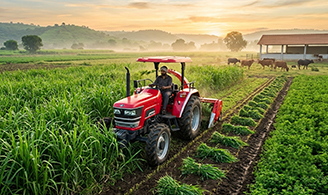
Successful fodder cultivation starts with planning for year-round availability rather than growing a single crop in one season. Farmers can spread risk by combining seasonal annual crops with a perennial grass and a legume fodder crop.
Before sowing, assess the farm's soil type, irrigation source, livestock herd size, and the expected feeding gap. In rainfed areas, drought-tolerant crops such as sorghum and bajra may be more practical. Farms with reliable irrigation can consider berseem, maize, oats, lucerne, or hybrid napier grass, depending on the region and season.
Important fodder crop management practices include:
- Prepare a clean, well-tilled seedbed to encourage uniform germination and early crop establishment.
- Use locally recommended seed varieties and follow guidance from agricultural universities, extension officers, or input specialists.
- Apply nutrients according to soil needs. Legumes and grasses have different nutrient requirements, so soil testing can support better fertilizer decisions.
- Maintain irrigation where needed, particularly during establishment and dry periods. Avoid waterlogging in crops that do not tolerate excess moisture.
- Control weeds early because weeds compete for water, nutrients, and sunlight and can reduce fodder quality.
- Harvest at the right growth stage. Overmature crops can become fibrous and less digestible, while very early harvesting may reduce total yield.
Mechanization can make fodder operations more timely and manageable. A tractor matched to farm size can support land preparation, seedbed work, transport, and implement operation. Implements such as cultivators, rotavators, seed drills, mowers, forage harvesters, balers, and trailers can reduce manual workload where suitable. For farmers using silage, timely chopping, compaction, and airtight storage are essential for good preservation.
Key takeaways
- Fodder crops are cultivated primarily to provide nutritious feed for livestock.
- The main types of fodder include green fodder, dry fodder, legumes, grasses, annual crops, and perennial crops.
- Maize, sorghum, bajra, hybrid napier, berseem, oats, cowpea and lucerne are widely used by Indian farmers.
- A mix of seasonal and perennial fodder crops can help reduce feed shortages.
- Timely cultivation, harvesting, storage, and suitable farm machinery can improve fodder management.
Frequently asked questions
1. Which fodder crop is best for dairy cattle?
There is no single best crop for every dairy farm. A combination of high-quality green fodder, legume fodder, dry roughage, and a balanced concentrate ration is generally more useful than depending on one crop alone.
2. Which fodder crops can be grown in summer?
Maize, cowpea, sorghum, bajra, and hybrid napier grass are commonly considered for warm-season fodder cultivation. The final choice should depend on irrigation access, local temperatures, and regional recommendations.
3. What is the difference between green fodder and dry fodder?
Green fodder is fed fresh and contains high moisture, while dry fodder includes materials such as straw, hay, and dried crop residues. Both can be part of a livestock ration, but they provide different nutritional value and physical roughage.
4. Can maize fodder be stored for later use?
Yes. Maize is widely used for silage when harvested and stored correctly under airtight conditions. Silage can help farmers maintain feed availability when fresh green fodder is scarce.
5. Why should farmers grow legume fodder crops?
Legume fodder crops such as berseem, cowpea, and lucerne can add protein to livestock feed. They can also support soil fertility because legumes are associated with nitrogen fixation when grown under suitable conditions.
Recent Articles
Tag Cloud
Connect With Us

Oct 30, 2026
Oct 30, 2026

You May Also Like
- Read More
 Which is the Best Tractor for Farming in India?
Farming tractors are the essential companions of farmers; these robust machines help them work...
- Read More
 Choosing the Right Tractor for Groundnut Farming
Groundnut, or peanut, is grown in five states of India, namely Andhra Pradesh, Gujarat, Tamil Nadu, Karnataka, Rajasthan and Maharashtra.
- Read More
 Mahindra’s Tractor’s Potato Farming Guide
Paddy farming is one of India’s most prevalent farming methods that use small, flooded fields to cultivate rice.
- Read More
 Why Buy a Mahindra 275 DI XP Plus Tractor: Mileage, Features & Specs
The Indian Tractor market is unique—farmers are looking for an all-rounder tractor that satisfies all their needs while being affordable and powerful. One such tractor that meets the demands of Indian farmers is the Mahindra 275


 Not happy
 Could be better
 It's okay
 Good
 Excellent